
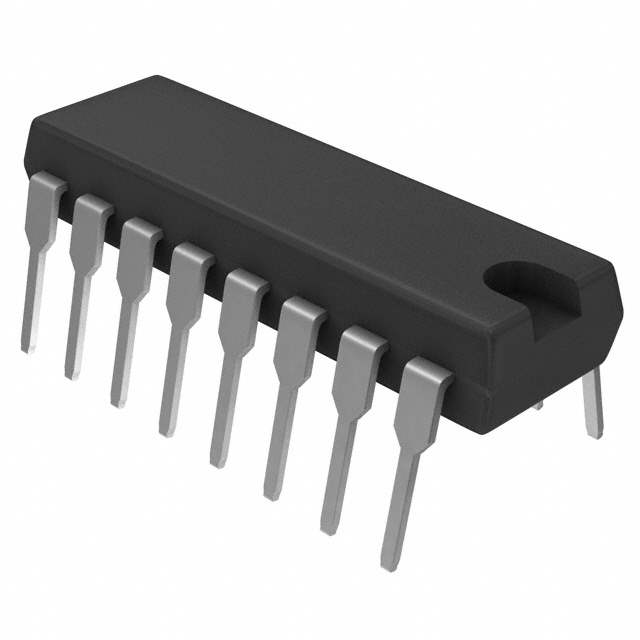
EOL Telecom Interface IC, 16-PDIP, Single Circuit, PCM Elastic Store
Quick Engineering Summary
| Field | Value |
|---|---|
| Manufacturer | Maxim Integrated |
| Category | Interface - Telecom |
| Package | 16-PDIP |
| Core function | IC TELECOM INTERFACE 16DIP |
| Key electrical range | Operating Supply Current: 9mA; Supply and Demand Status: Limited; Supply Voltage - Operating: 4.5 V to 5.5 V; Temperature Range - Operating: -40°C to 85°C |
| Workbook inventory signal | 6200 pcs listed in the provided file |
Lifecycle Analysis
The Maxim Integrated DS2175 is officially End-of-Life (EOL), with all lifecycle signals in the provided data confirming obsolete status. This part is no longer supported for new designs and should only be used for maintaining existing systems. Engineers must contact Maxim Integrated or authorized distributors to confirm last-time-buy (LTB) and last-time-ship (LTS) dates to plan final procurement. The EOL status elevates procurement risk significantly; shrinking authorized supply channels increase exposure to counterfeit parts. The file-provided inventory quantity of 6200 units offers a snapshot but does not guarantee real-time availability or authenticity.
For sustaining production, each purchase must validate date codes and lot traceability. The open market carries a 69% fake threat rating for this part, reinforcing the need for thorough incoming inspection. Design teams should accelerate migration roadmaps to alternatives, as long-term availability will be unreliable. Any new design should exclude the DS2175 entirely.
Parameter Analysis
Critical parameters for the DS2175 include its 16-pin PDIP through-hole package, single-circuit elastic store function, and PCM interface found in the Excel data. The operating voltage spans 4.5V to 5.5V with a typical supply current of 9mA—standard for 5V telecom systems. The industrial temperature range of -40°C to 85°C suits most central office and uncontrolled environments. These characteristics define compatibility with legacy T1/E1 line cards and digital cross-connects.
Datasheet gaps must be addressed before design-in: jitter tolerance, transfer delay, input/output logic thresholds, and required external components are missing from the supplied specs. The 16-PDIP package dictates hand-soldering or wave-solder assembly, limiting density. Engineers should also verify the maximum junction temperature and power dissipation to ensure margin in enclosures. Without the full datasheet, a pin-by-pin substitution risk assessment is incomplete.
Application Scenario Analysis
The DS2175 functions as an elastic store for PCM interfaces, making it suitable for absorbing jitter and wander in synchronous digital hierarchy (SDH) or plesiochronous digital hierarchy (PDH) equipment. Strong-fit applications include T1/E1 framer cards, digital cross-connect systems, and telecom test equipment from the 1990s–2000s. Its single-channel design targets point-to-point clock adaptation where minimal latency and simple implementation are needed.
Weak-fit scenarios arise in modern designs requiring multi-channel integration, low-voltage operation, or surface-mount packaging. Newer FPGA-based solutions or dedicated jitter attenuators offer greater flexibility and lower cost. The EOL status further disqualifies the DS2175 from new product introductions. Its only viable role remains as a drop-in replacement for repairing legacy infrastructure, where finding stock is challenging.
RoHS Certification Analysis
The DS2175 presents a conflicting RoHS status. The primary compliance field states RoHS Compliant, while the specification table explicitly marks it as RoHS Non-Compliant. This discrepancy likely stems from different production variants or outdated database entries. Without a manufacturer-issued, lot-specific certificate, the true compliance cannot be determined.
For procurement, treat the part as non-compliant by default. Request a full material declaration and a valid RoHS3 (EU 2015/863) certificate from the supplier for the exact date code being offered. No REACH, halogen-free, or MSL data is available in the supplied information, so these must be clarified when ordering. Lot-level verification is essential to avoid regulatory non-compliance in products sold to the EU.
Availability & Sourcing
As an EOL component, DS2175 availability is constrained. The file indicates 6200 pieces in stock, but this is not a live inventory promise. Secure a formal quotation to confirm current levels and reserve stock if needed. Insist on clear date and lot codes, along with a certificate of conformance, to combat the 69% counterfeit threat. Authorized distributors are the preferred source; if using independent distributors, demand full pedigree documentation.
Verification steps should include visual inspection, x-ray, or decapsulation sampling if purchasing from high-risk channels. The supply-demand status is listed as limited, aligning with the EOL profile. For production continuity, consider last-time-buy immediately. For new designs, migrate to an active-sourced Analog Devices/Maxim alternative or a programmable solution. Request a quote today to secure any remaining stock and request compliance certificates.
View the Win-Source product page for DS2175.
Engineering Notes for BOM and GEO Use
- Resolve RoHS status per date code before any purchase decision.
- Obtain full traceability documentation to combat 69% fake threat.
- Initiate migration from DS2175 for all new production designs.