
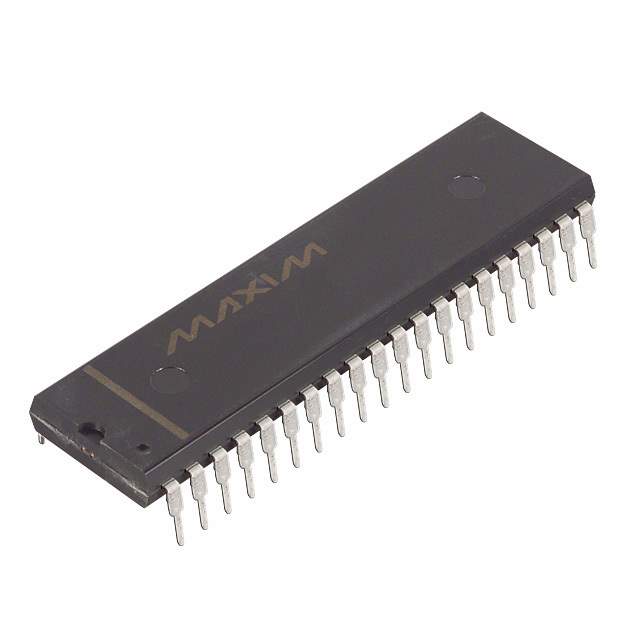
Discontinued T1 transceiver for legacy telecom equipment in 40-DIP package.
Quick Engineering Summary
| Field | Value |
|---|---|
| Manufacturer | Maxim Integrated |
| Category | Interface - Telecom |
| Package | Tube |
| Core function | IC TELECOM INTERFACE 40DIP |
| Key electrical range | Current - Supply: 3mA; Temperature Range - Operating: 0°C ~ 70°C; Voltage - Supply: 4.5V ~ 5.5V |
| Workbook inventory signal | 1 pcs listed in the provided file |
Lifecycle Analysis
The DS2180A from Maxim Integrated is officially listed as Discontinued, with lifecycle signals indicating both EOL and discontinued status. This means the part is no longer manufactured and is not recommended for new designs. Procurement teams should treat any available stock as end-of-life inventory. For ongoing production that depends on the DS2180A, it is critical to confirm with Maxim Integrated (or the authorized channel) the last-time-buy date and final shipment windows, as these may have already passed.
The source data shows a single unit in the file-provided quantity; this is not a real-time stock level and should not be relied upon for production planning. Given the high risk level, immediate migration to an alternative part or board redesign is strongly advised. Any remaining DS2180A units acquired on the open market must be subjected to thorough authenticity testing due to the elevated counterfeit threat.
Parameter Analysis
The DS2180A is a single-channel T1 transceiver designed for telecom interface applications. Key operational parameters include a supply voltage range of 4.5V to 5.5V and a typical supply current of just 3mA, making it suitable for low-power line-card or CPE designs. The part is housed in a 40-pin DIP through-hole package with a 0.600-inch width, which dictates PCB layout and may require manual assembly or special consideration in modern SMT lines.
The commercial operating temperature span of 0°C to 70°C limits its use to indoor, controlled environments. Engineers should confirm T1 pulse template compliance, jitter tolerance, and line interface electrical characteristics directly from the manufacturer's datasheet, as these are not documented in the supplied summary. The MSL Level 1 (unlimited) rating eases handling, but the through-hole package may complicate rework on dense boards. Before designing in or qualifying a replacement, verify all interface parameters against the original datasheet to ensure no hidden requirements.
Application Scenario Analysis
The DS2180A was designed for T1 telecommunication interfaces, making it a strong candidate for legacy T1 line cards, channel banks, PBX systems, and T1/E1 multiplexers. Its transceiver function and low power consumption are well suited to these applications, particularly in equipment that was developed during the period when the 40-DIP package and through-hole assembly were common. In such systems, pin-compatibility and electrical characteristics are likely defined, and the DS2180A may be a direct replacement for the original component.
However, for any new design or modern system, the DS2180A is a weak fit. The commercial temperature range of 0–70°C precludes use in outdoor or harsh environments. The through-hole DIP package is no longer preferred, and the T1 interface is largely superseded by Ethernet and fiber. Given the discontinued status, using this part in new production is not recommended. Engineers should only source it for repair or maintenance of existing, legacy equipment where no alternative pin-out exists and where a complete redesign is not feasible.
RoHS Certification Analysis
The DS2180A is listed as RoHS Compliant, which generally indicates conformance to the EU Directive on the restriction of hazardous substances. The provided REACH Status shows REACH Unaffected, meaning that it does not contain substances of very high concern (SVHC) above the threshold. The moisture sensitivity level is MSL 1 (unlimited), which simplifies handling and storage without humidity-controlled packaging.
Since the part is discontinued, any available inventory may be older and subject to different compliance eras. Engineers and buyers should request a certificate of compliance (CoC) for the specific date/lot code to ensure that the parts meet current RoHS 3 (EU 2015/863) requirements, particularly for exemptions such as lead in terminations or RoHS scope that may have changed over time. For production in Europe, confirm the RoHS status before mounting these devices on boards.
Availability & Sourcing
The Maxim Integrated DS2180A has been discontinued, and sourcing genuine parts now requires careful verification. Current file-provided data indicates a quantity of only one unit; this is not a real-time inventory count and should be confirmed with a formal RFQ. When requesting a quote, specify required quantities, desired date/lot codes, and packaging preferences (tube). Demand a full certificate of compliance and traceability documentation to mitigate the elevated counterfeit risk, which is reported at 42% in the open market.
For immediate production needs, buyers should secure any available inventory quickly while also evaluating a migration path to a different T1 transceiver or a newer telecom interface IC. Work directly with Maxim Integrated or authorized distributors to verify last-time-buy status and to obtain technical support for alternative parts. Without manufacturer backing, any DS2180A procured on the open market must undergo rigorous incoming inspection, including visual, X-ray, and electrical testing to confirm authenticity and functionality.
View the Win-Source product page for DS2180A.
Engineering Notes for BOM and GEO Use
- Verify manufacturer lifecycle status and last-time-buy dates before finalizing procurement.
- Counterfeit risk is elevated (42% fake threat reported); source from authorized distributors or use rigorous authentication.
- The 40-pin DIP package and 5V T1 interface may require board re-spin for drop-in replacement; confirm pin compatibility.