
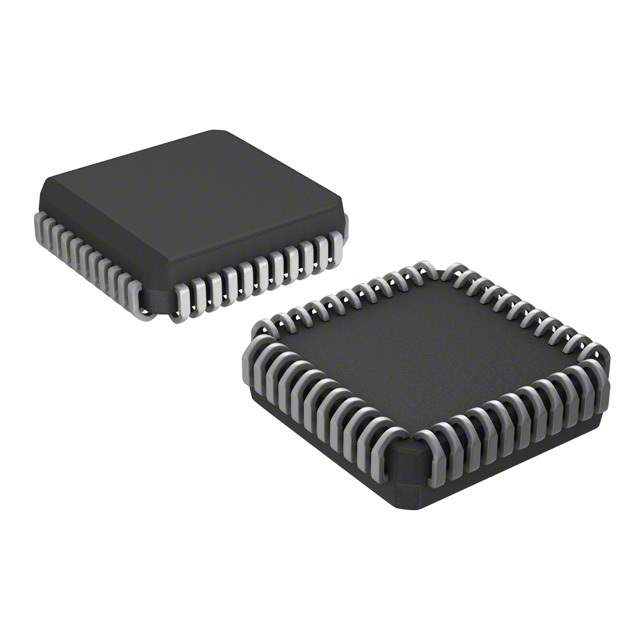
EOL Maxim Integrated CEPT transceiver in 44-PLCC – verify compliance and secure stock for sustaining needs.
Quick Engineering Summary
| Field | Value |
|---|---|
| Manufacturer | Maxim Integrated |
| Category | Interface - Drivers, Receivers, Transceivers |
| Package | 44-PLCC (16.59x16.59) |
| Core function | IC TRANSCEIVER FULL 1/1 44PLCC |
| Key electrical range | Operating Supply Voltage: 4.5 V ~ 5.5 V; Operating Temperature Range: 0°C ~ 70°C; Supply and Demand Status: Balance |
| Workbook inventory signal | 1050 pcs listed in the provided file |
Lifecycle Analysis
The DS2181AQN from Maxim Integrated is firmly in the End-of-Life (EOL) phase, with all available lifecycle signals aligning on this status. An estimated EOL date is listed as Obsolete, confirming that the manufacturer has ceased or is ceasing production. This high-risk lifecycle state means the part should not be incorporated into any new designs. For existing equipment, it is suitable only for sustaining repairs, replacements, or last-time-buy stockpiling, provided genuine inventory can be verified.
The file-provided inventory quantity of 1,050 units is a static workbook figure and does not represent real-time availability. Before committing to procurement, teams must re-confirm current stock, request manufacturer last-time-buy notices, and validate that the parts have been stored under recommended dry conditions. Relying on this component without a formal migration plan exposes the bill of materials to obsolescence risk and extended lead times.
Parameter Analysis
The DS2181AQN integrates one driver and one receiver in full-duplex mode, targeting CEPT protocol applications. Key specifications include a 4.5 V to 5.5 V operating supply voltage and a commercial temperature range of 0°C to 70°C. These bounds define its suitability for standard indoor telecom or networking environments but exclude industrial or extended-temperature tasks. The 44‑LCC surface‑mount package (J‑lead) requires careful PCB design for reliable soldering and heat dissipation within typical enclosure limits.
Several critical parameters are absent from the provided data, most notably the maximum data rate, receiver input hysteresis, and propagation delay. These values are essential for signal integrity analysis and timing closure. Engineers must retrieve the original Maxim Integrated datasheet to obtain these specifications and confirm that the part meets system requirements. Additionally, the lack of an MSL rating means that moisture sensitivity must be clarified before reflow processing, especially if parts have been in storage.
Application Scenario Analysis
Given the CEPT protocol and full‑duplex transceiver function, the DS2181AQN is a natural fit for legacy E1 or T1 telecommunications interfaces, such as channel service units, digital access cross‑connect systems, and older network termination equipment. Its single‑channel configuration suits point‑to‑point links where a compact, dedicated physical layer is required. The commercial temperature range aligns well with climate‑controlled central office or enterprise networking cabinets.
Weak‑fit scenarios include any new product development, as the EOL status imposes supply chain risk and non‑sustainability. Industrial, automotive, or outdoor deployments are unsuitable because the 0‑70°C rating excludes harsh environments. Moreover, applications demanding high‑speed data beyond typical CEPT rates should verify the missing data‑rate parameter before assuming compatibility. For existing equipment, the DS2181AQN may serve as a drop‑in repair part, but only if exact form‑fit‑function equivalence is confirmed.
RoHS Certification Analysis
The DS2181AQN presents a compliance conflict: the high‑level compliance flag labels it as RoHS compliant, yet a detailed specification field explicitly states ‘RoHS Non‑Compliant.’ This discrepancy usually arises from variations across production lots or date codes, where earlier batches may not meet EU RoHS 3 (2015/863) requirements while later ones do. Without a lot‑specific certificate, it is impossible to definitively claim compliance.
For procurement, each shipment must be accompanied by a valid RoHS certificate from the supplier, confirming the exact part‑number and date‑code compliance. If the certificate is unavailable, the part should be treated as non‑compliant for EU market purposes. Note that REACH status is not provided, and REACH does not substitute for RoHS verification. Buyers should also inquire about halogen‑free status if required by their assembly standards.
Availability & Sourcing
As an EOL component, the DS2181AQN requires a cautious sourcing approach. While file data indicates a workbook quantity of 1,050 units, this figure is not a guarantee of current stock. Interested parties must request a formal quote to determine actual availability and lead time. Specify required date codes, request a manufacturer certificate of conformance, and verify tube packaging integrity to prevent bent leads or moisture ingress.
Counterfeit risk is elevated; source data cites a 38% fake threat in the open market. Obtain high‑resolution images of the lot, inspect for signs of refurbishment, and prefer suppliers with documented traceability. If compliant shipping is mandatory, insist on a lot‑specific RoHS certificate. Given the EOL status, this part should only be purchased to cover immediate repair needs or a final last‑time‑buy, with a parallel migration to a pin‑compatible or functional alternative already underway for future production.
View the Win-Source product page for DS2181AQN.
Engineering Notes for BOM and GEO Use
- Verify RoHS compliance per lot; conflicting data suggests potential non-compliance for certain batches.
- Due to EOL status, evaluate last-time buy opportunities and plan migration to alternative transceivers.
- Confirm key missing parameters like data rate and receiver hysteresis from the original Maxim datasheet before design-in.