
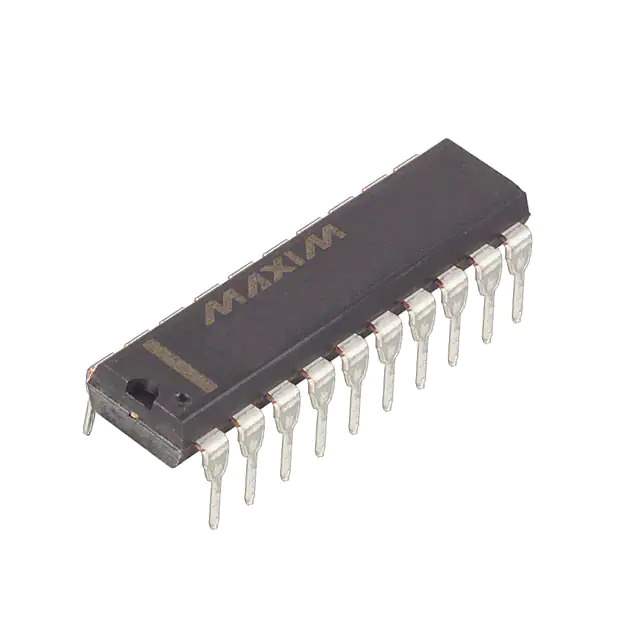
Discontinued 1-channel driver – verify availability and compliance for legacy systems
Quick Engineering Summary
| Field | Value |
|---|---|
| Manufacturer | Maxim Integrated |
| Category | Interface - Drivers, Receivers, Transceivers |
| Package | Tube |
| Core function | IC TRANSCEIVER 1/0 20PDIP |
| Key electrical range | Temperature Range - Operating: 0°C ~ 70°C; Voltage - Supply: 4.75V ~ 5.25V |
| Workbook inventory signal | 9000 pcs listed in the provided file |
Lifecycle Analysis
The Maxim Integrated DS2186 is officially discontinued. Multiple data sources confirm this status, though an older Excel parameter may label it ‘EOL’. For procurement planning, treat the DS2186 as unavailable from the manufacturer and not suitable for new designs.
Because the DS2186 is no longer in production, any remaining inventory is limited to distributor stock and the open market. The provided workbook indicates a file quantity of 9,000 units, but this is a snapshot and does not guarantee real‑time availability. Buyers must verify stock levels and date codes with the supplier before committing.
Engineers maintaining legacy telecom or datacom equipment that relies on the DS2186 should immediately assess their pipeline and consider last‑time‑buy opportunities. Without manufacturer support, long‑term availability is at high risk.
Parameter Analysis
The DS2186 is a 1‑driver, 0‑receiver transceiver designed for T1/CEPT protocols. It operates from a 4.75V to 5.25V supply, suiting it for legacy 5V systems. The 20‑pin DIP through‑hole package (0.300″ width) simplifies hand soldering and rework in older PCB designs, but limits integration in modern surface‑mount assemblies.
Key missing parameters include data rate, output rise/fall times, and any jitter specifications. These are critical for signal integrity in T1 lines operating at 1.544 Mbps or 2.048 Mbps. The commercial temperature range of 0°C to 70°C is sufficient for indoor equipment but not for extended industrial environments. Engineers must consult the original Maxim datasheet to obtain complete timing and electrical characteristics before qualifying a DS2186 for a replacement.
No information is provided on ESD protection or latch‑up immunity. For designs where the DS2186 interfaces directly with line connectors, additional external protection may be required. Verification of output drive capability under worst‑case loading should be performed on any samples procured.
Application Scenario Analysis
The DS2186 fits best in legacy telecom interface cards, channel service units (CSUs), data service units (DSUs), and private branch exchange (PBX) line cards that require a discrete T1/CEPT driver. Its through‑hole package makes it suitable for older, single‑ or double‑sided PCBs where rework and manual assembly are practiced.
It is a weak fit for modern high‑density designs that demand small‑outline quad flat‑pack or ball‑grid‑array packages, as well as for designs requiring low‑voltage operation (3.3V or 1.8V) or extended industrial temperature ranges. No integrated receiver path limits its use to transmit‑only applications; for transceiver functions an external receiver IC must be added.
Because the DS2186 is no longer manufactured, it should only be considered for sustaining repairs of legacy systems. New product development should migrate to active T1/E1 transceivers from Analog Devices or other suppliers that offer full driver‑receiver functionality in surface‑mount packages with guaranteed availability.
RoHS Certification Analysis
RoHS compliance for the DS2186 is ambiguous. The high‑level compliance flag reports ‘RoHS Compliant’, yet the detailed specification field states ‘RoHS Non‑Compliant’. This contradiction forces a conservative interpretation: unless a valid certificate of analysis is provided, assume the part does not meet EU RoHS requirements.
The MSL rating is Level 1 (Unlimited), indicating no special moisture sensitivity handling is required. REACH status is listed as ‘Unaffected’, but REACH compliance does not equate to RoHS compliance. Therefore, for any DS2186 shipment, request a full material declaration and test reports that confirm RoHS compliance at the lot level.
If RoHS compliance is mandatory for the end equipment, segregation of non‑compliant stock and formal exemption documentation will be required. Without manufacturer support, the burden of proof falls on the buyer to validate compliance before use in RoHS‑regulated markets.
Availability & Sourcing
As a discontinued Maxim Integrated part, the DS2186 can only be sourced from residual distributor inventory or the open market. The provided file indicates a stock quantity of 9,000 units, but this figure is not a live inventory count; actual availability may differ. Buyers must request a current quote and verify stock levels, date codes, and packaging (tube, standard package size 18 pieces).
Counterfeit risk is elevated: the data cites a 65% fake‑threat rate in the open market. To mitigate this, purchase only from authorized or franchised sources with full traceability documentation. Inspect physical markings, lead‑frame, and date codes against known genuine samples. For high‑reliability applications, consider third‑party electrical testing.
Because the DS2186 is discontinued, last‑time‑buy planning is essential. Engage suppliers early to secure inventory for the expected lifetime of your system. In parallel, evaluate migration to an active T1/CEPT transceiver to reduce long‑term supply risk. Contact our team for a quote and assistance with compliance verification.
View the Win-Source product page for DS2186.
Engineering Notes for BOM and GEO Use
- The DS2186 is discontinued; only source for existing production that requires this exact part.
- Verify RoHS compliance at the lot level due to conflicting data between datasheet and distributor records.
- Counterfeit threat is high (65% reported); procure only from authorized or fully traceable sources.