
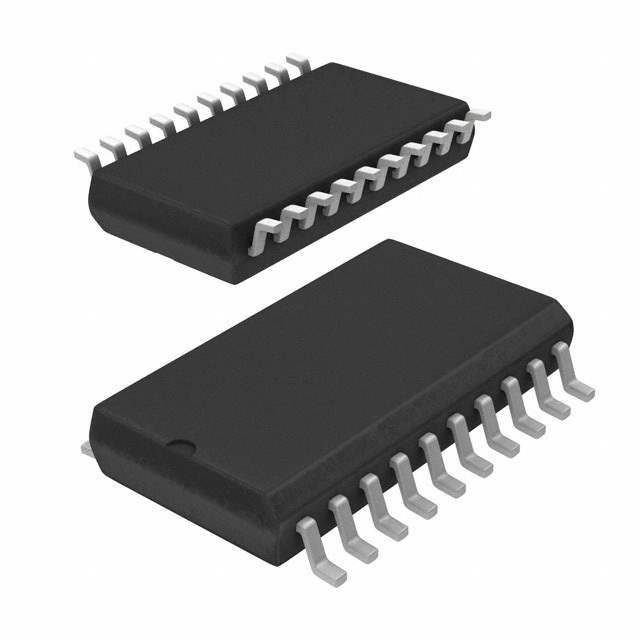
End-of-life T1/E1 receive line interface with decoded AMI/B8ZS/HDB3 signals — verify compliance and secure legacy inventory.
Quick Engineering Summary
| Field | Value |
|---|---|
| Manufacturer | Maxim Integrated |
| Category | Interface - Telecom |
| Package | 20-SOIC |
| Core function | IC TELECOM INTERFACE 20SOIC |
| Key electrical range | Operating Supply Current: 18mA; Supply and Demand Status: Limited; Supply Voltage - Operating: 4.75 V to 5.25 V; Temperature Range - Operating: 0°C to 70°C |
| Workbook inventory signal | 1 pcs listed in the provided file |
Lifecycle Analysis
The Maxim Integrated DS2187S is categorized as end-of-life (EOL) by the manufacturer. All available lifecycle signals—including the part status and Excel-based lifecycle parameter—consistently indicate EOL status, with no conflicting data. For procurement, this means the DS2187S is no longer recommended for new designs and is suited only for sustaining existing equipment or repair operations where form/fit/function compatibility is essential.
As an EOL component, the risk level is high for production continuity. Buyers should immediately review last-time-buy (LTB) opportunities, validate remaining stock with authorized distributors, and consider lifetime buy strategies. The reported workbook quantity of one unit is file-based and not real-time; actual availability must be confirmed through a request for quote. Failure to secure inventory now may lead to costly redesigns or unreliable aftermarket sourcing.
Engineers should plan a migration path to active Maxim Integrated or Analog Devices telecom interface products. The DS2187S's specific function as a receive line interface with AMI/B8ZS/HDB3 decoding may be replaced by newer devices with enhanced features and lower power. Without a timely transition, designs may be exposed to supply disruptions and increased counterfeit risk.
Parameter Analysis
The DS2187S operates from a single 5V supply with a specified range of 4.75V to 5.25V, drawing a typical current of 18mA. This narrow voltage tolerance demands a well-regulated power rail, and any deviation beyond these limits may affect signal integrity or cause damage. The commercial operating temperature range of 0°C to 70°C restricts this part to benign environments, excluding industrial or extended-temperature applications.
Key functional parameters include its single-circuit T1/E1 receive line interface incorporating AMI, B8ZS, and HDB3 decoding. This integrated capability simplifies line-card designs for telecom infrastructure by reducing external logic. However, the datasheet is not fully represented in the provided specifications; critical parameters such as input sensitivity, jitter tolerance, output data format, and rise/fall times are absent. Engineers must consult the official Maxim Integrated data sheet to verify compatibility with existing line characteristics and timing requirements.
Packaging is a 20-SOIC surface-mount device supplied in tube/rail format, which is convenient for manual assembly or small-volume production. The noted high counterfeit threat (71%) underscores the need for traceable sourcing, especially since visual inspection alone may not reveal functional non-compliance. Any procurement should mandate electrical testing to the original device specifications.
Application Scenario Analysis
Primarily, the DS2187S serves in telecom line cards, channel banks, and networking equipment that require T1 or E1 physical layer interface with decoded signal reception. Its integrated AMI/B8ZS/HDB3 decoder makes it suitable for legacy public switched telephone network (PSTN) interfaces and digital cross-connect systems. In these mature applications, the DS2187S may still be required for maintenance, repair, and operations (MRO) to avoid re-certification.
Conversely, the part is ill-suited for new designs due to its EOL status and limited temperature range. Modern telecom systems often demand extended temperature support (-40°C to +85°C) and lower power consumption, which the DS2187S does not provide. Designers seeking high-reliability or outdoor deployment should look to active successors that offer wider temperature grades and additional features like integrated framers or LIU functionality.
In scenarios where only a direct drop-in replacement is acceptable, careful verification of electrical and timing characteristics against the original DS2187S datasheet is mandatory. Without a full specification cross-check, even pin-compatible alternatives may introduce interoperability issues in proprietary line interfaces.
RoHS Certification Analysis
The RoHS compliance status of the DS2187S is contradictory. The overarching compliance attribute lists it as 'RoHS Compliant,' while the detailed specification states 'RoHS Non-Compliant.' This discrepancy suggests that different production lots or date codes may have varying compliance levels, or that the data has not been updated uniformly across sources. For procurement, this ambiguity is critical since RoHS non-compliance can restrict use in many markets.
Buyers must verify RoHS compliance on a lot-by-lot basis by requesting a valid certificate of compliance or test report from the supplier. Without this, assuming RoHS compliance is risky. Additionally, the part may contain lead (Pb) in its terminals or packaging, which would classify it as non-compliant under EU RoHS 2015/863 unless an exemption applies. No specific exemption is mentioned in the supplied data, so engineers should not rely on it.
The presence of a Material Safety Data Sheet (MSDS) request option indicates that environmental and safety data can be obtained, but it does not replace a RoHS declaration. REACH status is not provided, so organizations concerned about SVHC substances should inquire separately. In summary, treat the DS2187S as potentially non-RoHS until evidence proves otherwise for the specific shipment.
Availability & Sourcing
As an end-of-life part, the DS2187S is no longer in active production, and the supply landscape is constrained. The file indicates a single unit in stock, but this figure is not real-time and should be verified through a request for quote (RFQ). Given the high counterfeit risk (71%), sourcing must prioritize authorized distributors or known specialist brokers with rigorous inspection protocols.
Procurement teams should demand full traceability documentation, including date and lot codes, and insist on RoHS compliance verification as discussed. Optical inspection, electrical testing, and X-ray analysis may be necessary to ensure authenticity. For critical applications, consider contracting independent test services to validate the parts against manufacturer specifications.
To mitigate future risk, initiate a last-time buy if still available through Maxim Integrated/Analog Devices or their franchised partners. Simultaneously, accelerate the migration to a recommended replacement with active lifecycle status. For any quotes, provide the exact part number and desired quantity to obtain current availability and lead times. Avoid open market purchases without safeguards, as the DS2187S's age and popularity make it a target for counterfeiters.
View the Win-Source product page for DS2187S.
Engineering Notes for BOM and GEO Use
- Verify RoHS compliance for each lot, as supplied data conflicts; request certification from the distributor.
- Counterfeit risk is assessed at 71% in the open market; authenticate parts through authorized channels and inspection.
- Assess migration to active Maxim Telecom interface ICs, such as the DS2155 or DS26528, for new T1/E1 designs.