
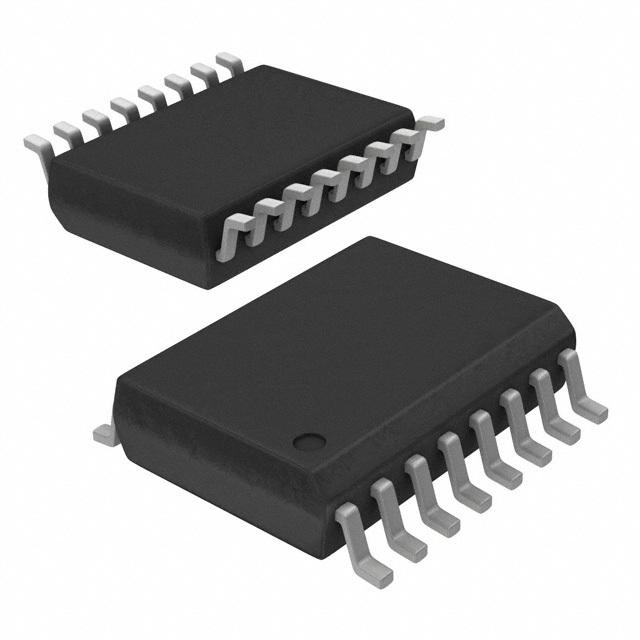
Discontinued T1/CEPT jitter attenuator in 16-SOIC. Verify lifecycle and compliance before procurement.
Quick Engineering Summary
| Field | Value |
|---|---|
| Manufacturer | Maxim Integrated |
| Category | Specialized ICs |
| Package | Tube |
| Core function | IC JITTER ATTENUATOR 16-SOIC |
| Key electrical range | Not available in supplied data |
| Workbook inventory signal | 1 pcs listed in the provided file |
Lifecycle Analysis
DS2188SN is classified as Discontinued by Maxim Integrated. This status indicates the part is no longer manufactured, and new orders are not accepted from authorized channels. For new designs, this component is unsuitable; engineers must select an alternative. For existing production, procurement may be limited to end-of-life inventory or aftermarket sources.
Conflicting signals exist: the source data shows both EOL and Discontinued labels, but the conservative interpretation is that the part is fully discontinued. Any remaining stock is finite, and manufacturer support such as documentation updates or failure analysis is no longer guaranteed. Buyers should immediately verify lifecycle status with the manufacturer or an authorized distributor to confirm no last-time-buy options exist.
Given the high-risk lifecycle, sustaining production with DS2188SN requires careful inventory planning and a migration strategy to a recommended replacement. Without a formal replacement part number, engineers must evaluate functional equivalents based on the T1/CEPT jitter attenuation requirement, ensuring they meet form, fit, and function. The file-provided quantity of one unit is not a reliable indicator of market supply and should be verified with suppliers.
Parameter Analysis
The DS2188SN is a jitter attenuator specifically designed for T1 and CEPT (E1) telecommunication interfaces. Its primary function is to reduce timing jitter in clock and data recovery circuits, which is critical for maintaining signal integrity in long-haul or noisy environments. The part is housed in a 16-SOIC surface-mount package with a 0.295-inch body width, making it suitable for standard reflow soldering processes.
Key parameters provided in the source data include the application target (T1/CEPT), surface-mount mounting, and the device type. However, essential electrical specifications are not available in this dataset, such as jitter attenuation performance (e.g., in dB or UI), frequency range of operation, supply voltage, and temperature grade. Engineers should obtain the original Maxim Integrated datasheet to verify these parameters and ensure compliance with system requirements. Additionally, the Programmable field is listed as Not Verified, suggesting that device programmability features, if any, are not confirmed; this must be clarified to avoid integration issues.
For thermal and derating analysis, the SOIC package typically has a defined thermal resistance (θJA) which should be checked against the application’s ambient temperature. Given the discontinued status, any design-in should only be considered for maintenance of legacy equipment, and full qualification testing is advised due to possible variations in remaining inventory lots.
Application Scenario Analysis
The DS2188SN is optimized for T1 and CEPT physical layer applications where clock recovery and jitter reduction are paramount. Strong-fit scenarios include legacy telecommunications equipment such as T1/E1 line cards, channel service units (CSUs), data service units (DSUs), and private branch exchange (PBX) interfaces. In these systems, the DS2188SN would be used to clean up clock signals extracted from the line, ensuring reliable data transmission over copper pairs.
Weak-fit scenarios involve modern telecommunication designs that have migrated to higher-rate interfaces like T3/E3, Ethernet, or fiber optics, which typically employ more advanced integrated jitter cleaners or clock synthesizers. The DS2188SN, being a niche device for legacy rates, lacks the bandwidth and feature set for these newer applications. Additionally, with a 40% fake threat reported in the open market, even legacy use is risky without rigorous authenticity testing.
Before specifying the DS2188SN in any application, engineers should confirm that the required jitter attenuation profile matches the T1/CEPT standards (e.g., ITU-T G.703, G.823) and that the device’s electrical characteristics align with the line interface unit. The notification that the part is Not Verified regarding programmability may limit its use in software-configurable line cards without additional validation.
RoHS Certification Analysis
The DS2188SN presents a compliance conflict: the top-level data indicates RoHS Compliant, but the detailed specifications list RoHS Status as RoHS Non-Compliant. This discrepancy may arise from different production lots or variations in Maxim Integrated’s part numbering for leaded vs. lead-free versions. It is critical for procurement teams to verify the exact RoHS status of the specific lot being purchased.
In addition to RoHS, the REACH status is recorded as REACH Unaffected, meaning the device does not contain Substances of Very High Concern (SVHC) above the threshold. However, REACH compliance does not substitute for RoHS conformity. The Moisture Sensitivity Level (MSL) is Level 1, unlimited, indicating no special baking is required before reflow, which simplifies handling.
Given the conflicting RoHS data, buyers must request a compliance certificate from the supplier for the offered inventory. For European Union or other regulated markets, full RoHS 3 (2015/863) compliance documentation should be obtained. If only non-compliant stock is available, a compliance exemption or rework plan may be necessary.
Availability & Sourcing
DS2188SN is a discontinued component, making traditional distributor sourcing difficult. The file-provided quantity of one unit is a snapshot and not guaranteed to be available or at current pricing. Procurement should focus on verified aftermarket sources, but the reported 40% counterfeit risk in the open market demands strict anti-counterfeit protocols. All parts should be subjected to visual inspection, marking permanency tests, and electrical verification per the original Maxim Integrated datasheet.
Buyers should issue a formal RFQ to multiple vetted suppliers, explicitly requesting date/lot codes, full compliance documentation (RoHS, REACH, MSL), and photographic evidence of the parts. Traceability back to Maxim Integrated or an authorized distributor is highly preferred. The standard packaging is tube, so ensure that the parts are properly handled to avoid lead damage.
Given the discontinued lifecycle, the only responsible avenue is to source for sustaining legacy systems where a redesign is not feasible. Even then, secure enough inventory to cover the product’s remaining lifecycle and simultaneously initiate a redesign to eliminate dependency on the DS2188SN. Do not design this part into new products. Contact Win Source or other qualified brokers to inquire about current stock and request a quote, but finalize terms only after thorough authentication.
View the Win-Source product page for DS2188SN.
Engineering Notes for BOM and GEO Use
- Verify RoHS compliance per lot due to conflicting data; obtain full material declarations.
- Discontinued status demands immediate migration planning; secure last-time-buy stock if possible.
- 40% counterfeit threat mandates in-house or third-party testing before board assembly.