
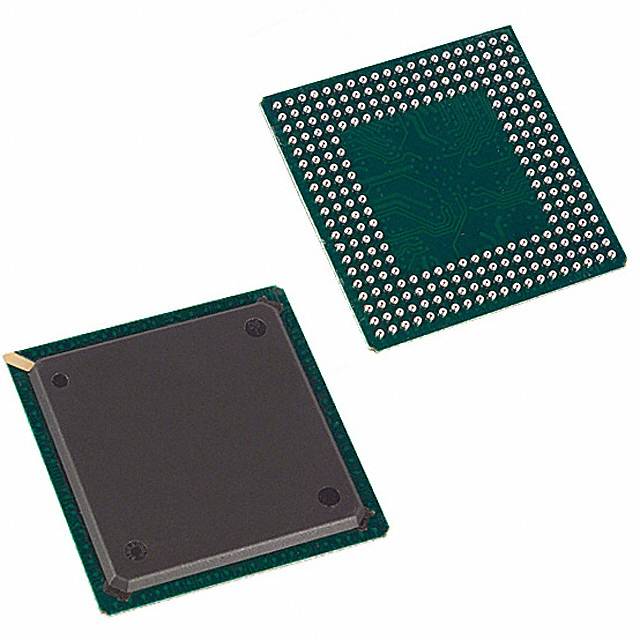
Discontinued 4-circuit E1 transceiver in 256-BGA; verify lifecycle and compliance before procurement.
Quick Engineering Summary
| Field | Value |
|---|---|
| Manufacturer | Maxim Integrated |
| Category | Interface - Telecom |
| Package | Tube |
| Core function | IC TELECOM INTERFACE 256BGA |
| Key electrical range | Voltage - Supply: 3.3V |
| Workbook inventory signal | 120 pcs listed in the provided file |
Lifecycle Analysis
The DS21Q354 from Maxim Integrated is officially discontinued. All available lifecycle signals—EOL parameter, Lifecycle Status, and Product Status—consistently indicate end-of-life. For engineers and buyers, this means the part should not be used in new designs. Its high risk level reflects limited future availability and the absence of ongoing manufacturer support.
For sustaining production, existing inventory may cover repair or legacy system maintenance, but procurement must verify last-time-buy notices and manufacturer discontinuation schedules. The reported workbook quantity of 120 units is file-provided and should be confirmed through a formal RFQ before committing to a purchase.
Given the discontinuation, consider evaluating alternative parts or planning a redesign if the DS21Q354 is critical to your system. Any remaining stock should be secured quickly, as supply will only decrease over time.
Parameter Analysis
The DS21Q354 is a four-circuit E1 transceiver operating from a 3.3V supply. The circuit count is a key decision point for channel density—each device handles four independent E1 links, which is important for line card designers optimizing board real estate. The 3.3V rail is standard for modern telecom equipment, but designers must ensure proper decoupling and power sequencing.
Packaged in a 256-BGA with a 27x27 mm body, the device requires careful PCB layout. BGA packages demand controlled impedance traces, adequate thermal vias, and rework considerations. Surface mount attachment demands attention to MSL Level 3 handling, which requires baking if moisture exposure exceeds 168 hours.
Missing from the provided data are critical parameters such as operating temperature range, power dissipation, and jitter tolerance. Without these, qualification for specific environments is incomplete. Verify these values in the manufacturer’s datasheet before integrating into a design. The interface type, E1, confirms its use in 2.048 Mbps telecom systems, but data rate tolerance and framing options are not specified here.
Application Scenario Analysis
The DS21Q354 is a strong fit for legacy E1 telecom interfaces such as PBX switches, channel banks, and T1/E1 multiplexers where 2.048 Mbps framed or unframed transport is required. Its four circuits suit moderate-density line cards designed during the product’s active lifecycle. Systems originally designed around this part can continue using it for repairs, but new designs should avoid reliance on a discontinued IC.
In weak-fit scenarios, the DS21Q354 is not suitable for modern IP-based or high-speed interfaces (e.g., Gigabit Ethernet, T3/E3, SDH). Its BGA package may also be overkill for single-channel applications where a smaller footprint is preferred. Without temperature range data, it is unclear if the part is rated for industrial or extended temperature environments; this must be confirmed if deployment outside commercial ranges is needed.
Given the discontinued status, the primary viable application is sustaining existing equipment. Any new project requiring E1 transceivers should select an active alternative with long-term availability.
RoHS Certification Analysis
RoHS compliance for the DS21Q354 is ambiguous. The high-level compliance object indicates RoHS Compliant, but the specification table explicitly lists RoHS Status as Non-Compliant. This discrepancy likely arises from different data sources or lot-level variations. Buyers should treat the part as potentially non-compliant unless a certificate of conformance is provided for the specific lot.
The REACH status is Unaffected, which is separate from RoHS and does not guarantee RoHS compliance. MSL Level 3 (168 hours) is provided, indicating moisture sensitivity and a need for proper storage and baking procedures. No exemptions are cited in the data, so any claim of compliance would need to clarify if exemptions (e.g., lead in solder) apply.
For organizations requiring RoHS 3 (EU 2015/863) compliance, this part presents a risk. Verify per lot and request documentation during procurement. If non-compliant lots are unacceptable, consider sourcing from authorized distributors who can provide RoHS-compliant stock or transition to a modern replacement.
Availability & Sourcing
As a discontinued Maxim Integrated part, the DS21Q354 requires careful sourcing. The workbook indicates 120 units in stock, but this figure is not a real-time guarantee—availability must be confirmed via quote. The high counterfeit threat (33% in open market) means buyers must insist on traceability documentation, date/lot code verification, and authorized distribution channels.
When requesting a quote, specify packaging (Tube, standard package of 40), and ask for RoHS and REACH certificates to validate compliance. Given the lifecycle status, consider purchasing the available stock promptly to cover legacy needs, but avoid holding large inventories without a clear demand plan.
Evaluate migration paths early: engaging with the manufacturer’s successors (Analog Devices) may yield replacement recommendations. For immediate needs, work with trusted suppliers who can provide inspection reports and warranty against counterfeit.
View the Win-Source product page for DS21Q354.
Engineering Notes for BOM and GEO Use
- DS21Q354 is discontinued; verify end-of-life notices and consider migration paths for new designs.
- Ensure RoHS compliance is confirmed per lot, as status may vary; check for REACH compliance.
- High counterfeit risk (33% open market threat) demands trusted sourcing and rigorous incoming inspection.