
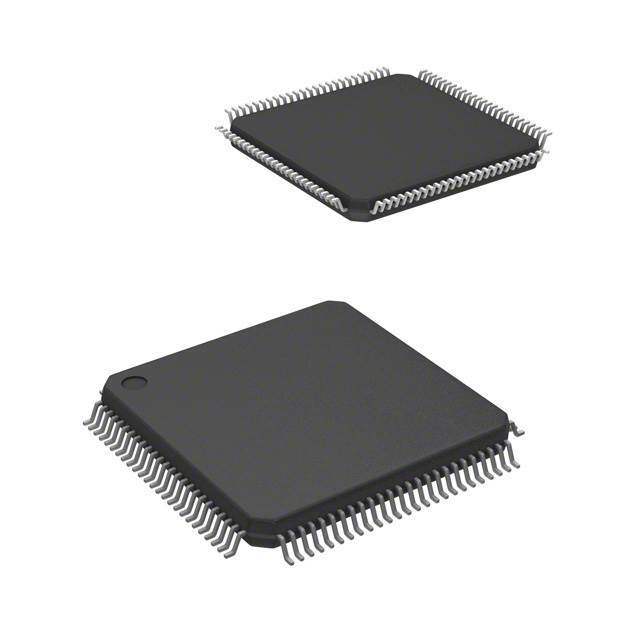
End-of-life quad E1 transceiver with integrated line interface and alarms. Verify last-time buy dates and source carefully.
Quick Engineering Summary
| Field | Value |
|---|---|
| Manufacturer | Maxim Integrated |
| Category | Interface - Telecom |
| Package | 100-LQFP (14x14) |
| Core function | IC TELECOM INTERFACE 100LQFP |
| Key electrical range | Operating Supply Current: 230mA; Supply and Demand Status: Balance; Supply Voltage - Operating: 3.14 V to 3.47 V; Temperature Range - Operating: 0°C to 70°C |
| Workbook inventory signal | 1520 pcs listed in the provided file |
Lifecycle Analysis
The DS21Q50L+ is classified as End-of-Life (EOL), meaning the manufacturer has ceased or announced plans to cease production. For new designs, this component must not be specified, as long-term availability is not guaranteed. For existing production, the EOL status mandates an immediate review of last-time buy (LTB) opportunities and final shipment dates to secure sufficient stock for product lifecycle needs.
All lifecycle signals from the dataset confirm the EOL status; there are no conflicting indicators. This high-risk designation requires procurement teams to treat the part as non-cancelable and non-returnable once purchased. File-provided inventory indicates 1520 units, but this is a static snapshot and not real-time availability. Buyers should request a quote to validate current stock levels and consider the part only for repair, maintenance, or legacy system continuation.
Migration planning should begin immediately, as Maxim Integrated (now Analog Devices) does not list a direct replacement. Engineers must evaluate alternative E1 transceivers with similar functionality, potentially from Analog Devices’ updated portfolio, and budget for redesign and requalification.
Parameter Analysis
The DS21Q50L+ integrates four independent E1 transceiver circuits, making it suitable for multi-port line cards. Its operating voltage range of 3.14V to 3.47V and supply current of 230mA are critical for power budgeting and thermal design. The 100-LQFP (14x14 mm) surface-mount package demands careful PCB layout to ensure signal integrity for the E1 interfaces.
Key functional features include built-in AIS alarm detection and generation, loopback modes, PRBS generator/detector, and remote diagnostics, which reduce external component count. Operation is specified from 0°C to 70°C, limiting deployment to controlled indoor environments. The datasheet does not explicitly define jitter tolerance, return loss, or line interface standards compliance beyond the generic “E1” interface description, so these must be verified against system requirements.
Engineers should confirm E1 pulse shape templates (e.g., G.703) and intrinsic jitter performance before finalizing the design. Missing specifications such as power dissipation per channel, electrostatic discharge ratings, and detailed timing parameters also require clarification from the manufacturer’s documentation to ensure reliable integration.
Application Scenario Analysis
The DS21Q50L+ is a strong fit for legacy E1 telecommunications infrastructure, including PBX systems, channel banks, multiplexers, and cellular base station backhaul equipment that still rely on traditional TDM interfaces. Its four‑channel architecture is ideal when multiple E1 lines need to be terminated on a single card, and its integrated line interface and diagnostic features simplify board design.
Weak-fit scenarios include any new product development, where the EOL status and industrial temperature range (0°C to 70°C) are unsuitable. Outdoor or extended‑temperature applications require an industrial‑grade alternative. Designs migrating to Ethernet‑based backhaul or higher‑speed TDM (e.g., T3/E3) should avoid this part entirely.
The 29% open‑market counterfeit threat underscores the need for authorized sourcing, especially for military, medical, or safety‑critical systems where reliability is paramount. Without explicit certifications (e.g., telecom approvals), compliance must be validated during system qualification.
RoHS Certification Analysis
The DS21Q50L+ is listed as RoHS Compliant. Under Maxim Integrated’s typical policies, this implies conformity to RoHS 3 (EU Directive 2015/863), which restricts ten hazardous substances including lead, mercury, and phthalates. While the compliance is a strong indicator, the supplied data does not confirm REACH SVHC adherence, so a separate REACH declaration should be obtained if needed.
For EOL components, RoHS compliance may be based on historical production lots; buyers should verify that the specific date and lot codes being offered still meet current RoHS requirements. Although no exemptions are noted in the dataset, some telecom SMD packages may contain lead in internal die attach or solder balls under older exemptions (e.g., 7(a)). Requesting a full material content certificate from the distributor is advisable.
Moisture sensitivity level (MSL) data is absent, but the storage condition note (“dry storage cabinet & humidity protection package”) suggests that proper handling per JEDEC standards is necessary to prevent moisture-related defects during reflow soldering.
Availability & Sourcing
As an EOL part, the DS21Q50L+ requires immediate and cautious sourcing. The file reports 1520 units in stock, but this is a non‑binding snapshot; current availability must be confirmed through a request for quote (RFQ). Buyers should also inquire about remaining factory stock or last‑time buy allocations directly from Maxim Integrated (now Analog Devices) or authorized distributors.
Given the 29% open‑market fake component threat, traceability is non‑negotiable. Every shipment must include full lot codes, date codes, and manufacturer certificates of conformance. Visual and electrical testing should be performed on samples from any non‑authorized source. Packaging in original trays and adherence to dry‑pack storage conditions (as noted) are important for incoming inspection.
For sustaining production, secure as many units as the product’s projected remaining life demands. For new designs, no amount of available stock justifies the long‑term risk; immediately evaluate migration to active Analog Devices interface solutions. All quotes should include a lifecycle verification statement and RoHS compliance documentation.
View the Win-Source product page for DS21Q50L+.
Engineering Notes for BOM and GEO Use
- Verify last-time buy and end-of-life notices with the manufacturer before committing to production.
- The 29% fake threat rate warrants rigorous supply chain authentication, including lot and date code verification.
- Operating temperature range of 0°C to 70°C limits use to controlled environments; consider thermal derating.