
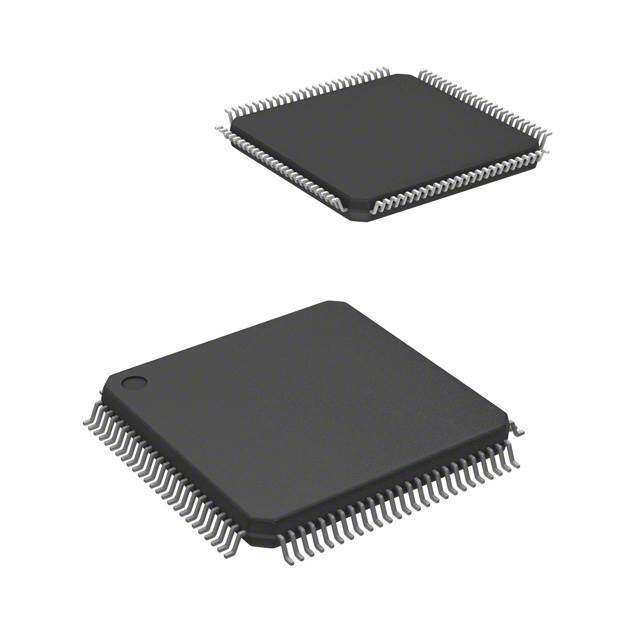
End-of-Life telecom interface IC with E1 transceiver functionality and integrated diagnostics.
Quick Engineering Summary
| Field | Value |
|---|---|
| Manufacturer | Maxim Integrated |
| Category | Interface - Telecom |
| Package | 100-LQFP (14x14) |
| Core function | IC TELECOM INTERFACE 100LQFP |
| Key electrical range | Operating Supply Current: 230mA; Supply and Demand Status: Balance; Supply Voltage - Operating: 3.14 V to 3.47 V; Temperature Range - Operating: -40°C to 85°C |
| Workbook inventory signal | 1 pcs listed in the provided file |
Lifecycle Analysis
The DS21Q50LN+ has been designated End-of-Life (EOL) by Maxim Integrated. All supplied lifecycle signals align on this status, with no conflicting data. This means the part is not recommended for new designs and should only be used for maintaining existing equipment. For new production, engineers should consider alternative parts or redesign with active components. For existing systems, it is critical to verify the manufacturer’s last-time buy (LTB) date and any remaining order windows. The file-provided inventory shows a quantity of one unit, which is not a guarantee of real-time availability. Procurement teams should request a quote to confirm current stock and plan for life-of-product needs. EOL status also implies diminishing support from the manufacturer, so technical documentation and application assistance may become limited over time.
Parameter Analysis
The DS21Q50LN+ is a 4-channel E1 transceiver with a narrow supply voltage range of 3.14V to 3.47V and a typical operating current of 230mA. These parameters demand a well-regulated power supply; deviation can affect performance or damage the IC. The 230mA current is significant—thermal management and power budgeting are essential in dense designs. The -40°C to 85°C industrial temperature range supports outdoor or uncontrolled environments, but junction temperature derating should be verified. The 100-LQFP package with 0.5mm pitch requires careful PCB layout and soldering process control. Integrated features include AIS alarms, loopback, PRBS generator/detector, and remote diagnostics, which reduce external test circuitry. Missing from the supplied data are critical E1 line-interface specs like jitter tolerance, pulse shape, and internal termination; these must be confirmed from the official Maxim datasheet before use, even for legacy maintenance.
Application Scenario Analysis
Strong-fit scenarios include E1 primary rate interface cards, digital access cross-connect switches, channel banks, and PBX systems where multi-channel E1 termination is required. The integrated AIS alarm detection/generation and PRBS diagnostics make it suitable for equipment requiring built-in self-test and remote fault monitoring. Loopback functions support line and diagnostic testing without external equipment. Weak-fit or caution scenarios include designs requiring newer standards like TDM over IP, or where power dissipation must be minimized—230mA may be high for battery-powered or ultra-compact designs. As an EOL part, it is not suitable for any new platform development; it should only be used to duplicate existing proven designs for repair or limited production runs. Verify that the 3.3V-only operation aligns with system backplanes, as some legacy telecom equipment uses 5V signaling.
RoHS Certification Analysis
The DS21Q50LN+ is marked as RoHS Compliant in supplied data, indicating compliance with EU RoHS directives, likely RoHS 2 (2011/65/EU) or later. No specific exemptions are listed. Given the EOL status, compliance may be based on the original manufacturing lot; new old stock may still be compliant, but procurement teams should request a certificate of compliance (CoC) for each lot to ensure it meets current RoHS requirements (EU 2015/863 for RoHS 3). The data does not mention REACH or halogen-free status, so if these are needed, further verification with the supplier is advised. With the noted 41% counterfeit threat in open market, ensuring genuine RoHS-compliant parts requires sourcing from authorized channels with full traceability documentation.
Availability & Sourcing
The DS21Q50LN+ is an EOL product with high risk of limited availability. One unit is listed in the file-provided inventory, but this is not real-time data. Buyers should request a quote for current stock and lead times. Given EOL, it is critical to secure sufficient stock for all production and field service requirements. Work with authorized distributors to verify last-time buy windows and any remaining factory inventory. Because of the 41% fake threat rate in the open market, avoid unauthorized brokers; insist on full lot traceability, date codes, and RoHS compliance certificates. The part comes in tray packaging, stored in dry cabinet with humidity protection. For high-reliability applications, consider third-party testing for authenticity and shelf-life verification. When quoting, specify the exact part number DS21Q50LN+ to avoid wrong variants. Plan for migration to an active alternative as early as possible to mitigate supply chain risk.
View the Win-Source product page for DS21Q50LN+.
Engineering Notes for BOM and GEO Use
- Secure last-time buy authorization from Maxim Integrated to cover all remaining production needs.
- Verify electrical and thermal margins with actual 230mA supply current and 3.3V regulation in your system.
- Require full traceability and RoHS certification from distributors due to high counterfeit risk.