
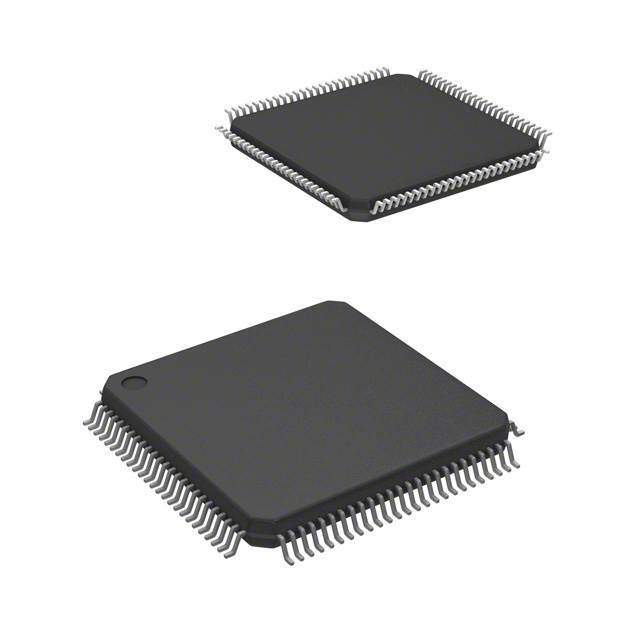
Comprehensive sourcing resource for DS21Q59LN+ E1 interface IC, covering lifecycle, specs, applications, and compliance.
Quick Engineering Summary
| Field | Value |
|---|---|
| Manufacturer | Maxim Integrated |
| Category | Interface - Telecom |
| Package | 100-LQFP |
| Core function | IC TELECOM INTERFACE 100LQFP |
| Key electrical range | Current - Supply: 230mA; Supply and Demand Status: Limited; Supply Voltage (V): 3.14V ~ 3.47V; Temperature Range - Operating: 0°C ~ 70°C |
| Workbook inventory signal | 10 pcs listed in the provided file |
Lifecycle Analysis
The DS21Q59LN+ is currently listed as Active with a low risk level, indicating full manufacturer support for new designs and ongoing production. This status is consistent across all provided lifecycle signals, with no conflicts reported. Engineers can confidently select the DS21Q59LN+ for new telecommunications interface projects.
Given the Active lifecycle status, sourcing teams should prioritize standard procurement channels and long-term supply agreements. It is still advisable to periodically revalidate the status directly with Maxim Integrated (now Analog Devices) or authorized distributors, as manufacturer roadmaps can change. The file-provided inventory shows a quantity of 10 units, which should not be considered a guarantee of real-time availability but rather a snapshot requiring a formal quote for current levels.
Parameter Analysis
The DS21Q59LN+ integrates four E1 transceivers in a single 100-LQFP package, making it a space-efficient solution for multi-port line cards. Key electrical parameters include a supply voltage range of 3.14V to 3.47V and a supply current of 230mA, which directly influence power supply design and thermal management. Designers must ensure adequate decoupling and plane capacitance to accommodate the current demand, especially in dense boards.
The operating temperature range of 0°C to 70°C defines its suitability for commercial environments only; applications requiring extended or industrial temperature ranges would need a different part. The MSL 3 rating requires careful moisture handling and proper baking if the tray packaging is opened outside of controlled conditions. Important parameters not provided in the available data—such as jitter tolerance, transmit pulse shape compliance, and return loss characteristics—must be verified from the official datasheet to ensure E1 line interface compliance.
Application Scenario Analysis
The DS21Q59LN+ is engineered for E1 telecommunication interface applications, particularly where multiple E1 channels are aggregated. Typical use cases include digital access cross-connect systems, channel banks, wireless base station backhaul, and enterprise PBX gateways. The inclusion of alarm detection and generation, loopback, and PRBS functions simplifies line diagnostics and system testing, making it a strong fit for carrier-grade equipment.
However, this device is not suited for applications requiring extended temperature ranges or extreme vibration, as its commercial 0°C–70°C rating limits environmental resilience. Additionally, designs requiring interfaces other than E1—such as T1/J1 or higher-rate telecom standards—would need a different transceiver family. For rack-mounted indoor telecom equipment with multiple E1 ports, the DS21Q59LN+ offers a reliable, integrated solution.
RoHS Certification Analysis
The DS21Q59LN+ is documented as RoHS Compliant, aligning with EU RoHS directives. While the specific standard version (e.g., EU 2015/863) is not explicitly cited, Maxim Integrated’s compliance programs typically address current requirements. No exemptions are listed, which suggests full compliance without reliance on special exclusions. However, for formal qualification, procurement should request a certificate of compliance or a full material declaration from the manufacturer.
Additionally, the MSL 3 rating indicates moisture sensitivity, requiring proper storage and handling per J-STD-033. Although REACH data is not supplied in this dataset, RoHS compliance is the primary environmental regulation to verify for EU market entry. As with all semiconductor components, batch-level verification is recommended because compliance may vary by date code or assembly site.
Availability & Sourcing
With an Active lifecycle status, the DS21Q59LN+ is available through standard distribution channels. The file-provided quantity of 10 units should be confirmed via a request for quote, as inventory levels are dynamic. This part ships in tray packaging with a manufacturer pack quantity of 10, which influences lot integrity and handling procedures.
A critical concern is the 79% fake threat rate reported for this component in the open market, underscoring the necessity of sourcing exclusively from authorized Maxim Integrated or Analog Devices distributors. Procurement teams should mandate full traceability documentation, date/lot code verification, and incoming inspection per industry standards such as IDEA-STD-1010 or AS6081 to mitigate counterfeit risk. As an active component, standard RFQ and supply agreement processes apply, with a recommendation to also verify lifecycle status directly with the manufacturer before committing to large production volumes.
View the Win-Source product page for DS21Q59LN+.
Engineering Notes for BOM and GEO Use
- Verify E1 pulse mask compliance, jitter tolerance, and receive sensitivity using the official Maxim Integrated datasheet before final design sign-off.
- Source DS21Q59LN+ only from authorized distributors due to a reported 79% counterfeit threat; implement incoming inspection per AS6081.
- Plan for 230mA supply current per device and ensure thermal margins in commercial 0°C–70°C environments, with proper MSL-3 handling.