
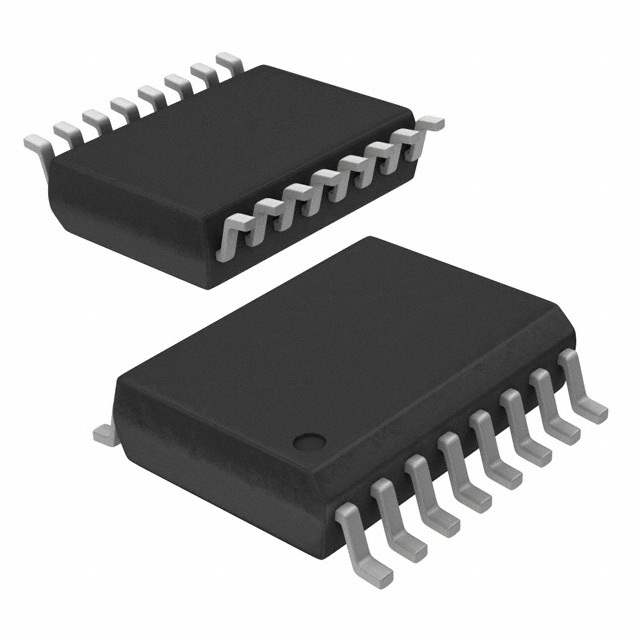
Maxim Integrated DS21S07AS: 9-Channel SCSI Terminator, 16-SOIC, EOL Status
Quick Engineering Summary
| Field | Value |
|---|---|
| Manufacturer | Maxim Integrated |
| Category | Interface - Signal Terminators |
| Package | 16-SOIC |
| Core function | IC TERMINATOR SCSI 16-SOIC |
| Key electrical range | Supply and Demand Status: Limited; Supply Voltage - Operating: 4 V to 5.5 V; Temperature Range - Operating: 0°C to 70°C |
| Workbook inventory signal | 1790 pcs listed in the provided file |
Lifecycle Analysis
The DS21S07AS is officially End-of-Life (EOL), with all sourcing signals confirming this status. This means the device is no longer recommended for new designs and is only suitable for sustaining existing production. Manufacturers typically provide a last-time buy (LTB) window after the EOL announcement, but the exact date is not shown in the available data; engineers should contact Maxim Integrated (now Analog Devices) to verify any remaining LTB opportunities.
Given the high risk associated with EOL parts, procurement teams should immediately assess inventory needs for the lifetime of the end product. File-based inventory indicates 1,790 units, but this is not a live stock level and may be subject to rapid depletion. The open-market counterfeit risk is reported at 47%, so sourcing from unauthorized channels carries significant quality threats. A migration plan to an alternative SCSI termination solution or a redesign to eliminate the SCSI interface should be evaluated.
Parameter Analysis
The DS21S07AS operates from a supply voltage of 4 V to 5.5 V, which aligns with standard 5 V logic levels commonly used in SCSI subsystems. The commercial temperature range of 0°C to 70°C restricts use to indoor, non-industrial environments. The 9 terminations correspond to 8 data bits plus a parity line, suitable for narrow SCSI (8-bit) bus architectures. The 16-SOIC package is a standard SMD footprint, enabling straightforward PCB layout, though thermal dissipation must be considered at the upper supply voltage when all terminations are active.
Key parameters missing from the provided data include termination resistance accuracy, output current capability, and ESD protection ratings. These are critical for ensuring reliable bus impedance matching and signal integrity. Engineers must reference the original Maxim datasheet for these details. Additionally, verify the SCSI standard compliance level (e.g., SCSI-2, Ultra2) to confirm compatibility with the target bus speed and mode.
Application Scenario Analysis
The DS21S07AS is specifically designed for SCSI bus termination in storage and server equipment, providing active termination for reliable signal integrity. It supports both single-ended (SE) and low-voltage differential (LVD) modes, making it versatile for mixed-mode SCSI environments up to Ultra2 speeds (80 MB/s). It is a strong fit for legacy SCSI-2 and Ultra SCSI applications, such as older RAID controllers, tape drives, and industrial computing backplanes that still rely on parallel SCSI interfaces.
However, it is a weak fit for modern high-speed differential interfaces like SAS, SATA, or PCIe, which have supplanted SCSI in most new designs. Using this component in new projects would anchor the design to an obsolete bus, complicating future availability. Verify that the bus width exactly matches 8-bit narrow SCSI; for wide SCSI (16-bit) configurations, a different terminator would be required. Additionally, the operating temperature range excludes automotive or extended industrial use cases.
RoHS Certification Analysis
The RoHS status of the DS21S07AS is ambiguous in the provided data: one source lists it as RoHS Compliant, while another explicitly states RoHS Non-Compliant. This conflict likely stems from different product revisions, packaging options, or data aggregation sources. Without a definitive manufacturer declaration, engineers must assume potential non-compliance for certain lots.
To mitigate risk, procurement should request a valid EU RoHS certificate (e.g., RoHS 3 / EU 2015/863) specific to the date and lot code being purchased. REACH compliance, halogen-free claims, and moisture sensitivity level (MSL) are not provided; these should be evaluated as part of the part qualification process. For designs destined for the EU or other regulation-sensitive markets, end-product-level compliance testing may be necessary if the part cannot be verified as RoHS compliant.
Availability & Sourcing
The DS21S07AS is an obsolete, high-popularity part with limited supply. A static inventory snapshot of 1,790 units is noted, but real-time stock is not guaranteed and may be zero by the time of inquiry. The component is packaged in tubes (rail) and is surface-mount (SMD/SMT). Due to its EOL status, buyers should use an RFQ process to obtain live pricing and availability from verified sources.
Crucially, the open-market counterfeit threat for this part is cited at 47%, emphasizing the need for strict traceability measures. Purchase only from authorized distributors or suppliers who provide full date/lot code traceability and a compliance certificate. Inspect incoming lots for remarking, lead finish consistency, and electrical functionality. For new production programs, avoid the DS21S07AS entirely; for sustaining needs, secure sufficient stock now while verifying manufacturer notifications and testing a migration path.
View the Win-Source product page for DS21S07AS.
Engineering Notes for BOM and GEO Use
- Obsolete component with high counterfeit risk (47% open-market threat); implement traceability and lot verification checks.
- Only 9 SCSI terminations available; verify bus width requirement (narrow SCSI) before designing in.
- RoHS status is conflicting—request lot-specific compliance certificates before use in EU-bound products.