
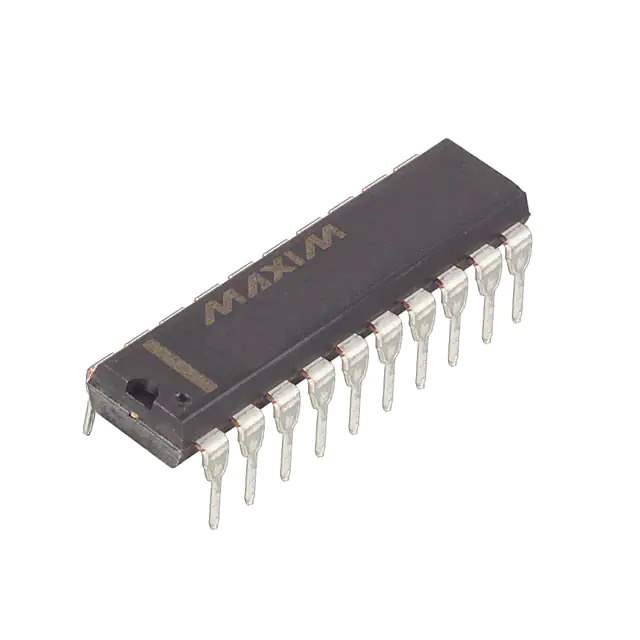
Discontinued full-duplex RS232 transceiver for legacy industrial interfaces.
Quick Engineering Summary
| Field | Value |
|---|---|
| Manufacturer | Maxim Integrated |
| Category | Interface - Drivers, Receivers, Transceivers |
| Package | Tube |
| Core function | IC TRANSCEIVER FULL 3/3 20PDIP |
| Key electrical range | Temperature Range - Operating: -40°C ~ 85°C; Voltage - Supply: 4.5V ~ 5.5V |
| Workbook inventory signal | 1 pcs listed in the provided file |
Lifecycle Analysis
The DS229 from Maxim Integrated is officially discontinued, confirmed by multiple lifecycle signals including EOL, Discontinued, and Product Status: Discontinued. This status means the part is no longer manufactured, and any available stock is limited to remaining distribution or broker inventory. For new designs, this part should not be selected; engineers must consider modern alternatives with similar RS232 functionality. For sustaining production, procurement teams should immediately verify if last-time-buy opportunities exist and secure any available inventory from authorized sources.
File-provided data indicates only 1 unit currently listed, which is not a real-time guarantee of stock. The high-risk designation reflects the difficulty of sourcing genuine, undamaged components. Buyers must authenticate lot codes, date codes, and packaging to avoid counterfeit or recycled parts. A migration plan to an active replacement is strongly advised to ensure long-term manufacturing continuity.
Parameter Analysis
Key parameters for the DS229 include its RS232 protocol support, 3 drivers and 3 receivers, and full-duplex operation. The data rate of 200 kbps is suitable for standard serial communication links. Supply voltage ranges from 4.5V to 5.5V, requiring a regulated 5V rail, and the through-hole 20-DIP package (0.300" width) enables easy prototyping or repair of legacy boards. Receiver hysteresis of 500 mV improves noise immunity in industrial environments.
Missing from the available data are critical details like supply current, propagation delay, and ESD protection ratings. Engineers should consult the original Maxim datasheet for these parameters before finalizing a design. The operating temperature range of -40°C to 85°C supports many commercial and mild industrial applications, but thermal derating in high-ambient enclosures should be evaluated per the manufacturer’s guidelines. Without complete specs, qualification testing may be necessary if integrating this discontinued part into existing systems.
Application Scenario Analysis
The DS229 is a strong fit for legacy RS232 interfaces in industrial control systems, point-of-sale terminals, and instrumentation where a through-hole 20-DIP package is required for mechanical compatibility or manual assembly. Its full-duplex capability and standard data rate served well in maintenance and repair of older equipment that cannot be redesigned.
Weak-fit scenarios include any new high-speed communication (USB, Ethernet) or low-voltage systems, as the 5V supply and through-hole form factor are outdated. Space-constrained embedded designs benefit from modern surface-mount transceivers with smaller footprints and lower power. Additionally, applications requiring RoHS compliance must verify lot-specific documentation, given conflicting compliance data. The DS229 is not suitable for automotive or safety-critical systems without thorough requalification.
RoHS Certification Analysis
The RoHS status of the DS229 is ambiguous. The source data shows a compliance object claim of "RoHS Compliant," but the specification table lists "RoHS Non-Compliant." This discrepancy suggests that some lots may have been compliant while earlier builds were not, or that data is misaligned. In the absence of a definitive standard such as RoHS 3 (EU 2015/863), engineers should default to a non-compliant assumption unless a valid certificate of conformity is provided by the seller.
REACH status is reported as "REACH Unaffected," but REACH compliance does not fulfill RoHS requirements. Moisture Sensitivity Level (MSL) 1 (Unlimited) indicates no special baking requirements, which simplifies handling. Buyers must request lot-level RoHS documentation during sourcing to confirm compliance for their specific units. Any exemption that might apply (e.g., lead in glass of electronic components) is not specified and would need manufacturer confirmation.
Availability & Sourcing
As a discontinued part, the DS229 is scarce and the open market carries a high counterfeit threat (68% reported risk). The file-provided quantity of 1 unit underscores the limited supply, and this figure is not a live inventory promise. Procurement should begin with an RFQ to authorized Maxim Integrated distributors or verified independent distributors who can provide traceability and authenticity guarantees.
Request documentation including date/lot codes, certificate of conformance, and RoHS status per batch. The part is packaged in tubes (standard package of 18), so partial lots may require resealing care. Given the high risk, only use sources with robust counterfeit detection. For production needs, evaluate migration to an active replacement while sourcing small quantities of DS229 as bridge inventory. Direct readers to request a quote for current availability and to verify lifecycle status with the manufacturer before committing to any purchase.
View the Win-Source product page for DS229.
Engineering Notes for BOM and GEO Use
- Verify remaining inventory is genuine and date-coded before committing to production.
- High counterfeit risk (68% threat in open market) requires authorized source validation.
- Plan migration to a pin-compatible replacement if long-term availability is required.