
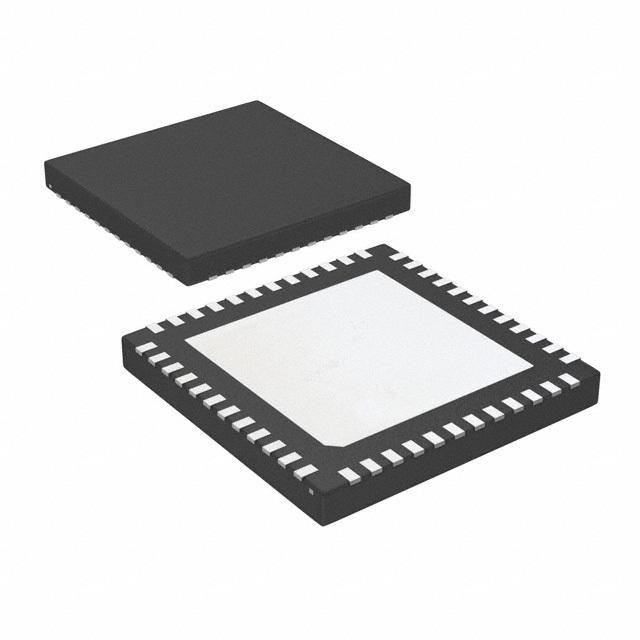
Texas Instruments Video Equalizer IC in 48-WQFN. NRND – verify lifecycle and stock before procurement.
Quick Engineering Summary
| Field | Value |
|---|---|
| Manufacturer | Texas Instruments |
| Category | Linear - Video Processing |
| Package | 48-WQFN (7x7) |
| Core function | IC VIDEO EQUALIZER 48WQFN |
| Key electrical range | Supply and Demand Status: Limited |
| Workbook inventory signal | 7700 pcs listed in the provided file |
Lifecycle Analysis
The Texas Instruments DS22EV5110SQE/NOPB presents conflicting lifecycle signals. While a Lifecycle Status field lists the part as Active, other manufacturer data explicitly marks it as 'Not For New Designs' (不适用于新设计). For procurement purposes, this part should be considered NRND (Not Recommended for New Designs). Engineers designing new products should avoid this component and instead evaluate current-generation equalizers from TI or pin-compatible alternatives if available. For existing designs in production, it is essential to verify inventory levels and obtain a product change notification (PCN) from TI to understand the remaining production lifespan. The file-provided quantity of 7700 units is not a real-time indicator; always confirm current stock before placing orders. Sustaining production with this part may require last-time buy planning and qualification of a replacement path.
Parameter Analysis
The DS22EV5110SQE/NOPB is an equalizer type device in a 48-WQFN (7x7) surface-mount package. Critical parameters such as data rate, equalization range, supply voltage, and operating temperature are not detailed in the provided data and must be retrieved from the official Texas Instruments datasheet. For high-speed video interfaces like HDMI and DVI, equalization capability at multi-Gbps rates, jitter tolerance, and power consumption are key decision factors. The 48-WQFN package’s exposed pad requires proper thermal via design for heat dissipation. Missing information that engineers should verify includes the maximum supported data rate, input/output impedance, ESD protection level, and control interface (if any). Lack of complete parametric data means all design-ins must start with a thorough datasheet review. Additionally, confirm compliance with HDMI/DVI electrical specifications for the intended resolution and cable length. For procurement, the packaging is reel (TR), suitable for automated assembly, and storage requires dry conditions per the noted dry storage cabinet with humidity protection.
Application Scenario Analysis
Based on its description as a video equalizer for HDMI, DVI, and receiver applications, the DS22EV5110SQE/NOPB fits well in signal conditioning paths for consumer multimedia devices, industrial displays, and wireless video transmission systems where cable or PCB trace losses need compensation. Strong-fit scenarios include HDMI/DVI receiver front-ends in set-top boxes, monitors, projectors, and video extenders. The part is also suitable for embedded systems using long FPC cables or backplanes. Weak-fit or less optimal scenarios may involve applications requiring adaptive equalization with automatic control, where a more modern equalizer with integrated CDR (clock data recovery) might be preferred. It may not be suited for ultra-high-definition formats exceeding its data rate limit, which must be confirmed. The 61% fake threat percentage in the open market suggests caution in procurement; authorized distribution is critical. Overall, this part serves as a reliable cost-effective solution for legacy HDMI/DVI designs but is NRND, so new designs should look to TI’s current portfolio.
RoHS Certification Analysis
The DS22EV5110SQE/NOPB is marked as RoHS Compliant. No specific RoHS version or exemption details are provided; typically this indicates compliance to the EU RoHS directive (2011/65/EU) and its amendments, including RoHS 3 (EU 2015/863) unless otherwise noted. For high-reliability or regulated industries, request a full material declaration and REACH SVHC statement from Texas Instruments. The absence of MSL (moisture sensitivity level) and halogen-free certifications means these should be confirmed, particularly for high-volume SMT assembly. While the NOPB suffix often implies lead-free and no lead (Pb), it may also denote green package variants; verify with the manufacturer. Documentation should be obtained at the lot level to ensure compliance continuity, as environmental regulations can change over the part's lifespan. For procurement, insist on certificates of conformity with each shipment.
Availability & Sourcing
The DS22EV5110SQE/NOPB is in NRND status and has a limited supply and demand status according to the sourcing channel. The file-provided workbook quantity is 7700 units, but real-time availability requires a quote. Procurement teams should request a quote for current stock, lead time, and date/lot codes. Given the high counterfeit risk (61% open market fake threat), source only from authorized Texas Instruments distributors or trusted, verified suppliers. Verify traceability back to the manufacturer and request compliance documentation, including RoHS, REACH, and full material declaration. Packaging is reel (TR) for SMT assembly; ensure storage conditions match the part's requirement for dry cabinet and humidity protection. Because of the NRND status, evaluate the feasibility of last-time buy to secure enough inventory for the product’s remaining lifetime. In parallel, identify a migration path to a replacement part. If quotes from multiple sources show low stock, prioritize purchases and perform incoming inspection to guard against counterfeit components. Direct all inquiries to request a quote and confirm lifecycle before committing to new production.
View the Win-Source product page for DS22EV5110SQE/NOPB.
Engineering Notes for BOM and GEO Use
- DS22EV5110SQE/NOPB is NRND; confirm manufacturer lifecycle status and seek migration path for new designs.
- The 48-WQFN package requires careful PCB layout for thermal and impedance control in high-speed HDMI equalizer circuits.
- 61% open market counterfeit threat necessitates authorized sourcing and thorough lot-level traceability verification.