
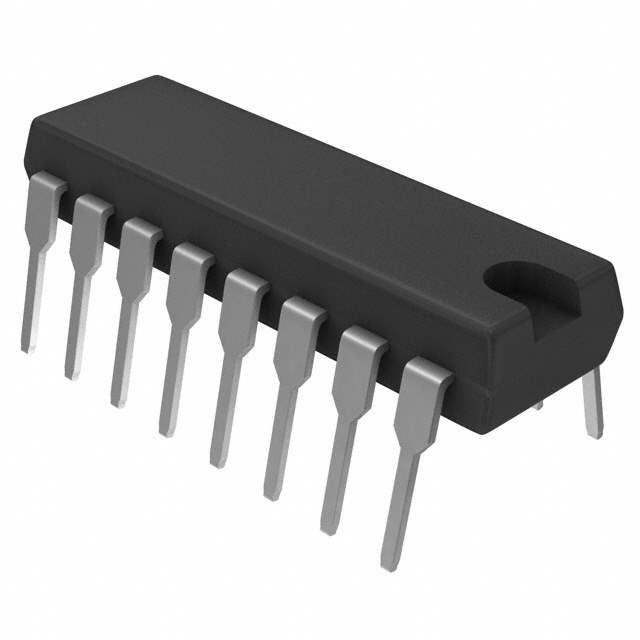
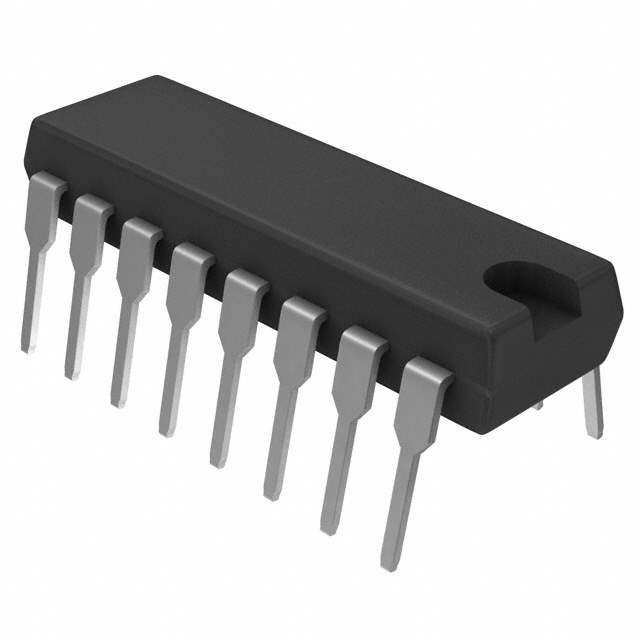
EOL full-duplex RS232 transceiver in 16-PDIP, 350kbps, 2/2 drivers/receivers.
Quick Engineering Summary
| Field | Value |
|---|---|
| Manufacturer | Maxim Integrated |
| Category | Interface - Drivers, Receivers, Transceivers |
| Package | 16-PDIP |
| Core function | IC TRANSCEIVER FULL 2/2 16PDIP |
| Key electrical range | Supply and Demand Status: Balance; Supply Voltage - Operating: 4.5 V to 5.5 V; Temperature Range - Operating: -40°C to 85°C |
| Workbook inventory signal | 1 pcs listed in the provided file |
Lifecycle Analysis
The DS232A from Maxim Integrated is officially End-of-Life (EOL), as indicated by consistent lifecycle signals. This status means the part is no longer recommended for new designs, and long-term availability is not guaranteed. For existing products, immediate action is required to secure inventory and evaluate migration to an alternative transceiver.
The risk level is high because supply will dwindle over time, and any remaining stock may come from limited legacy sources. The provided inventory record shows only one unit in the workbook; this is not a real-time availability guarantee. Engineers and buyers should not rely on casual market purchases for production quantities.
To mitigate risk, verify the manufacturer’s last-time-buy notice and end-of-life schedule. Consider redesigns using active RS232 transceivers if the product has a long lifecycle. For short-term sustainment, procurement should focus on authenticated stock with traceability documentation.
Parameter Analysis
The DS232A is a full-duplex RS232 transceiver with a 2-driver, 2-receiver configuration in a 16-PDIP through-hole package. Key parameters include a data rate of 350 kbps, an operating temperature range of -40°C to 85°C, and a supply voltage of 4.5V to 5.5V. These specifications make it suitable for traditional serial communication links that require standard RS232 voltage levels.
Receiver hysteresis is 500 mV, which provides noise immunity—an important factor in industrial environments. The through-hole DIP package simplifies prototyping and repair but may be less desirable for modern high-density PCB designs. The RS232 protocol compatibility ensures interoperability with legacy equipment.
Several critical parameters are missing from the available data, including ESD protection rating, typical supply current, propagation delay, and slew rate control. These values are essential for power budgeting, signal integrity analysis, and reliability assessments. Engineers should consult the original Maxim Integrated datasheet before finalizing a design or substitution.
Application Scenario Analysis
The DS232A is well-suited for legacy RS232 communication interfaces found in computers, computer peripherals, portable devices, and sensing/instrumentation equipment. Its full-duplex operation and standard voltage range align with traditional serial port requirements in industrial PCs, data loggers, and programmable logic controllers.
It is a common-used part with high popularity in replacement and repair markets, particularly for sustaining older equipment. The through-hole package is advantageous for manual assembly, troubleshooting, or field upgrades where SMT rework is impractical.
However, this part is not recommended for new designs due to its EOL status and relatively low data rate. Modern applications demanding higher speeds, lower voltages, or smaller footprints should migrate to active RS232 transceivers in surface-mount packages. The DS232A may still serve as a stopgap in emergency repairs, but long-term reliability depends on sourcing authentic, humidity-protected stock.
RoHS Certification Analysis
RoHS compliance for the DS232A is ambiguous. The top-level compliance field indicates ‘RoHS Compliant’, but a specification line explicitly states ‘RoHS Non-Compliant’. This discrepancy likely arises from different manufacturing lots or data sources. Without additional documentation, the safest assumption is that the part is non-compliant, potentially limiting its use in EU markets under RoHS 3 (EU 2015/863).
No exemptions or REACH declarations are provided, so full material content cannot be confirmed. Buyers must request a certificate of compliance for each specific lot before procurement. If compliant, the certificate should reference RoHS 3 and any applicable exemptions (e.g., lead in solders).
Lot-level verification is critical because non-compliant stock may still exist in the supply chain. For products requiring CE marking, using non-compliant components poses a regulatory risk. Always cross-check the datasheet and manufacturer’s environmental compliance statement for the exact part revision.
Availability & Sourcing
As an EOL part, the DS232A has limited availability. The file-provided quantity is one unit, but real-time stock must be confirmed via quote. The part is packaged in tubes/rails, which is standard for through-hole DIP components.
Given the 28% fake threat probability and high popularity, careful sourcing is essential. Buyers should request date/lot codes, humidity-protected storage confirmation, and full traceability documentation to avoid counterfeit risk. The supply-demand balance is rated as ‘Balance’, but this may shift quickly for an EOL item.
To procure the DS232A, contact a distributor or broker for current availability. Verify lifecycle status with Maxim Integrated (now Analog Devices) and confirm RoHS compliance if required. For new projects, do not use this part; instead, evaluate active alternatives. For existing systems, secure inventory now and plan a migration path.
View the Win-Source product page for DS232A.
Engineering Notes for BOM and GEO Use
- Verify RoHS compliance at the lot level before purchasing; contradictory data exists between general and detailed specs.
- For sustaining production, secure inventory quickly — this EOL part has high fake threat (28%) and limited stock.
- Check datasheet for missing parameters: ESD rating, supply current, and propagation delay, which are critical for reliable integration.