
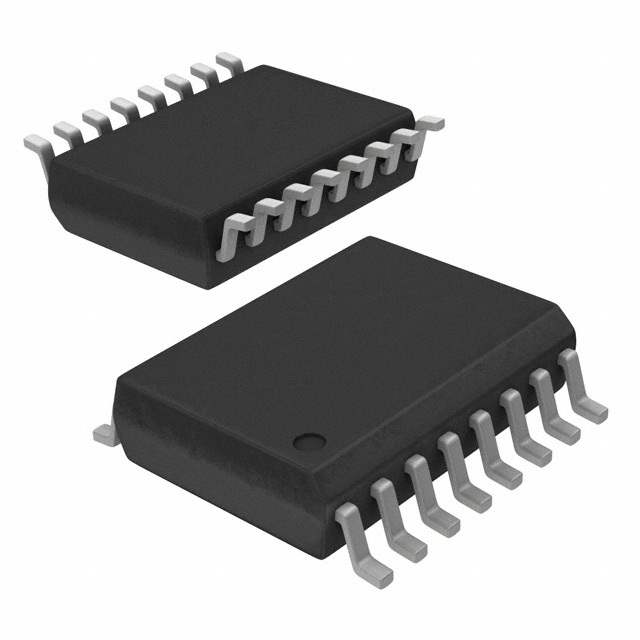
EOL full‑duplex RS‑232 transceiver, 2/2 drivers/receivers, 350 kbps, 4.5–5.5 V, ‑40 to +85°C, 16‑SOIC.
Quick Engineering Summary
| Field | Value |
|---|---|
| Manufacturer | Maxim Integrated |
| Category | Interface - Drivers, Receivers, Transceivers |
| Package | 16-SOIC |
| Core function | IC TRANSCEIVER FULL 2/2 16SOIC |
| Key electrical range | Supply and Demand Status: Limited; Supply Voltage - Operating: 4.5 V to 5.5 V; Temperature Range - Operating: -40°C to 85°C |
| Workbook inventory signal | 29000 pcs listed in the provided file |
Lifecycle Analysis
The DS232AR-N has been flagged as End-of-Life (EOL) by Maxim Integrated, indicating that the manufacturer has ceased regular production. For new designs, this part should not be used; engineering teams must qualify an alternative before committing to a design. In sustaining production, procurement must secure sufficient stock to cover lifetime demand, as availability will only dwindle over time.
The file indicates a workbook quantity of 29,000 units, but this is not a real-time guarantee. Buyers must verify actual stock with distributors and consider last-time-buy opportunities. Due to the EOL status, demand may spike, and remaining inventory can quickly become depleted or subject to allocation.
Given the high risk level, immediate action is recommended: validate the lifecycle status directly with Maxim Integrated (now Analog Devices) through a formal PCN (Product Change Notification) or discontinuation notice, and plan a migration strategy to a functionally compatible RS-232 transceiver.
Parameter Analysis
The DS232AR-N is a 5V RS-232 transceiver with 2 drivers and 2 receivers, supporting full-duplex communication at data rates up to 350 kbps. Its receiver hysteresis of 500 mV improves noise immunity in electrically harsh industrial environments, while the -40°C to +85°C operating temperature range suits extended temperature applications. The 16-SOIC package is a standard surface-mount footprint for automated assembly.
Supply voltage is specified as 4.5 V to 5.5 V, placing it in the traditional 5V RS-232 domain. This is critical for matching with legacy UARTs or microcontrollers that use 5V logic levels, but may require level translation if interfacing with modern 3.3V systems.
Important parameters not present in the available data that should be verified from the official datasheet include: supply current, ESD protection ratings (e.g., HBM), propagation delay, and maximum capacitive load. These affect power budgeting, reliability, and signal integrity, especially for high-temperature or long-cable applications. Additionally, missing packaging information (e.g., tape-and-reel options) must be confirmed if automated pick-and-place is used.
Application Scenario Analysis
The DS232AR-N fits applications requiring RS-232 serial communication, particularly in legacy industrial equipment, programmable logic controllers (PLCs), instrumentation, and point-of-sale terminals. Its full-duplex capability and 2-driver/2-receiver configuration support standard DB9 or DB25 serial ports for bidirectional data exchange.
Given its 5V operation and 350 kbps data rate, it is well-suited for moderate-speed data logging, sensor networks, and control panels where robustness and noise immunity are valued over transmission speed. The industrial temperature range allows deployment in factory floors or outdoor cabinets without additional heating or cooling.
However, this device is a poor choice for designs requiring low-voltage (3.3V or 1.8V) operation, high-speed serial interfaces such as USB or Ethernet, or applications needing more than two transceiver channels. Its EOL status further dictates that it should only be used in existing designs being maintained, not in new product introductions.
RoHS Certification Analysis
The compliance data for the DS232AR-N presents a conflict: the high-level RoHS compliance field states RoHS Compliant, but the detailed product specifications table explicitly lists RoHS Non-Compliant. This discrepancy requires immediate resolution before procurement.
When such conflicts arise, the more conservative interpretation is to treat the part as non-compliant unless a valid certificate of compliance (CoC) or test report for the specific lot can be provided. The non-compliance may be due to lead in the termination finish or other restricted substances common in legacy RS-232 transceiver packages. REACH status is not supplied, so verification of SVHC compliance is also necessary if required by the end application.
Engineers and buyers should request a batch-specific RoHS conformity document from the supplier. If the part is indeed non-RoHS, it cannot be used in equipment destined for the EU market without an exemption. For high-reliability or medical devices, full material disclosure may be needed.
Availability & Sourcing
Sourcing the DS232AR-N demands caution due to its EOL status, high counterfeit risk (49% reported in open market), and conflicting RoHS data. The displayed inventory of 29,000 units is file-based; interested parties must request a quote to confirm real-time availability. Do not base a production forecast solely on this reported quantity.
Given the part is obsolete, authorized distributors may hold the last remaining stock. Buyers should require full traceability documentation, including manufacturer date/lot codes and proof of controlled storage (dry-pack or humidity-protected). Packaging is tube/rail, so if tape-and-reel is needed for placement machines, a retaping service may be required, adding cost and risk.
A rigorous sourcing workflow includes: verifying lifecycle status with Analog Devices directly, requesting a RoHS/REACH certificate for the offered lot, and conducting incoming inspection to detect counterfeit devices (e.g., x-ray, decapsulation, or electrical testing). For new production, a formal qualification of a replacement part should run in parallel.
View the Win-Source product page for DS232AR-N.
Engineering Notes for BOM and GEO Use
- The DS232AR-N is EOL; migrate to an active RS-232 transceiver for all new designs.
- Conflicting RoHS data demands lot-level compliance verification before purchase.
- High open-market counterfeit rate (49%) mandates sourcing only through authorized channels with full traceability.