
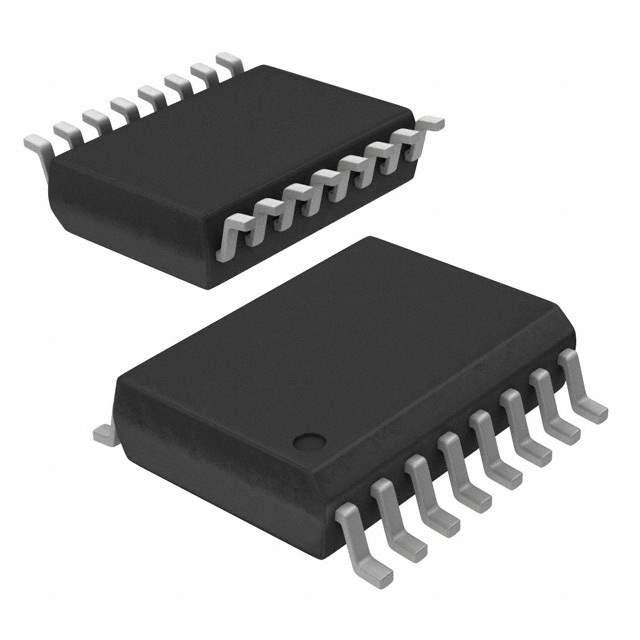
EOL RS-232 transceiver with 2/2 drivers/receivers in 16-SOIC package
Quick Engineering Summary
| Field | Value |
|---|---|
| Manufacturer | Maxim Integrated |
| Category | Interface - Drivers, Receivers, Transceivers |
| Package | 16-SOIC |
| Core function | IC TRANSCEIVER FULL 2/2 16SOIC |
| Key electrical range | Operating Temperature Range: -40°C ~ 85°C; Supply and Demand Status: Balance |
| Workbook inventory signal | 1690 pcs listed in the provided file |
Lifecycle Analysis
The Maxim Integrated DS232AS-N is confirmed End of Life (EOL), with a Part Status of Obsolete across all provided records. This means production has ceased, and no further build-to-order windows are anticipated from the manufacturer. For new designs, the DS232AS-N carries a high procurement risk and is not recommended; engineering teams should instead identify active pin‑compatible alternatives or migrate to newer RS‑232 transceiver families.
For existing production programs, sustaining teams must immediately assess remaining lifecycle demand. A last‑time buy should be initiated if feasible, and all inventory should be secured under controlled storage conditions. The file‑based inventory figure of 1,690 units is a historical snapshot and does not guarantee current stock; always verify with the supplier. Without an official EOL notice and last‑order date from Maxim Integrated, uncertainty remains high. Buyers should request documentation from authorized distributors to confirm the EOL timeline and any authorized aftermarket support.
The DS232AS‑N’s high popularity suggests many designs still depend on it, which may accelerate the depletion of remaining stock. Procurement strategies should prioritize verified, traceable inventory over cost, and engineering should prepare for a design‑in of a functional replacement if production cannot be sustained.
Parameter Analysis
Critical parameters for the DS232AS‑N include its 16‑SOIC surface‑mount package, which dictates PCB footprint and thermal layout. The package dimension (0.295″ wide, 7.50 mm) is standard, but designers must confirm pad geometry against the official Maxim Integrated datasheet. The 350kbps data rate is typical for RS‑232, supporting moderate‑speed serial communication, while the 500 mV receiver hysteresis improves noise immunity in industrial environments.
The operating temperature range of -40°C to 85°C qualifies the part for industrial fanless and outdoor equipment. The supply voltage span of 4.5V to 5.5V aligns with standard 5V logic rails, but designers should account for tolerance and transient conditions. The device’s MSL Level 1 rating eliminates baking requirements, easing assembly. Missing specifications that should be verified from the original datasheet include driver output slew rate, supply current, ESD protection levels, and propagation delay. Without these, margin analysis for signal integrity and power budgeting is incomplete.
Buyers and engineers should note the tube packaging and tube quantity (45 units per tube) for handling and pick‑and‑place setup. Because the DS232AS‑N is EOL, obtaining the full datasheet may require direct contact with Maxim Integrated or an authorized archive, which is especially important for qualification in high‑reliability applications.
Application Scenario Analysis
The DS232AS‑N is a full‑duplex RS‑232 transceiver suited for legacy serial interfaces in industrial automation, telecom infrastructure, point‑of‑sale terminals, and embedded systems that still rely on RS‑232 signaling. The 2/2 driver/receiver configuration supports common point‑to‑point and multidrop applications where short cable runs and noise‑immune communication are required. The industrial temperature range makes it viable for outdoor or unventilated enclosures.
Strong‑fit scenarios include retrofitting existing equipment, repairing legacy test benches, or producing spares for long‑lifecycle machinery. Weak‑fit scenarios include any new design requiring higher data rates (USB, Ethernet, LVDS) or lower voltage operation, as well as applications demanding isolated interfaces or enhanced ESD protection beyond generic RS‑232 levels. The device’s 5V supply excludes it from 3.3V‑only systems unless level translation is added.
Given the EOL status, engineers should evaluate whether the design’s product lifetime aligns with available DS232AS‑N inventory. In new projects, migrating to an active‑status RS‑232 transceiver with similar or improved specs is strongly advised. For board repairs, matching the exact DS232AS‑N marking is critical to avoid compatibility issues with subtle parametrics such as receiver threshold or shutdown behavior not fully captured in the brief description.
RoHS Certification Analysis
The DS232AS‑N carries a RoHS Compliant designation, which under Maxim Integrated’s typical compliance framework indicates conformity to EU RoHS directive 2015/863 (RoHS 3). This covers restricted substances including lead, mercury, cadmium, and specific phthalates. The REACH status is listed as REACH Unaffected, confirming that the part does not contain Substances of Very High Concern (SVHCs) above the 0.1% weight threshold. However, REACH is an independent regulation and does not fulfill RoHS requirements; both must be verified separately.
The MSL rating of Level 1 (unlimited) complements RoHS by confirming that no moisture‑sensitive bake‑out is needed, but it does not directly affect hazardous substance compliance. While the family‑level status suggests compliance, lot‑level variation can occur in EOL parts sourced from mixed production dates, making batch‑specific certificates of compliance important. Buyers should request RoHS and REACH certificates with full‑material declaration from each supplier, especially when purchasing from the open market.
The DS232AS‑N’s 16‑SOIC package likely uses matte‑tin lead finish, which is compatible with lead‑free soldering processes. For high‑reliability sectors such as medical or aerospace, additional testing may be warranted to confirm the absence of tin whisker hazards, particularly for long‑stored EOL stock. Because the part is obsolete, documentation availability can be inconsistent; factor this into supplier qualification.
Availability & Sourcing
The DS232AS‑N is no longer in active production, and all existing supply is limited to pre‑existing stock held by Maxim Integrated, authorized distributors, or independent brokers. The file‑reported quantity of 1,690 units offers a static reference point; this is not a real‑time inventory figure and should be confirmed through a formal RFQ. Given the EOL status, lead times are undefined, and any purchase is on a first‑come, first‑served basis.
Buyers should exercise heightened caution due to a reported 43% counterfeit threat in the open market. Mitigation measures include sourcing only through Maxim Integrated’s authorized or franchised partners, requesting full chain‑of‑custody and date/lot code verification, and performing incoming inspection (visual, x‑ray, or electrical) on any lot lacking documented pedigree. The tube packaging facilitates individual traceability, but mixed lots may appear on the broker market.
For procurement, the recommended action is to request a quote for current availability, specifying required quantity and acceptable date codes, and to request compliance documentation (RoHS, REACH, MSL, and ECCN). If insufficient inventory is available, organizations should accelerate the evaluation and qualification of a functionally equivalent replacement part. Avoid committing to new production builds reliant on the DS232AS‑N without a secured, verified source of supply, and monitor manufacturer or authorized distributor portals for any last‑time‑buy announcements.
View the Win-Source product page for DS232AS-N.
Engineering Notes for BOM and GEO Use
- EOL device: Avoid new designs and secure inventory for sustaining production through last‑time buy.
- Verify all datasheet parameters including supply current, slew rate, and ESD ratings before integration.
- Counterfeit risk is elevated (43% in open market); always source through authorized channels with full traceability.