
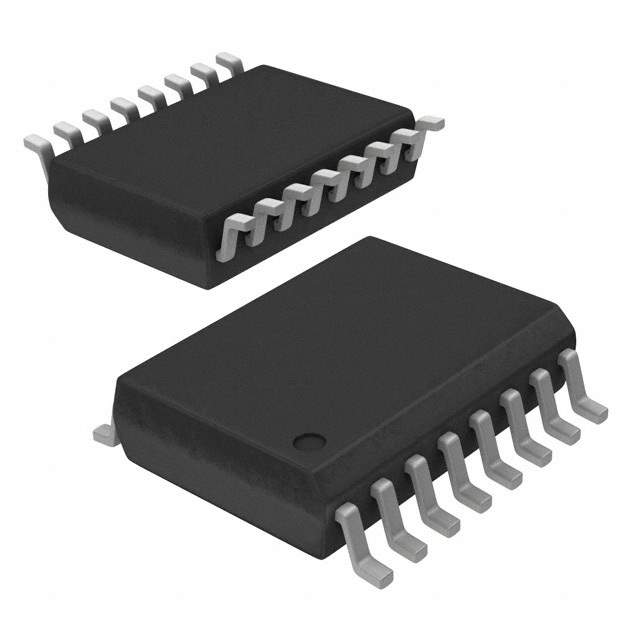
End-of-Life RS-232 transceiver with 2 drivers and 2 receivers, 350kbps data rate, 5V supply, in 16-SOIC.
Quick Engineering Summary
| Field | Value |
|---|---|
| Manufacturer | Maxim Integrated |
| Category | Interface - Drivers, Receivers, Transceivers |
| Package | 16-SOIC |
| Core function | IC TRANSCEIVER FULL 2/2 16SOIC |
| Key electrical range | Operating Supply Voltage: 4.5 V ~ 5.5 V; Operating Temperature Range: -40°C ~ 85°C; Supply and Demand Status: Limited |
| Workbook inventory signal | 5500 pcs listed in the provided file |
Lifecycle Analysis
The DS232AS+ from Maxim Integrated is confirmed End-of-Life (EOL) based on both the manufacturer’s lifecycle status and estimated EOL date. Introduced in 1999, this RS-232 transceiver is now obsolete, and no further revisions or production runs are planned. For new design projects, engineers should select an active alternative to ensure long-term availability and technical support.
For existing designs in sustaining production, the small remaining pool of inventory—such as a file-sourced quantity of 5500 units—may cover limited production or repair needs. However, this quantity is not guaranteed in real-time and should be verified directly with the supplier. Procurement teams must account for a high counterfeit risk (63% fake threat in the open market) when sourcing this EOL component; authentic parts are increasingly scarce.
Any decision to continue using the DS232AS+ should include a formal migration plan. Manufacturer documentation, such as an official EOL notice or last-time-buy schedule, should be revalidated to confirm that no additional support windows exist. Without such confirmation, sustaining production on this part carries significant supply chain risk.
Parameter Analysis
The DS232AS+ operates as a full-duplex RS-232 transceiver with two drivers and two receivers, capable of 350kbps data rate. This speed, while sufficient for many legacy serial interfaces, is relatively low by modern standards; designers must ensure it meets the required baud rate for their application. Receiver hysteresis of 500mV provides good noise immunity, which is critical in industrial environments where ground shifts and interference are common.
The device is designed for a single 5V supply (4.5V to 5.5V range), which restricts its use to 5V systems. Modern 3.3V-only boards would require external level translation. The industrial temperature range (-40°C to 85°C) allows deployment in harsh thermal conditions, but thermal derating should be verified using the datasheet’s power dissipation curves, which are not supplied here. Missing parameters such as propagation delay, supply current, and ESD protection level also need to be confirmed from the manufacturer's original documentation before design finalization.
The 16-SOIC SMD package is industry-standard and suitable for automated assembly, but the tube packaging may complicate reel-fed pick-and-place processes. When sourcing EOL stock, verify that storage conditions (dry storage with humidity protection as noted) have been adhered to, to avoid moisture-related soldering defects.
Application Scenario Analysis
The DS232AS+ was typical for legacy RS-232 communication interfaces in industrial automation, programmable logic controllers (PLCs), and older point-of-sale equipment. Its full-duplex, 2/2 configuration handles basic bidirectional serial links, and the wide temperature range made it suitable for factory-floor environments. Engineers maintaining such legacy systems may need this exact part to avoid requalification efforts.
For new designs, however, the DS232AS+ is a weak fit. Its 5V-only operation and 350kbps data rate are outdated; most modern microcontrollers offer integrated USB or low-voltage UART interfaces. Battery-powered or portable devices would be poorly served by this transceiver due to its single 5V rail requirement. Additionally, its EOL status and high counterfeit risk make it unsuitable for any volume production run.
In summary, the DS232AS+ is appropriate only as a maintenance part for existing equipment that cannot be redesigned. For any application that allows board changes, selecting a current RS-232 transceiver from Maxim Integrated (or alternative supplier) is strongly recommended to avoid supply chain disruption.
RoHS Certification Analysis
The DS232AS+ is documented as RoHS Compliant and Halogen Free, aligning with EU environmental standards. This designation helps in meeting regulatory requirements for sales into European markets, but as an EOL component, the certification may date from before the latest RoHS amendment (2015/863).
For continued compliance, purchasers should request an up-to-date RoHS certificate from the supplier, confirming that the specific lot meets current exemption limits. Without such documentation, there is a risk of non-compliance if the part contains legacy substances that are no longer exempt. REACH status is not mentioned in the source data and should be confirmed separately if needed.
Availability & Sourcing
The DS232AS+ is an EOL transceiver with limited supply. The file-provided quantity of 5500 units suggests some remaining stock, but this figure is not guaranteed real-time and must be confirmed through an RFQ. The high counterfeit threat (63%) in the open market makes authentication critical; buyers should only source from authorized distributors or trusted suppliers who can provide full traceability, including date and lot codes.
Packaging is tube, and the part requires dry storage with humidity protection to maintain solderability. Procurement teams should request storage condition history and check for any signs of improper handling. Since the lifecycle is EOL, no more units are being produced, and any last-time-buy window has likely passed—verify directly with Maxim Integrated (now Analog Devices) for any remaining stock or official notices.
To proceed, submit a request for quote to confirm current availability, pricing (not disclosed), and lead time. Additionally, secure a compliance certificate and consider a third-party test if authenticity is in question. For any new production use, a migration to an active RS-232 transceiver is strongly advised.
View the Win-Source product page for DS232AS+.
Engineering Notes for BOM and GEO Use
- EOL: No longer recommended for new designs; secure inventory for legacy sustainment only.
- Counterfeit risk: With 63% fake threat, source only from authorized distributors with traceability.
- 5V-only operation: Confirm system compatibility; 350kbps data rate may limit use in high-speed applications.