
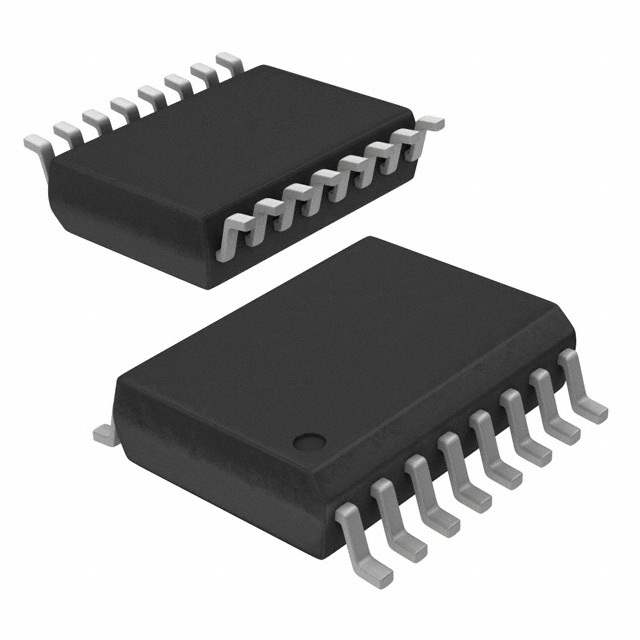
End-of-life RS-232 transceiver in 16-SOIC package for industrial applications.
Quick Engineering Summary
| Field | Value |
|---|---|
| Manufacturer | Maxim Integrated |
| Category | Interface - Drivers, Receivers, Transceivers |
| Package | 16-SOIC |
| Core function | IC TRANSCEIVER FULL 2/2 16SOIC |
| Key electrical range | Supply and Demand Status: Limited; Supply Voltage - Operating: 4.5 V to 5.5 V; Temperature Range - Operating: -40°C to 85°C |
| Workbook inventory signal | 5500 pcs listed in the provided file |
Lifecycle Analysis
The DS232AS is unequivocally at End-of-Life (EOL). All available lifecycle signals—including the explicit ‘Lifecycle Status: EOL’ and ‘Status: Obsolete(EOL)’—align, leaving no ambiguity. For new designs, this part must be avoided; any design-in would carry unacceptable supply risk.
For existing production, immediate action is required. The provided workbook inventory figure of 5500 units is a file-based snapshot and not a guarantee of real-time availability. Engineers and buyers should treat this as the last remaining pool and secure confirmed stock commitments while evaluating migration paths to active alternatives.
Even if inventory can cover short-term builds, documentation requirements such as obsolescence notices should be requested from Maxim Integrated (now Analog Devices). Without an official last‑time‑buy window, the risk of sudden unavailability is high, necessitating parallel qualification of a replacement component.
Parameter Analysis
The DS232AS operates from a single 4.5 V to 5.5 V supply—a typical RS-232 voltage range that simplifies system power design but eliminates compatibility with modern low‑voltage logic (<3.3 V) without level shifters. Its 350 kbps data rate, while sufficient for many industrial serial interfaces, falls short of the multi‑megabit demands of contemporary peripherals, making it suitable only for legacy or low‑speed data links.
The full‑duplex architecture with 2 drivers and 2 receivers pairs well with standard DB9 connectors and point‑to‑point link budgets. The 500 mV receiver hysteresis enhances noise immunity in electrically harsh environments, a critical feature for factory floor or instrumentation use. The SMD 16‑SOIC package (7.50 mm wide) is widely footprint‑compatible, facilitating replacement sourcing.
Key missing datasheet parameters that must be verified before final qualification include driver output voltage swing under load, supply current consumption, ESD protection levels, and input logic thresholds. These directly impact thermal management, power budgeting, and reliability compliance for the intended system.
Application Scenario Analysis
This part is purpose‑built for industrial RS‑232 communication. The specified application fields—Automation & Process Control, Sensing & Instrumentation, and Commercial—point to PLC interfaces, sensor gateways, and legacy instrument control ports where the 350 kbps rate and ±5V‑level signaling remain standard. The extended -40°C to +85°C temperature range supports deployment in non‑climate‑controlled cabinets and outdoor enclosures.
Strong‑fit scenarios include retrofitting or maintaining existing industrial equipment that cannot be redesigned due to certification or mechanical constraints. The 16‑SOIC package fits crowded control boards and allows manual or automated insertion.
Weak‑fit scenarios encompass any new product development targeting USB or Ethernet connectivity, battery‑powered designs where 5V rails are unavailable, or applications requiring high‑speed (>1 Mbps) serial streams. Also, designs aimed at EU markets must carefully navigate the unresolved RoHS status, potentially eliminating DS232AS from compliance‑critical products.
RoHS Certification Analysis
RoHS compliance for the DS232AS is ambiguous. The top‑level data declares ‘RoHS Compliant’, yet a detailed specification row explicitly states ‘RoHS Non‑Compliant’. This discrepancy may stem from different assembly flows, material sets, or datasheet revision stages.
A non‑compliant designation would prohibit the part from being used in products shipped to the European Union or other RoHS‑aligned markets. Until resolved, engineering teams must assume a worst‑case non‑compliant posture to avoid production stops or market access issues.
The proper course is to request the full material declaration and RoHS certificate from Maxim Integrated (Analog Devices) for the specific lot codes under consideration. Lot‑level verification is critical because component‑level compliance can change between production batches. Without such documentation, the DS232AS cannot be considered reliably RoHS‑compliant.
Availability & Sourcing
Sourcing the DS232AS demands exceptional diligence given its EOL status and a counterfeit threat level of 28%. The file‑indicated inventory of 5500 pieces is not real‑time confirmed; buyers must request a formal quote to obtain current stock levels, pricing, and lead times.
Procurement should mandate full traceability: original manufacturer’s date/lot codes, dry‑pack storage condition verification (as specified), and a certificate of conformance. The tube/rail packaging is conducive to anti‑static handling and long‑term storage but requires visual inspection for oxidation or pin damage.
Because the part is EOL, the call to action is dual: secure enough buffer stock to cover production until a qualified substitute is validated, and simultaneously expedite qualification of a pin‑compatible or functionally equivalent active part. Do not rely on the DS232AS for future production builds without a confirmed LTB agreement from the manufacturer.
View the Win-Source product page for DS232AS.
Engineering Notes for BOM and GEO Use
- Confirm RoHS compliance status directly with Maxim Integrated due to conflicting declarations.
- Given EOL status, allocate inventory for ongoing production and initiate redesign for replacement.
- Ensure supply chain verification for 16-SOIC package and date/lot traceability to avoid counterfeit risk.