
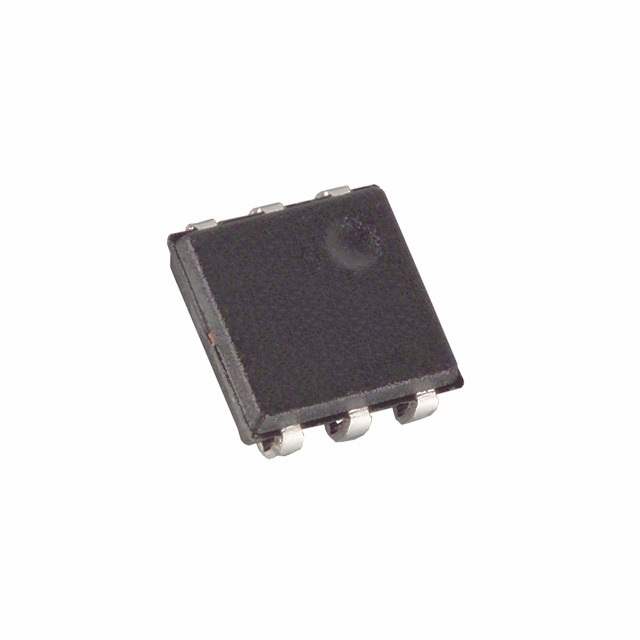
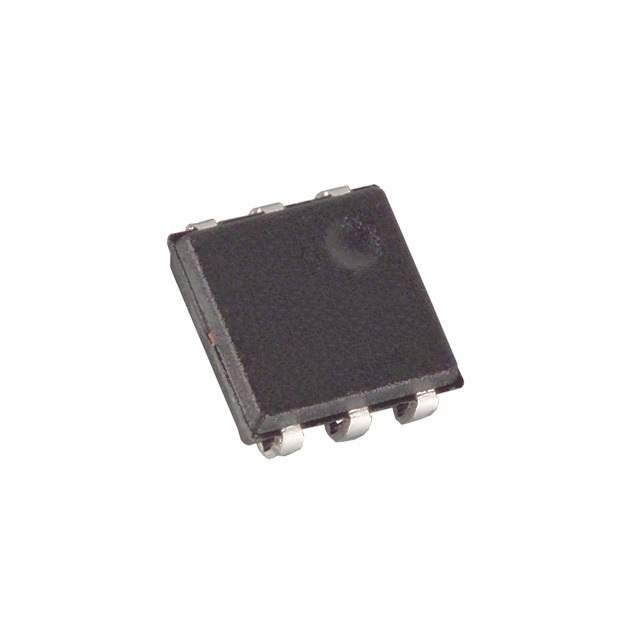
Maxim Integrated DS2415P 1-Wire Binary Counter Real-Time Clock IC
Quick Engineering Summary
| Field | Value |
|---|---|
| Manufacturer | Maxim Integrated |
| Category | Clock/Timing - Real Time Clocks |
| Package | 6-TSOC |
| Core function | IC RTC BINARY CNTR 1-WIRE 6TSOC |
| Key electrical range | Current - Timekeeping (Max): 0.25μA to 0.45μA @ 3V to 5V; Supply and Demand Status: Balance; Supply Voltage - Operating: 2.5 V to 5.5 V; Temperature Range - Operating: -40°C to 85°C |
| Workbook inventory signal | 19384 pcs listed in the provided file |
Lifecycle Analysis
The lifecycle status of the DS2415P from Maxim Integrated is currently unknown, with no manufacturer-issued obsolescence or product change notifications present in the provided data. This absence of signals places the part at a medium risk level for procurement planning. For new designs, the unknown lifecycle means there is no assurance of long-term availability, and engineers should consider alternative RTCs with confirmed active status. For sustaining production, existing designs may still rely on the DS2415P, but continuity of supply cannot be guaranteed without direct verification from Maxim Integrated, which is now part of Analog Devices. Contact authorized distributors or the manufacturer to obtain official lifecycle documentation before committing to production volumes.
The dataset includes a file-provided inventory quantity of 19384 units, but this figure is not a real-time stock indicator and should not be interpreted as guaranteed availability. In the absence of a confirmed lifecycle phase, procurement teams should treat the part as potentially constrained and plan for alternate sourcing. If the DS2415P is in an NRND or EOL transition, the available inventory could deplete quickly. Therefore, a thorough lifecycle revalidation is the first and most critical step in the sourcing process.
Parameter Analysis
The DS2415P operates as a binary counter RTC with a 1-Wire communication interface, making it distinct from conventional calendar-based RTCs. Key parameters include a supply voltage range of 2.5 V to 5.5 V, which provides flexibility for both 3.3 V and 5 V logic systems without level shifters. The timekeeping current is specified between 0.25 µA and 0.45 µA across the operating voltage range, indicating excellent power efficiency for battery-backed applications. The operating temperature range of -40°C to +85°C qualifies the part for industrial environments. The 6-TSOC surface-mount package (SMD) enables compact PCB layouts, and tube/rail packaging supports automated assembly lines.
Critical parameters not listed in the supplied data—such as clock accuracy, resolution, integral oscillator type, and memory capacity—must be obtained from the official datasheet. The binary time format implies that the device simply increments a counter, leaving elapsed-time interpretation to the host microcontroller. Engineers should also verify the 1-Wire protocol specifics, including parasite power capability and network topology constraints. When qualifying the DS2415P, pay special attention to PCB layout guidelines for the 1-Wire bus, as signal integrity directly affects reliable communication. Additionally, thermal derating should be assessed, especially if the device operates near the upper temperature limit in enclosed spaces.
Application Scenario Analysis
The DS2415P’s 1-Wire binary counter RTC architecture aligns well with applications that require simple elapsed-time tracking rather than human-readable calendar functions. Strong-fit scenarios include embedded sensor nodes, data loggers, and industrial monitoring systems where multiple 1-Wire devices share a single bus, reducing pin count and cable complexity. The unique ID feature can serve as a network address or for authentication purposes in security-conscious designs. Battery-assisted timekeeping enables continuous counting during power cycles, making it useful for power-fail timestamping and maintenance interval tracking.
Weak-fit or inappropriate uses include designs needing year/month/day/hour/minute/second output, daylight saving adjustments, or alarm interrupts commonly found in calendar RTCs. The DS2415P does not provide these functions natively. High-speed data logging applications that require sub-second resolution and timestamping may also find the binary counter limiting unless combined with a high-accuracy external clock. In terms of environmental fit, the industrial temperature range supports outdoor and automotive (non-safety) applications, but for mil-spec or extended-temp requirements, verify the exact grade from the manufacturer. Overall, the DS2415P is a focused, low-power timing solution best suited for 1-Wire ecosystems with modest timekeeping demands.
RoHS Certification Analysis
The compliance status of the DS2415P is ambiguous. The top-level product entry lists a status of RoHS Compliant, while a detailed specification field explicitly states RoHS Non-Compliant. Such conflicts can arise from different production batches, supplier data entry errors, or the coexistence of lead-containing and lead-free variants under the same part number. Without additional data such as an MSL rating, REACH declaration, or lead-free terminal finish details, it is not possible to definitively declare compliance.
Buyers and quality engineers must treat this as a red flag and request a lot-specific RoHS certificate from the supplier before accepting shipment. Even if the top-level status suggests compliance, the non-compliant flag indicates that some units in distribution channels may not meet EU RoHS (2015/863) requirements. In regulated markets, non-compliant parts can lead to import restrictions and product recalls. For new designs intended for the European market, it is advisable to identify a confirmed RoHS-compliant alternative or ensure that the specific lot undergoes third-party testing. Always include RoHS verification as a mandatory line item in the RFQ process for the DS2415P.
Availability & Sourcing
Sourcing the DS2415P requires a cautious approach due to the unknown lifecycle status and conflicting compliance data. The provided file inventory shows 19384 units, but this figure is not real-time and should only be used as an approximate reference. Procurement teams should submit an RFQ to authorized distributors to obtain current stock levels, lead times, and lot-specific traceability. Ensure that the quote includes date/lot codes, packaging condition (tube/rail), and ideally a photo or report of the physical inventory to verify authenticity.
The dataset indicates a 28 percent counterfeit threat in the open market, which is a significant risk. All sourced parts should undergo visual inspection, resistance measurements, and functional testing per the manufacturer’s specifications. Given the unknown lifecycle, do not base high-volume production builds on this part without securing long-term supply assurances or qualifying an alternate source. If the DS2415P is still in production, request a Certificate of Conformance and full environmental compliance documents. If it is discontinued, limit procurement to last-time-buy quantities while transitioning to a newer 1-Wire RTC from Maxim Integrated/Analog Devices. For any scenario, insist on humidity-protected storage as recommended by the supplier to prevent moisture-related soldering defects.
View the Win-Source product page for DS2415P.
Engineering Notes for BOM and GEO Use
- Verify lifecycle status directly with Maxim Integrated (Analog Devices) as no stable production signal is available.
- Check RoHS compliance at the lot level due to conflicting compliance data in supplier listings.
- Employ humidity-controlled storage and anti-counterfeit verification given the 28% counterfeit threat rate.