
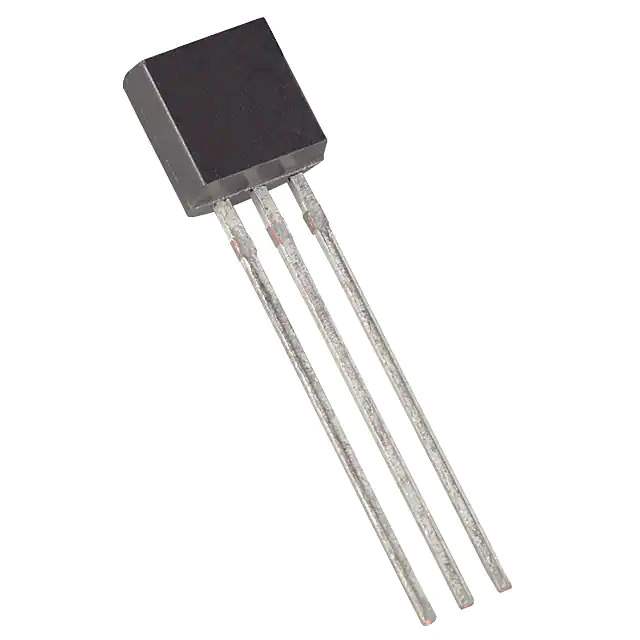
256-bit 1-Wire EEPROM in TO-92-3, lifecycle and availability analysis for procurement.
Quick Engineering Summary
| Field | Value |
|---|---|
| Manufacturer | Maxim Integrated |
| Category | Memory |
| Package | Bulk |
| Core function | IC EEPROM 256BIT 1-WIRE TO92-3 |
| Key electrical range | Temperature Range - Operating: -40°C ~ 85°C (TA) |
| Workbook inventory signal | 1 pcs listed in the provided file |
Lifecycle Analysis
The DS2430A+ presents a mixed lifecycle picture that demands conservative interpretation for procurement decisions. While the internal Lifecycle Status field lists ‘Active’, the overarching Product Status is explicitly ‘Not For New Designs’. An Excel-originated parameter also indicates the part is not suitable for new designs. In practice, this means Maxim Integrated (now part of Analog Devices) does not recommend integrating the DS2430A+ into new product designs. For sustaining engineering and existing production lines, the part may remain procurable, but the NRND classification introduces medium risk of dwindling inventory or future discontinuation.
Engineers should treat the DS2430A+ as an NRND item. For new projects, select a modern 1-Wire EEPROM alternative with active new-design support. For current builds, immediately verify the latest lifecycle status directly with the manufacturer or authorized distributors and develop a phase-out plan. The file-listed stock quantity reflects a single snapshot and does not guarantee real-time availability, so rely on confirmed order data when planning production volumes.
Parameter Analysis
The DS2430A+ provides 256 bits of non-volatile EEPROM storage organized as 32 x 8, accessed through a 1-Wire interface. The specified access time is 15 µs, which is typical for small serial EEPROMs in this class but may limit performance in high-speed readout applications. The operating temperature range of -40°C to +85°C qualifies the device for industrial environments, and the through-hole TO-92-3 package simplifies prototyping and manual assembly but limits density on modern PCB designs.
Several critical parameters are absent from the available data. The supply voltage range is not specified; without it, the DS2430A+ cannot be properly integrated into a power tree. Write cycle endurance and data retention ratings are also missing, which are essential for assessing long-term reliability in fielded systems. The Programmable field is listed as ‘Not Verified’, meaning the device may be OTP or user-programmable—datasheet confirmation is needed. Before committing to design or procurement, obtain the full manufacturer datasheet for the DS2430A+ to verify supply requirements, endurance, and write timing, and to ensure compatibility with the target host controller.
Application Scenario Analysis
The DS2430A+ suits legacy systems that require a small, low‑complexity persistent memory node on a 1‑Wire bus. Typical uses include storing calibration constants, board serial numbers, sensor trim values, or equipment identification codes in industrial sensors, medical devices, or access control modules. Its through‑hole packaging favours applications where manual soldering, socketed replacement, or low‑volume production is expected.
Conversely, the DS2430A+ is a weak fit for new designs that demand larger memory, faster interface speeds, or surface‑mount assembly for automated manufacturing. Modern designs often default to I²C or SPI EEPROMs with greater densities and smaller footprints. The NRND lifecycle and 256‑bit capacity further limit its relevance in IoT or high‑data‑rate consumer products. For any new design, even if the 1‑Wire protocol is required, a pin‑compatible or functionally equivalent active‑status part should be evaluated instead of relying on the DS2430A+.
RoHS Certification Analysis
According to the supplied compliance data, the DS2430A+ is marked as RoHS Compliant. Typically, this indicates adherence to EU RoHS directive restrictions on lead, mercury, cadmium, and other hazardous substances. The exact directive version (e.g., 2011/65/EU or 2015/863) is not specified, so for high‑assurance procurement, request a manufacturer certificate that cites the current standard.
REACH status is listed as Unaffected, which addresses chemical registration obligations but does not substitute for RoHS compliance. The MSL rating of 1 (Unlimited) confirms that the TO‑92‑3 package does not require special moisture‑sensitive handling. Nonetheless, because compliance declarations can be family‑level, verify lot‑specific documentation when ordering the DS2430A+ for regulated markets. If end‑product certification depends on precise RoHS exemption tracking, obtain the full compliance report from Maxim Integrated/Analog Devices.
Availability & Sourcing
Procurement of the DS2430A+ demands careful handling due to its NRND status and a reported 58% counterfeit threat in the open market. The source file shows a single unit in stock and a standard package quantity of 2,000 pieces, but these numbers are not live inventory guarantees. To avoid fake parts, source exclusively through Maxim Integrated’s authorized distributors (now Analog Devices) or their franchised partners, and mandate traceability documentation, including date and lot codes.
Because the DS2430A+ is not recommended for new designs, buyers should secure existing inventory for long‑term maintenance requirements while initiating a migration to an actively supported replacement. Request a quote from approved suppliers to confirm current pricing and lead times, and always ask for certificates of conformance and RoHS compliance for each shipment. For sustaining production, consider placing a last‑time buy if a discontinuation notice appears, and work with engineering to validate a drop‑in alternative before the supply window closes.
View the Win-Source product page for DS2430A+.
Engineering Notes for BOM and GEO Use
- Verify supply voltage and write endurance from manufacturer datasheet before design-in of the DS2430A+.
- Product status Not For New Designs; the DS2430A+ is not suitable for new projects, evaluate alternative 1-Wire EEPROMs.
- Sourcing from authorized channels is critical due to 58% counterfeit risk in the open market for this part.