
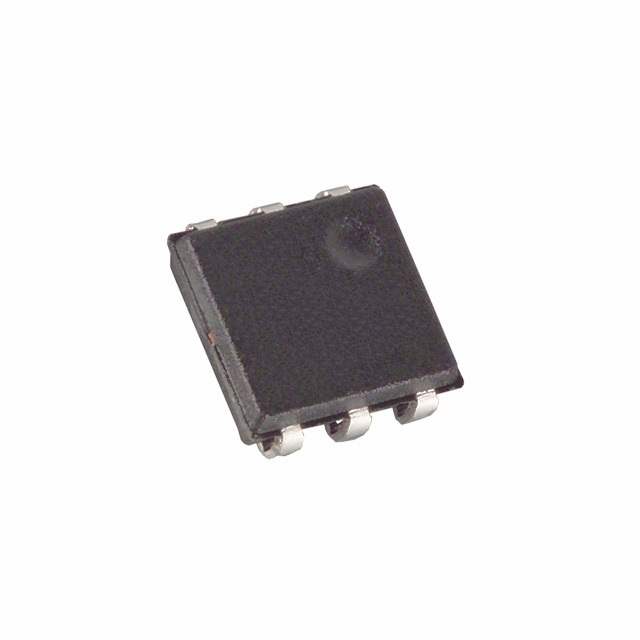
Active 1Kb 1-Wire EEPROM in 6-TSOC. Check lifecycle, RoHS conflict, and availability.
Quick Engineering Summary
| Field | Value |
|---|---|
| Manufacturer | Maxim Integrated |
| Category | EEPROM |
| Package | 6-TSOC |
| Core function | IC EEPROM 1KBIT 1-WIRE 6TSOC |
| Key electrical range | Supply and Demand Status: Balance; Temperature Range - Operating: -40°C to 85°C (TA) |
| Workbook inventory signal | 350000 pcs listed in the provided file |
Lifecycle Analysis
The DS2431P+ carries a uniform Active lifecycle status across all supplied data sources, indicating ongoing production by Maxim Integrated without near‑term discontinuation plans. For design engineers and component buyers, this status supports qualification for new projects, because the part is expected to remain available for the foreseeable future. During sustaining production, Active status reduces risk of last‑time buys or forced redesigns.
Nonetheless, Active does not eliminate the need for periodic revalidation. Monitor Maxim Integrated’s product change notifications and lifecycle advisories, especially if the DS2431P+ is being designed into long‑lifecycle equipment. The file‑provided inventory quantity of 350,000 units is a snapshot only and should not substitute for real‑time availability checks through authorized distributors.
In procurement terms, a low‑risk lifecycle status allows standard RFQ workflows without the urgency of end‑of‑life sourcing. However, the high open‑market fake threat reported for this part (40%) means that lifecycle stability does not equate to supply‑chain safety. Pair lifecycle assurance with rigorous vendor authentication.
Parameter Analysis
Key specifications of the DS2431P+ shape its suitability for many embedded designs. The 1‑Kb memory organized as 256 × 4 bits is accessed through Maxim’s 1‑Wire interface, which reduces pin count to a single data line plus ground, ideal for space‑constrained or connector‑limited applications. The 2 µs access time provides deterministic read performance, critical for real‑time identification or calibration data retrieval. The 6‑TSOC surface‑mount package offers a small footprint for compact PCBs, while the –40 °C to 85 °C operating temperature range supports industrial equipment.
However, several vital parameters are missing from the provided data. The operating voltage range (often 2.8 V to 5.25 V for similar 1‑Wire EEPROMs) directly affects power supply design and must be confirmed against the official datasheet. Write cycle endurance and data retention—typically expressed in millions of cycles and years—are fundamental to EEPROM selection and are absent here. Also unstated are the write time, standby current, and ESD ratings, all necessary for derating and qualification. Without these, a complete fitness‑for‑use analysis cannot be performed.
Designers should retrieve the full Maxim Integrated DS2431P+ datasheet to verify these missing parameters and compare them to application requirements. Pay particular attention to 1‑Wire timing characteristics, pull‑up resistor values, and parasitic power capabilities, which are often detailed in the manufacturer’s documentation.
Application Scenario Analysis
The DS2431P+ is optimized for applications requiring small amounts of non‑volatile storage with minimal interconnect. Strong‑fit scenarios include device serialization, authentication tokens, calibration constants, and sensor identification in industrial, medical, and consumer electronics. Its 1‑Wire protocol minimizes cabling, making it suitable for add‑on modules, replaceable sensors, or cartridge‑based systems where only two contacts are available. The small 6‑TSOC package aids integration into wearables, IoT end nodes, or micro‑controller boards where board area is at a premium.
Weak‑fit or challenging scenarios arise when higher data throughput or frequent writes are needed. The 2 µs access time and single‑wire interface limit effective data transfer speed; applications requiring rapid logging or streaming data would be poorly served. Additionally, 1 Kb of storage may be insufficient for firmware storage or complex parameter sets. The device is also not suited for automotive under‑hood environments unless the temperature grade and reliability data are verified beyond the supplied –40 °C to 85 °C range.
In battery‑powered designs, the EEPROM’s low‑power potential (assumed from EEPROM technology) is an advantage, but actual standby and active current must be confirmed. Overall, the DS2431P+ fits well in low‑complexity, space‑constrained systems that need small, reliable non‑volatile memory accessible over a single wire.
RoHS Certification Analysis
RoHS assessment for the DS2431P+ is complicated by conflicting information: the primary compliance field reports ‘RoHS Compliant’, while a detailed specification entry states ‘RoHS Non‑Compliant’. This inconsistency prevents a confident compliance declaration. Lead‑free or halogen‑free status is not supplied, and no exemption list is provided. In such cases, the part cannot be assumed to meet EU RoHS Directive 2011/65/EU or its amendments.
To resolve this, procurement teams should request a manufacturer’s Certificate of Compliance (CoC) or a third‑party test report for the specific lot or date code under consideration. Lot‑level compliance can vary due to material changes or process variations, so blanket family‑level statements may be unreliable. If the part is destined for the European market, failure to confirm RoHS compliance could lead to import or market‑access issues.
Additionally, note that REACH compliance, MSL rating, and halogen‑free status are not provided. Although REACH is a separate regulation, its absence in the data further underscores the need for a complete environmental compliance package from the manufacturer. Always cross‑check the official Maxim Integrated environmental information portal or authorized distributor certifications before final order.
Availability & Sourcing
The DS2431P+ is an Active part with a file‑indicated inventory quantity of 350,000 units, suggesting broad channel availability in the open market. Buyers should treat this quantity as a non‑binding estimate and obtain real‑time stock and lead times through a request for quote (RFQ) from authorized Maxim Integrated distributors or reputable hybrid suppliers like Win Source. The standard packaging is specified as Reel (TR), but exact reel size and quantity per reel should be confirmed during ordering.
Due to the reported 40% fake threat in the open market, sourcing requires extra diligence. Insist on full traceability documentation, date‑ or lot‑code verification, and authorized distributor pedigree. Counterfeit EEPROMs may exhibit out‑of‑spec write endurance, incorrect memory size, or absent unique 1‑Wire ROM IDs, causing field failures. Third‑party visual inspection or electrical testing upon receipt is advisable for non‑authorized channels.
For lifecycle risk mitigation in new designs, request a compliance package that includes RoHS, REACH, and MSL certifications along with the quote. If the DS2431P+ is intended for high‑reliability or long‑life products, consider securing a buffer stock or negotiating a vendor‑managed inventory (VMI) agreement. Always verify the manufacturer’s PCN status at time of purchase, even for Active parts, to avoid unanticipated discontinuations.
View the Win-Source product page for DS2431P+.
Engineering Notes for BOM and GEO Use
- Verify RoHS compliance per lot due to conflicting source data; request certificates from authorized distributors.
- Critical missing parameters (operating voltage, write endurance, data retention) must be checked in the full Maxim Integrated datasheet before design-in.
- With a reported open‑market fake threat level of 40%, source only through authorized or traceable channels to avoid counterfeit parts.