
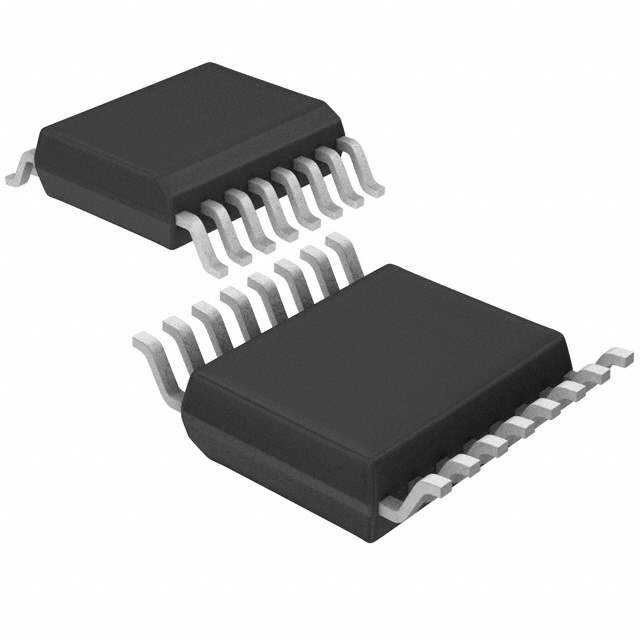
EOL Smart Battery Monitor IC in 16-SSOP
Quick Engineering Summary
| Field | Value |
|---|---|
| Manufacturer | Maxim Integrated |
| Category | PMIC - Battery Management |
| Package | 16-SSOP |
| Core function | IC BATT MONITOR SMART 16SSOP |
| Key electrical range | Supply and Demand Status: Limited; Temperature Range - Operating: -40°C to 85°C (TA) |
| Workbook inventory signal | 8500 pcs listed in the provided file |
Lifecycle Analysis
The DS2437S-3 from Maxim Integrated is confirmed as End-of-Life (EOL) based on multiple lifecycle signals, including the manufacturer status and supply chain data. This status indicates that the part is no longer recommended for new designs and may have limited availability for sustaining production. EOL components carry a high procurement risk, especially for long-term projects, as future supply is not assured and may require last-time buys or migration to alternative solutions.
Engineers and buyers should verify this EOL status directly with Maxim Integrated (now part of Analog Devices) and check for any official product discontinuance notices (PDN) or last-time buy (LTB) announcements. The file-provided inventory quantity of 8500 units is a static snapshot and not a real-time guarantee; actual stock may vary. For sustaining existing products, securing inventory promptly and evaluating replacement paths is critical.
Parameter Analysis
The DS2437S-3 is a battery monitor IC targeting smart battery applications. Key parameters include a 1-Wire communication interface, 16-SSOP surface-mount package, and an operating temperature range of -40°C to 85°C (TA). The 1-Wire interface simplifies connectivity and reduces pin count, which is important for space-constrained designs. The SSOP package offers moderate thermal performance and ease of PCB assembly, though designers should confirm pad layout and reflow profiles.
Critical missing parameters from the available data include supply voltage range, measurement accuracy, supported cell configurations, and standby current. These specifications are essential for proper integration and must be verified against the official Maxim Integrated datasheet before design-in or qualification. Without these, power budgeting, noise immunity, and system-level compliance cannot be assured. Additionally, the 'Smart Batteries' chemistry assignment suggests compatibility with batteries that include built-in monitoring circuitry, but exact protocol support requires datasheet confirmation.
Application Scenario Analysis
As a smart battery monitor, the DS2437S-3 is suited for applications that require real-time monitoring of battery parameters such as voltage, temperature, and charge status via a 1-Wire interface. Typical use cases include portable instrumentation, medical devices, industrial battery packs, and backup power systems where battery health data is critical for safe operation or predictive maintenance. Its operating temperature range allows deployment in both commercial and extended industrial environments.
However, as an EOL component, the DS2437S-3 is only advisable for sustaining existing designs where continued production requires small replacement volumes. It is not recommended for new product development, as future availability is uncertain. For new designs, engineers should evaluate active alternatives from Maxim Integrated or other manufacturers that offer comparable 1-Wire or SMBus battery monitors in similar packages. Without datasheet confirmation of accuracy and feature set, even legacy use should proceed with caution and a verified migration plan.
RoHS Certification Analysis
The RoHS compliance status of the DS2437S-3 is ambiguous based on the provided data. One source lists it as 'RoHS Compliant,' while another explicitly states 'RoHS Non-Compliant.' This discrepancy may arise from differences in production date codes, packaging variants, or data sources. For procurement and export to RoHS-regulated markets (such as the EU), this conflict must be resolved before purchase.
Buyers should request a valid certificate of compliance (CoC) or full material declaration (FMD) from the distributor for the specific lot being offered. It is also advisable to cross-check with Maxim Integrated’s official environmental documents or the manufacturer’s PCN/PDN library. REACH status is not provided, so if REACH compliance is required, additional verification is needed. Note that even if a part number is generally compliant, older date codes or alternate assembly sites could yield non-compliant material. Lot-level checking is the only safe approach.
Availability & Sourcing
Sourcing the EOL DS2437S-3 requires a diligent RFQ process focused on authenticity, date/lot code verification, and environmental compliance. The file indicates a stock quantity of 8500 units, but this is not a live inventory figure and must be confirmed with the distributor. Buyers should inquire about the original packaging (Tube/Rail), the suggested dry storage conditions, and the traceability to Maxim Integrated’s authorized channels.
Given the high counterfeit risk (67% fake threat in the open market), purchasing only from vetted sources is critical. Always request photographic evidence of date codes, factory seals, and any available test reports. For EOL components, negotiate a last-time-buy arrangement where possible and validate that the parts meet the required RoHS standard before shipment. To secure the DS2437S-3 for your production needs, contact Win Source for a current quote and compliance documentation.
View the Win-Source product page for DS2437S-3.
Engineering Notes for BOM and GEO Use
- Verify EOL status and last-time-buy options with Maxim Integrated (Analog Devices) before committing to production.
- Resolve RoHS conflict by requesting lot-specific certificates; 67% counterfeit threat demands strict sourcing controls.
- Use only for legacy designs; evaluate active 1-Wire battery monitors like the MAX17260 for new projects.