
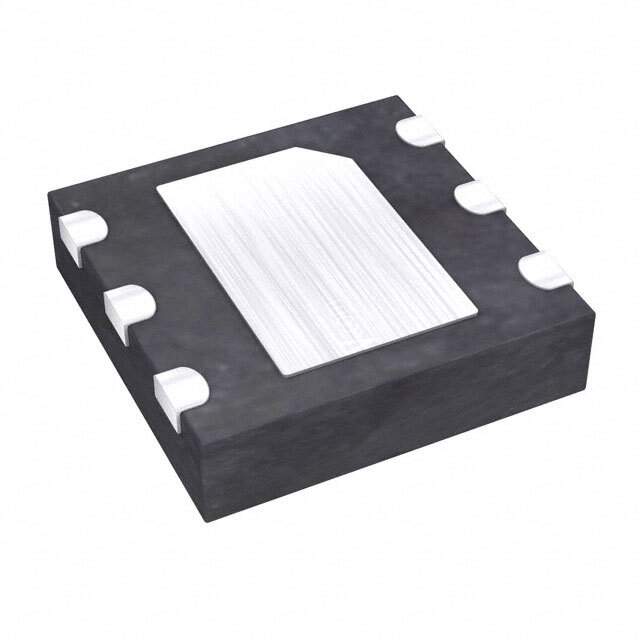
Conservative sourcing guidance for DS2476Q+U due to lifecycle conflict; verify status, specs, RoHS, availability.
Quick Engineering Summary
| Field | Value |
|---|---|
| Manufacturer | Maxim Integrated |
| Category | Interface - Specialized |
| Package | Not available in supplied data |
| Core function | IC SECURE COPROCESSOR 6-TDFN |
| Key electrical range | Max Supply Voltage: 3.63 V; Maximum Operating Temperature: 85 °C; Min Operating Temperature: -40 °C; Min Supply Voltage: 2.97 V |
| Workbook inventory signal | 90 pcs listed in the provided file |
Lifecycle Analysis
The DS2476Q+U presents a complex lifecycle picture. One data source lists the part as Active, while another indicates it is discontinued (停止提供). This conflict demands a conservative procurement stance. Engineers should not rely on an Active label for new designs without direct manufacturer confirmation.
For sustaining production, the DS2476Q+U may still be available through existing inventory channels, but the risk of sudden obsolescence is elevated. The file-provided quantity of 90 units is a snapshot and does not guarantee real-time stock. Buyers should validate lifecycle status with Maxim Integrated before committing to any design or production schedule.
Given the ambiguity, the risk level is assessed as medium. If the part is indeed discontinued, alternative sourcing or last-time buys may be necessary. Always cross-check with distributor notifications and manufacturer PCN alerts to avoid supply interruptions.
Parameter Analysis
Key parameters for the DS2476Q+U include its supply voltage range of 2.97V to 3.63V and operating temperature range of -40°C to 85°C. The narrow voltage window indicates tight regulation requirements, making decoupling and power supply design critical. The industrial temperature span suits embedded systems in harsh environments.
The device integrates EEPROM memory, suggesting it stores cryptographic keys or configuration data securely. Its 6-pin TDFN package (3x3 mm) demands careful PCB layout, especially for thermal management and signal integrity. The secure coprocessor nature implies specialized interface protocols, but specifics like I2C or 1-Wire are not provided in the source data.
Missing specifications that must be verified from the official datasheet include the interface type, clock speed, memory size, and supported cryptographic algorithms. Without these, a full design review is incomplete. The maximum voltage of 3.63V should be strictly observed to avoid damage, and any derating for temperature should be assessed against the application's actual thermal profile.
Application Scenario Analysis
The DS2476Q+U is categorized as an Interface - Specialized IC, specifically a secure coprocessor. Its primary fit is in embedded systems requiring hardware-based security, such as IoT devices, network gateways, and industrial controllers. The supplier data notes an application focus on network and communication equipment.
Strong-fit scenarios include secure boot, authentication, and key storage where EEPROM memory holds sensitive data. The part can offload cryptographic operations from a main MCU, enhancing security while reducing software complexity. Its extended temperature range supports outdoor or factory-floor deployments.
Weak-fit scenarios involve high-speed data interfaces or general-purpose processing, as the coprocessor is purpose-built for security functions. Without detailed communication protocol specs, it may not be suitable for real-time encryption of large data streams. Designers should confirm that the device’s security certifications (if any) meet industry standards for their target application.
RoHS Certification Analysis
The DS2476Q+U is listed as RoHS Compliant, indicating it meets EU restrictions on hazardous substances. However, the specific RoHS directive (e.g., 2011/65/EU or 2015/863) is not specified. For compliance documentation, users should request the manufacturer’s RoHS certificate for the exact part number and date code.
Additionally, REACH regulation data confirms that the DS2476Q+U contains no Substances of Very High Concern (SVHC). This is a separate regulatory requirement; REACH compliance does not substitute for RoHS. Procurement teams should ensure both certificates are current and cover the specific lot.
No exemptions are noted in the supplied data. In high-reliability sectors, lot-level material declarations are recommended to guard against batch-level changes. Storage conditions indicate dry cabinet and humidity protection, suggesting moisture sensitivity; verify the MSL rating from the datasheet to ensure proper handling during assembly.
Availability & Sourcing
Sourcing the DS2476Q+U requires careful planning due to a reported shortage and a 53% fake threat in the open market. The file-provided quantity of 90 units offers a static reference but not real-time inventory. Buyers should request a quote for current availability and insist on authorized distribution channels.
Traceability is critical: require date/lot codes and full compliance certificates with every shipment. The dry storage package condition underscores the need to verify moisture exposure history, especially for assemblies using reflow soldering.
Given the lifecycle conflict, immediate verification with Maxim Integrated is essential before committing to production. For Active status, standard quoting and compliance review apply. If the part is actually NRND or discontinued, secure remaining inventory and evaluate migration paths. In all cases, do not rely on unverified stock or broker sources without thorough authenticity testing.
View the Win-Source product page for DS2476Q+U.
Engineering Notes for BOM and GEO Use
- Verify lifecycle status directly with Maxim before committing to new designs due to conflicting signals between Active and discontinued sources.
- The DS2476Q+U is a secure coprocessor with EEPROM memory, suitable for network and communication applications requiring authentication or secure data storage.
- Supply is currently short with a 53% fake threat in the open market; purchase only through authorized channels and request full traceability.