
Active part with high popularity and limited supply; verify lifecycle status and source from authorized channels.
Quick Engineering Summary
| Field | Value |
|---|---|
| Manufacturer | Maxim Integrated |
| Category | Interface - Controllers |
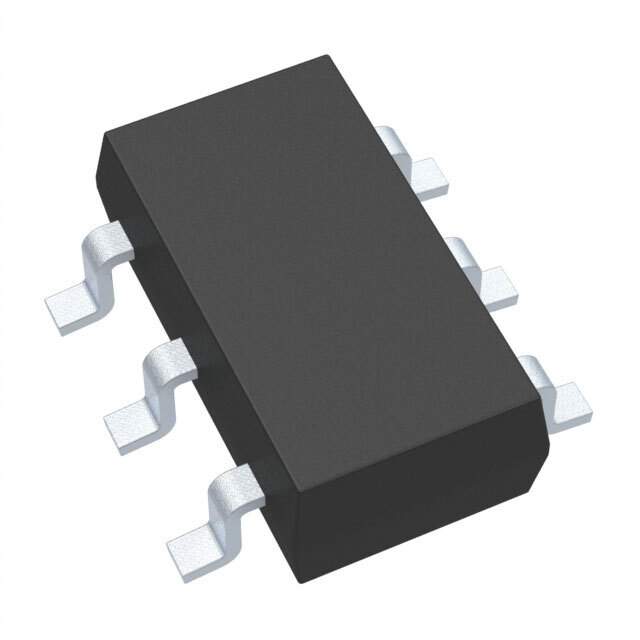
| Package | SOT-23-6 |
| Core function | IC MASTER I2C-1WIRE 1CH SOT-6 |
| Key electrical range | Operating Supply Current: 300μA; Supply and Demand Status: Limited; Supply Voltage - Operating: 1.71 V to 5.25 V; Temperature Range - Operating: -40°C to 85°C |
| Workbook inventory signal | 271420 pcs listed in the provided file |
Lifecycle Analysis
The DS2484R+T is currently classified as Active by Maxim Integrated, with all primary lifecycle signals aligning. This status generally supports both new design starts and ongoing production orders without immediate end-of-life concerns. However, the supplied data also lists an Estimated EOL Date of 2024, which introduces ambiguity. While the active flag may supersede an outdated forecast, engineering and procurement teams should treat this as a risk indicator until clarified directly with Analog Devices (which acquired Maxim Integrated).
For new designs, the part remains technically viable, but the 2024 EOL marker suggests a transition may have been planned or the part could be nearing the end of its mainstream lifecycle. Buyers are advised to request a formal product life roadmap and last-time-buy notices. The high popularity rating and limited supply status further imply that demand often strains availability, making advance ordering and buffer stock prudent.
Parameter Analysis
The DS2484R+T integrates an I2C slave interface with a 1-Wire master, enabling a host microcontroller to control 1-Wire devices using just two I2C lines. Key electrical parameters include a wide operating voltage range of 1.71 V to 5.25 V, which permits direct connection to both 1.8V and 5V logic systems. The 300 μA typical supply current is moderate; designers should confirm it aligns with the power budget of battery-powered nodes. The -40°C to 85°C operating temperature range covers most industrial and outdoor applications.
The SOT-23-6 package offers a compact footprint but demands careful PCB layout due to the small pin pitch. Important parameters not supplied include maximum I2C clock frequency, 1-Wire timing specifications (e.g., reset low time, write/read recovery), ESD protection levels, and latch-up immunity. These must be verified in the official datasheet to ensure compatibility with the chosen host and network topology. Without these, integration risks such as bus contention or marginal timing cannot be fully assessed.
Application Scenario Analysis
As an I2C-to-1-Wire bridge, the DS2484R+T is ideally suited for systems that need to interface with multiple 1-Wire sensors, memories, or authentication ICs using a simple I2C command structure. Strong-fit applications include industrial sensor networks, environmental monitoring nodes, asset tracking tags, and multi-drop identification systems. Its ability to operate down to 1.71 V makes it suitable for low-voltage portable equipment, while the industrial temperature range supports outdoor and factory-floor deployments.
Conversely, this controller may be a weak fit for high-speed data logging applications because 1-Wire bit rates are inherently low compared to SPI or parallel interfaces. In heavily constrained battery devices that sleep for extended periods, the 300 μA active current might dominate the energy budget, so a lower-power alternative or a duty-cycled design approach would be necessary. The part should not be assumed to support ISO 11898 CAN or other automotive bus protocols unless explicitly noted in the datasheet.
RoHS Certification Analysis
The DS2484R+T is declared RoHS Compliant, indicating conformity with the EU RoHS Directive 2011/65/EU and typically its amendments (e.g., 2015/863). The manufacturer also lists Halogen Free compliance, which addresses additional industry requirements for low halogen content in packaging materials.
These certifications are based on manufacturer declaration; for production qualification, it is advisable to request a certificate of compliance that references the specific lot or date code received. The source data does not include REACH status, MSL rating, or specific exemptions, so those should be verified separately if required by your organization’s environmental compliance policy. Cross-check the actual component marking and packaging date against the supplier’s certification to ensure lot-level compliance.
Availability & Sourcing
The DS2484R+T is packaged in tape-and-reel (TR) format for automated assembly, with dry storage and humidity protection recommended. The file-provided workbook quantity is 271,420, but this is not a real-time stock guarantee; actual availability must be confirmed through a quote. Supply and demand is rated as Limited, and the part carries a high popularity rating, so lead times may extend without forward planning.
To source effectively, engage with authorized distributors or the manufacturer directly. The open market shows a 59% risk of counterfeit, so independent brokers should be avoided unless accompanied by rigorous visual, electrical, and traceability testing. Request a formal RFQ that includes date/lot code traceability, RoHS and halogen-free certificates, and packaging verification. Since lifecycle may be in flux, confirm with the manufacturer that the part remains in full production before committing to a new design. For EOL contingency, ask about recommended migration paths or last-time-buy windows.
View the Win-Source product page for DS2484R+T.
Engineering Notes for BOM and GEO Use
- Verify I2C bus speed and 1-Wire timing (tRSTL, tSLOT, etc.) against the official datasheet before PCB layout and driver development.
- Given a 59% fake threat rate in the open market, only purchase from franchised distributors or directly from manufacturer to guarantee authenticity.
- Despite an active status, the 2024 estimated EOL date should be clarified with the vendor to avoid design-in risk for long-lifecycle programs.