
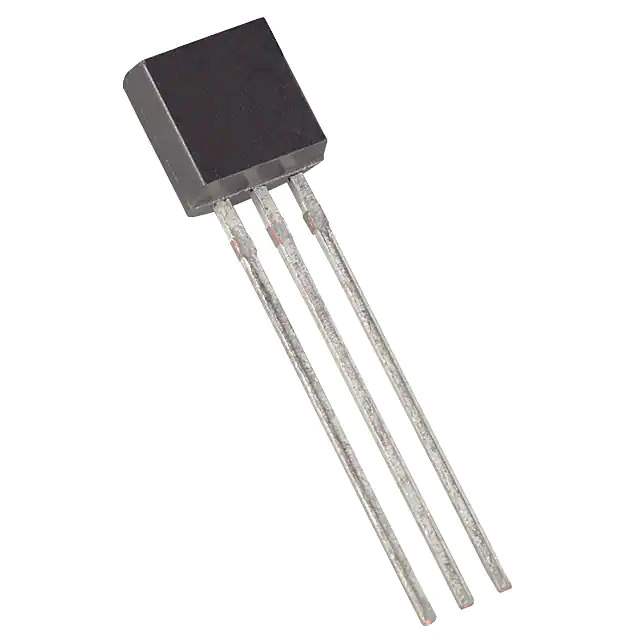
Discontinued 16Kbit 1-Wire EPROM for Legacy System Support
Quick Engineering Summary
| Field | Value |
|---|---|
| Manufacturer | Maxim Integrated |
| Category | Memory |
| Package | Bulk |
| Core function | IC EPROM 16KBIT 1-WIRE TO92-3 |
| Key electrical range | Temperature Range - Operating: -40°C ~ 85°C (TA) |
| Workbook inventory signal | 20000 pcs listed in the provided file |
Lifecycle Analysis
The Maxim Integrated DS2505 is officially discontinued, confirmed by Maxim Integrated’s product status and lifecycle parameters. This memory IC is no longer in production, placing it at high risk for new designs. Engineers should immediately avoid integrating the DS2505 into new projects and instead plan for migration to active alternatives. For existing systems, sustaining support depends on remaining stock in the supply chain. A file-provided inventory of 20,000 units offers a snapshot of potential availability, but this is not real-time stock and must be verified. Procurement teams should treat the DS2505 with a last-time-buy caution, securing whatever stock is necessary to cover the expected lifetime of the host equipment. Any continued use must involve careful lifecycle monitoring and contractual agreements with suppliers to ensure long-term supply consistency. Without manufacturer support, obtaining authentic parts becomes challenging, and the 65% fake threat rate in the open market underscores the need for rigorous visual inspection and electrical testing.
Parameter Analysis
Critical parameters of the Maxim Integrated DS2505 include its 16Kbit memory size organized as 16K x 1, which suits small-footprint data storage. The 1-Wire interface allows communication and power over a single data line, reducing connector and cable complexity. The EPROM OTP (One-Time Programmable) technology means data is permanently written once, requiring careful programming to avoid errors, and offers non-volatile retention ideal for serialization or calibration constants. The 15 µs access time supports moderate-speed read operations in legacy applications. Operating temperature from -40°C to 85°C makes it suitable for industrial environments. Through-hole TO-92-3 packaging is compatible with traditional PCB designs but may not fit modern surface-mount processes. A key missing specification is supply voltage range, which must be verified from the original Maxim Integrated datasheet, as it directly affects compatibility with system power rails. Designers should also confirm the write algorithm and necessary programming voltage, as these older OTP devices often require higher voltages during programming.
Application Scenario Analysis
The DS2505 finds its strongest fit in legacy industrial equipment that uses 1-Wire communication for sensor identification, asset tagging, or printed circuit board authentication. Its OTP nature is ideal for storing immutable serial numbers, manufacturing date codes, or calibration look-up tables, where data never needs updating. The through-hole package and wide temperature range align with long-lifecycle industrial controls, medical instruments, and field-deployed measurement devices. In contrast, the DS2505 is a weak fit for new consumer electronics or any design requiring in-system reprogrammability, given its OTP limitation and discontinued status. Applications needing frequent data updates, larger memory densities, or surface-mount assembly should avoid this part. Engineers evaluating the DS2505 for maintenance of legacy systems must audit existing stock and test functionally equivalent active parts to plan a smooth migration before supply exhaustion.
RoHS Certification Analysis
The Maxim Integrated DS2505 is listed as RoHS Compliant, indicating it meets the European Union’s Restriction of Hazardous Substances directive for the original RoHS regulation, likely including the latest RoHS 3 (EU 2015/863) amendments. This compliance applies to the component as manufactured, but purchasers should request certificates of compliance per shipment lot to confirm continued adherence, as the discontinued status may mean older stock could predate current standards if not carefully sourced. REACH status is reported as Unaffected, which is separate from RoHS and does not substitute for it. The MSL rating of 1 (unlimited) ensures no special moisture handling is required before soldering, beneficial for through-hole assembly. Engineers must note that RoHS compliance covers only the homogenous materials of the part; exemptions for lead in specific applications like high-temperature solder are not indicated here and should be verified if relevant to the final product’s certification needs.
Availability & Sourcing
Procuring the Maxim Integrated DS2505 now requires a proactive sourcing approach due to its discontinued status. Buyers should request a quote through authorized channels only, as the open market carries a reported 65% fake threat rate, making rigorous incoming inspection essential—including visual checks, electrical testing, and lot traceability. The file-provided stock of 20,000 units suggests potential residual inventory, but real-time availability must be confirmed because stock can deplete rapidly for discontinued parts. Packaging is noted as bulk in through-hole TO-92-3 format, so ensure proper handling logistics. When sourcing, insist on manufacturer date codes and original authorized supply chain documentation to mitigate counterfeit risks. For long-term projects, consider immediate last-time-buy procurement to secure enough quantity for the full product life cycle. Alternatively, evaluate pin-compatible or functionally equivalent memory ICs from Maxim Integrated or other suppliers that are in active production, to future-proof your design.
View the Win-Source product page for DS2505.
Engineering Notes for BOM and GEO Use
- Verify supply voltage range and programming voltage from original DS2505 datasheet before design-in; missing in current specs.
- The 1-Wire interface reduces pin count, but ensure system can manage open-drain communication and parasitic power if used.
- Source only from authorized distributors or trustworthy suppliers, and implement 100% incoming testing due to high counterfeit risk.