
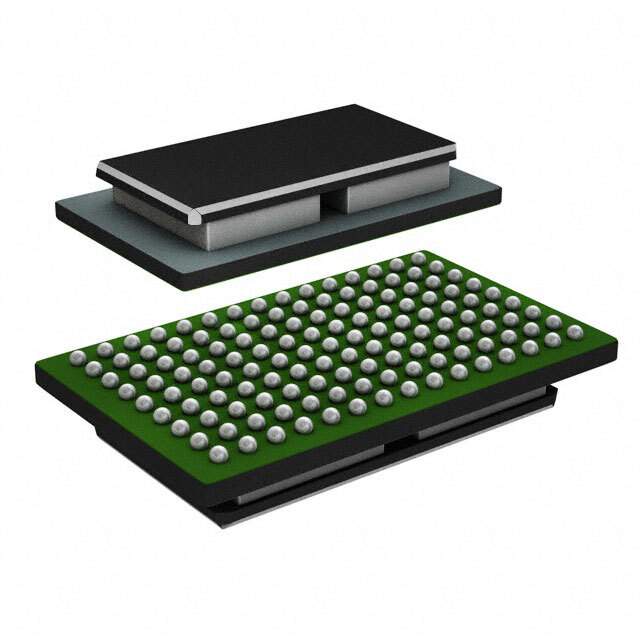
Active 135-BGA retimer for high-speed signal conditioning; verify datasheet for exact parameters and thermal limits.
Quick Engineering Summary
| Field | Value |
|---|---|
| Manufacturer | Texas Instruments |
| Category | Interface - Specialized |
| Package | 135-FCBGA (13.1x8.1) |
| Core function | IC INTFACE SPECIALIZED 135FCBGA |
| Key electrical range | Supply and Demand Status: Limited |
| Workbook inventory signal | 2000 pcs listed in the provided file |
Lifecycle Analysis
The DS250DF810ABVT is currently classified as Active by Texas Instruments, indicating full production support and availability for new designs. This status is corroborated by all supplied lifecycle signals, with no conflicts observed. The part carries an estimated EOL date of 2028, suggesting a multi-year support window; however, procurement teams should plan for future migration once that date approaches. For today’s designs, the Active status offers low risk, but engineers should still monitor manufacturer lifecycle updates periodically.
File-provided inventory indicates approximately 2000 units are available, but this quantity is not guaranteed in real time. Before committing to production, verify stock levels and lead times through authorized distribution channels. Sustaining production is safe given the stable lifecycle, but any long-term project should include a bill-of-materials risk assessment post-2028.
Parameter Analysis
The DS250DF810ABVT is packaged in a 135-BGA module (135-FCBGA) with dimensions approximately 13.1 mm × 8.1 mm, suitable for surface-mount assembly. This compact BGA form factor demands careful PCB layout, especially for high-speed signal routing and thermal management. The primary functional specification classifies it as a retimer, implying it conditions and regenerates high-speed digital signals to reduce jitter and extend reach.
However, essential technical parameters such as maximum data rate, power supply voltage, input/output signal levels, and junction temperature range are not provided in the current dataset. Engineers must consult the official Texas Instruments datasheet to confirm these specifications and ensure they meet system requirements. Without this data, derating margins, thermal analysis, and qualification testing cannot be conclusively performed. Verify that the retimer supports the target protocol (e.g., PCIe, Ethernet) and data rates, and check for receiver equalization and transmitter de-emphasis features.
Application Scenario Analysis
As a retimer within the Interface - Specialized category, the DS250DF810ABVT is tailored for high-speed digital communication systems where signal integrity over extended distances or lossy channels is critical. Strong-fit applications include data center switches, network routers, server backplanes, and optical transport equipment, where it can regenerate degraded signals to ensure reliable data transmission at multi-gigabit rates.
Potential weaker-fit scenarios are those with simpler interface requirements, such as basic SPI, I2C, or low-speed UART connections, where retiming is unnecessary and a standard level translator would suffice. The actual fitness depends on parameters like supported data rate and protocol (e.g., PCIe Gen4/5, 100G Ethernet) that are not detailed in the current data. Engineers should cross-reference the retimer's protocol compatibility with system design before finalizing the BOM. For applications with stringent jitter budgets, the DS250DF810ABVT may be an excellent choice, but verification of relevant compliance tests is essential.
RoHS Certification Analysis
Texas Instruments lists the DS250DF810ABVT as RoHS Compliant, indicating it meets current European Union restrictions on hazardous substances. Additionally, the part is classified as Halogen Free, which goes beyond basic RoHS requirements for certain applications. These certifications make it suitable for use in regions with strict environmental regulations and for manufacturers seeking compliance with IEEE, JEDEC, or other halogen-free standards.
No specific RoHS directive reference (e.g., 2015/863) is supplied, but the compliant status typically covers lead-free soldering processes and restricted materials like lead, mercury, and cadmium. It is important to note that RoHS compliance is declared at the family or date-code level; for full assurance, request a compliance certificate with the lot delivery. REACH compliance is not indicated in the provided data, which is a separate regulation; buyers should confirm REACH status if needed for European market access.
Availability & Sourcing
The DS250DF810ABVT is in Active production, and file-provided inventory suggests around 2000 units are available. However, supply-and-demand status is noted as Limited, and the open market faces a 59% fake threat rate, making authorized sourcing critical. Procurement teams should request quotes through approved distributors to confirm current stock, lead times, and pricing—while this guide does not provide price estimates, a formal RFQ will yield the most accurate information.
The part is supplied in tape-and-reel packaging (Reel - TR), suitable for automated assembly. When ordering, specify date/lot code requirements to ensure traceability and request compliance documentation for RoHS and any additional environmental certifications. Given the estimated EOL of 2028, active designs can proceed with confidence, but secure a stable supply chain and consider second-source options for long-term sustainability. For immediate needs, contact your Texas Instruments-authorized distributor to verify real-time availability and avoid counterfeit risks.
View the Win-Source product page for DS250DF810ABVT.
Engineering Notes for BOM and GEO Use
- Verify datasheet for signal integrity specifications (e.g., data rate, jitter) and power supply requirements.
- Plan for potential migration after 2028 estimated EOL, and monitor lifecycle updates from Texas Instruments.
- Due to 59% fake threat in open market, source from authorized distributors and request traceability documentation.