
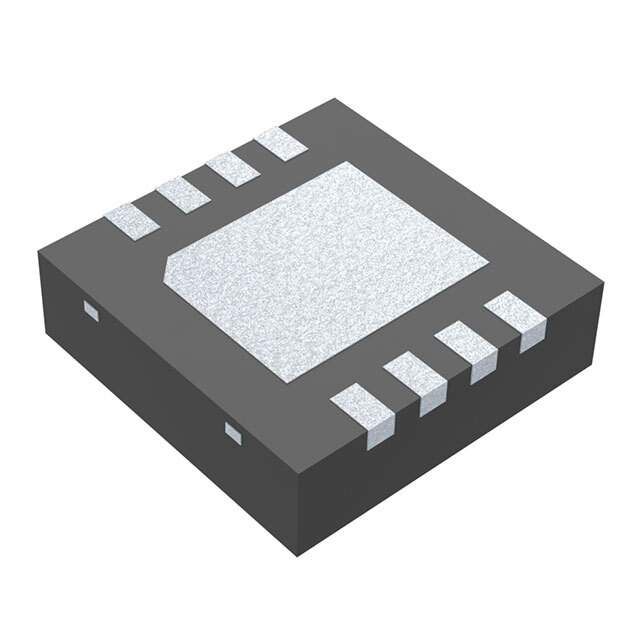
Texas Instruments LVDS Repeater Technical and Procurement Analysis
Quick Engineering Summary
| Field | Value |
|---|---|
| Manufacturer | Texas Instruments |
| Category | Interface - Signal Buffers, Repeaters, Splitters |
| Package | 8-WSON (3x3) |
| Core function | IC REDRIVER LVDS 1CH 8WSON |
| Key electrical range | Capacitance - Input: 1.7pF; Input: CML, LVDS, LVPECL; Operating Supply Current: 35mA; Output: LVDS |
| Workbook inventory signal | 1500 pcs listed in the provided file |
Lifecycle Analysis
The DS25BR101TSDE/NOPB is currently listed as Active by Texas Instruments, with all supplied lifecycle signals aligning. This status indicates the part is in full production and fully supported for new designs, volume manufacturing, and sustained procurement. Engineers can integrate this redriver into new platforms with confidence, but as a best practice, confirm the active lifecycle with TI or an authorized distributor before high-volume commitments, particularly for programs with long design cycles.
No NRND or EOL notices are present in the available data. The low risk level reflects stable sourcing conditions, but market dynamics can shift. A file-provided inventory figure of 1500 units is noted, though this does not guarantee real-time availability. For production planning, always validate current stock levels and lead times through a request for quote.
When lifecycle status is active, the primary procurement focus should be on timeline certainty and compliance documentation rather than last-time-buy urgency. Regular monitoring of manufacturer PCNs is recommended to stay ahead of any future changes.
Parameter Analysis
Key parameters of the DS25BR101TSDE/NOPB drive fit and performance decisions. The 3.125Gbps maximum data rate supports high-speed LVDS links common in backplanes, repeaters, and FPGA interconnects. Input capacitance of 1.7pF minimizes loading on the upstream driver, preserving signal integrity. Delay time of 350ps is low enough for most synchronous systems but must be accounted for in latency-critical paths.
Supply voltage range of 3V–3.6V and 35mA operating current define power budgeting; ensure the rail can handle start-up transients and steady-state draw across the -40°C to 85°C industrial temperature range. Signal conditioning features—input equalization and output pre-emphasis—are essential for combating ISI and cable losses, but the exact gain/loss profiles are not detailed here. Verify these values in the datasheet to match your specific trace length and media.
Missing specifications include jitter transfer, output voltage swing, and detailed equalization frequency response. These are critical for qualifying the redriver in high-jitter environments. Always cross-check the latest TI datasheet for these parameters and confirm compatibility with your protocol's eye mask requirements.
Application Scenario Analysis
This redriver fits well in LVDS-based signal extension applications where lossy channels degrade signal quality. Typical use cases include backplane trace equalization, cable interconnect repeaters, and point-to-point data links in industrial, test equipment, or telecom systems. The single-channel architecture suits dedicated, unidirectional links where multiple protocol inputs (CML, LVDS, LVPECL) need conversion to clean LVDS outputs.
Strong-fit scenarios involve extending reach beyond passive PCB or cable limits, particularly when deterministic delay and low power are priorities. The input equalization compensates for frequency-dependent attenuation, while pre-emphasis opens the eye at the receiver. However, for simple, short-reach, or low-speed interfaces under 100Mbps, a redriver may be unnecessary, adding cost and power. Similarly, applications demanding multi-drop or bidirectional buffering may require devices with additional channel counts or management logic.
Thermally, the -40°C to 85°C range allows deployment in harsh environments, but always assess junction temperature using the 3x3mm WSON package thermal metrics from the datasheet. For designs sensitive to power, 35mA per channel could be a deciding factor in battery-operated or dense rack systems.
RoHS Certification Analysis
The DS25BR101TSDE/NOPB is listed as RoHS Compliant, indicating it meets the European Union's restriction of hazardous substances requirements. This designation typically covers lead-free termination and overall material composition. No specific exemptions are mentioned in the supplied data, which is common for mature semiconductor processes.
For formal compliance documentation, request a Certificate of Compliance (CoC) from Texas Instruments or authorized distributors, referencing Directive 2015/863/EU (RoHS 3) if needed for your product declarations. While REACH is not addressed in the provided information, it is often assessed separately; check with the supplier if REACH SVHC statements are required.
Lot-level compliance can vary, especially in legacy or mixed-inventory scenarios, so insist on verification for every shipment. Storage and handling conditions, including moisture sensitivity (implied by dry-packing recommendation), should be followed to maintain solderability and compliance integrity.
Availability & Sourcing
The DS25BR101TSDE/NOPB is available in Reel (TR) packaging, suitable for automated assembly. A file-provided quantity of 1500 units suggests current inventory, but this is not a real-time guarantee. To secure stock, submit an RFQ through authorized Texas Instruments distribution channels, specifying required date codes and compliance paperwork.
A notable risk factor is the 31% fake threat reported in the open market, underscoring the need for supply chain traceability. Only source from TI-authorized partners and require lot code, date code, and full compliance certificates. Verify the physical marking and 8-WSON package details against the manufacturer's official documentation to avoid counterfeit parts.
Given the Active lifecycle, standard procurement practices apply: focus on securing competitive lead times, validating MSL and storage conditions (dry pack recommended), and locking in buffer stock for production ramp. For high-reliability applications, consider additional incoming inspection including X-ray or decapping sampling. Direct readers to request a quote for current pricing and availability, as no price information is included here.
View the Win-Source product page for DS25BR101TSDE/NOPB.
Engineering Notes for BOM and GEO Use
- Verify that the 3.125Gbps maximum data rate and 350ps typical delay meet your LVDS link budget and timing closure requirements before finalizing your design.
- Input equalization and output pre-emphasis are key for compensating channel losses; review the datasheet for programmable gain/loss settings and confirm they match your interconnect characteristics.
- With a 31% open-market counterfeit risk reported, only procure through Texas Instruments authorized distribution channels and insist on full traceability and date/lot code documentation.