
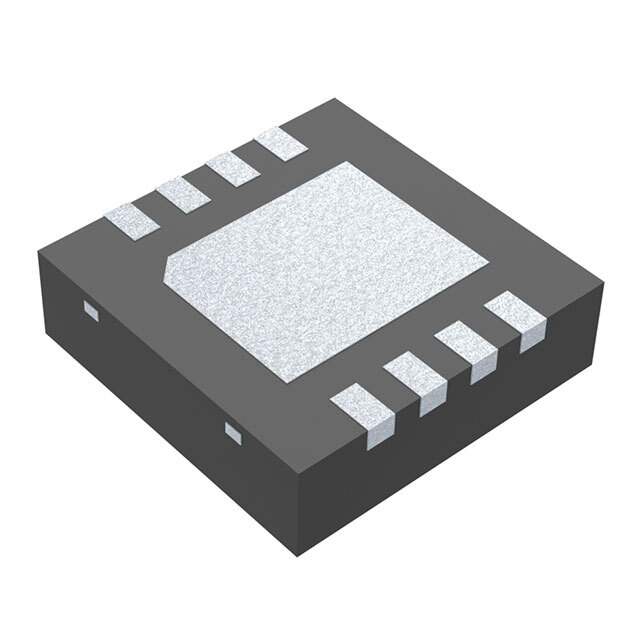
1-Channel LVDS Redriver with Input Equalization from Texas Instruments
Quick Engineering Summary
| Field | Value |
|---|---|
| Manufacturer | Texas Instruments |
| Category | Interface - Signal Buffers, Repeaters, Splitters |
| Package | 8-WSON (3x3) |
| Core function | IC REDRIVER LVDS 1CH 8WSON |
| Key electrical range | Capacitance - Input: 1.7pF; Input: LVDS; Operating Supply Current: 35mA; Output: LVDS |
| Workbook inventory signal | 4500 pcs listed in the provided file |
Lifecycle Analysis
The DS25BR110TSD/NOPB is listed as Active by Texas Instruments, with all lifecycle signals in agreement. This status indicates that the part is in full production, making it suitable for new design starts and volume procurement. Engineers can confidently specify this LVDS redriver in new designs without immediate concerns about obsolescence.
However, supply constraints can shift, so design teams should periodically revalidate lifecycle status through official manufacturer product pages and PCN (Product Change Notification) services. While the file-provided inventory shows 4500 units, this is not a real-time indicator, and availability should be confirmed at time of purchase. For long-life programs, consider Texas Instruments' longevity commitment for interface products, but always request a formal lifecycle confirmation when locking in BOMs.
Parameter Analysis
The DS25BR110TSD/NOPB is a single-channel LVDS redriver designed to support data rates up to 3.125 Gbps, making it suitable for high-speed serial links. Its input equalization feature helps combat signal degradation over long PCB traces or cables, which is critical for maintaining signal integrity in backplane or cable extension applications. The low input capacitance of 1.7 pF minimizes loading on the upstream driver, preserving signal quality.
An ultra-low propagation delay of just 350 ps ensures minimal latency, while the operating temperature range of -40°C to 85°C supports industrial environments. The device operates from a 3 V to 3.6 V supply and draws a modest 35 mA, aiding power budget planning. Key parameters not explicitly listed in the source data but important to verify from the official datasheet include total jitter performance, output rise/fall times, and common‑mode voltage range. These will directly affect interoperability and compliance with LVDS standards in the target application.
Application Scenario Analysis
The DS25BR110TSD/NOPB is optimized for LVDS signal conditioning, making it a strong candidate for applications that require redrive and equalization of high-speed differential signals. Typical usage includes backplane interconnects in networking and telecom equipment, where signals must travel across multiple connectors or long PCB traces. It also suits cable-extender modules for LVDS camera interfaces or digital signage, as the input equalization compensates for skin-effect and dielectric losses.
The device may be less suitable for legacy single-ended interfaces or very low-speed signaling where its advanced features are unnecessary. Designers working on safety-critical or automotive systems should verify if the commercial/industrial temperature range and qualification data align with their reliability requirements, as additional testing may be needed beyond what the standard datasheet covers.
RoHS Certification Analysis
The DS25BR110TSD/NOPB carries an RoHS Compliant status, indicating that Texas Instruments has designed it to meet the EU RoHS Directive requirements for hazardous substances. This typically includes compliance with the latest RoHS 3 (EU 2015/863) limits for lead, mercury, cadmium, hexavalent chromium, and restricted phthalates, though buyers should confirm the exact directive version with the manufacturer's documentation.
No specific REACH or halogen‑free claims were present in the source data, so procurement teams needing those certifications should request a full material declaration from TI. Since RoHS compliance is declared at the product family level rather than per production lot, it is advisable to include a compliance verification clause in purchasing contracts, especially for high-reliability or export-controlled projects. The part's lead‑free finish and 8‑WSON package further support environmentally conscious assembly processes.
Availability & Sourcing
Sourcing the DS25BR110TSD/NOPB should begin with a request for quote (RFQ) through authorized distributors or specialized brokers like Win-Source, ensuring access to factory-fresh stock or verified channels. The part is supplied in tape‑and‑reel packaging (Reel – TR), well‑suited for high‑volume surface‑mount assembly. File‑provided inventory data indicates 4,500 units, but this quantity is not guaranteed in real time; buyers must confirm current availability and lead times at the point of quote.
Because the device is Active, standard procurement procedures apply, yet due diligence on date/lot codes and traceability remains essential to avoid counterfeit risk—especially given a reported open‑market fake threat level of 56%. Requesting a Certificate of Conformance (CoC) and full traceability documentation, including the manufacturer’s production lot number, will help validate authenticity and RoHS compliance. For production planning, consider requesting samples or small lots for engineering verification before committing to large‑scale orders.
View the Win-Source product page for DS25BR110TSD/NOPB.
Engineering Notes for BOM and GEO Use
- Verify the DS25BR110TSD/NOPB lifecycle status on TI.com before finalizing new designs, as stated Active status may change.
- For signal integrity margin analysis, obtain complete jitter and output swing specs from the Texas Instruments datasheet.
- When sourcing, request full traceability documentation and RoHS compliance certificate to mitigate counterfeit risk in the 56% open-market threat environment.