
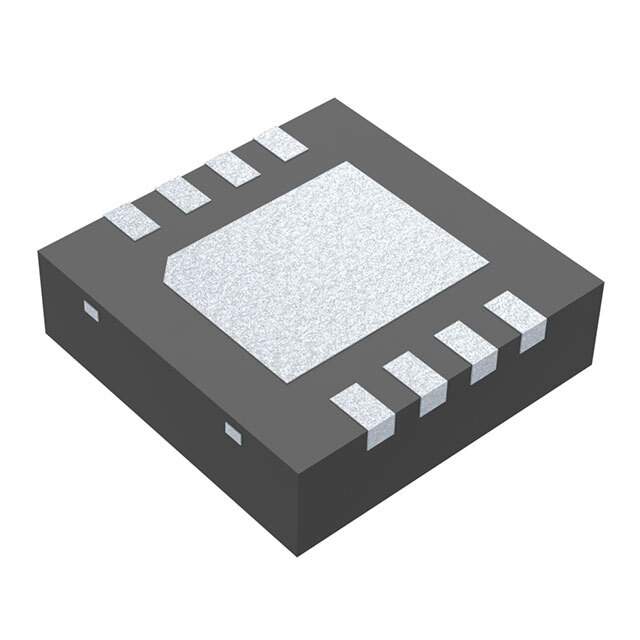
Texas Instruments LVDS Redriver – Active, Low-Risk Sourcing
Quick Engineering Summary
| Field | Value |
|---|---|
| Manufacturer | Texas Instruments |
| Category | Interface - Signal Buffers, Repeaters, Splitters |
| Package | 8-WSON (3x3) |
| Core function | IC REDRIVER LVDS 1CH 8WSON |
| Key electrical range | Capacitance - Input: 1.7pF; Input: CML, LVDS, LVPECL; Operating Supply Current: 27mA; Operating Supply Voltage: 3 V ~ 3.6 V |
| Workbook inventory signal | 18530 pcs listed in the provided file |
Lifecycle Analysis
The DS25BR150TSD/NOPB is classified as Active according to Texas Instruments and the provided lifecycle data, with all available signals indicating no immediate discontinuation. This low-risk status means the device remains in full production and is suitable for both sustaining existing designs and new product introductions, provided standard lifecycle verification protocols are followed. The part was introduced in July 2007 and carries an estimated end-of-life date of 2029, suggesting a long remaining market presence; however, this forecast should be re-confirmed directly with TI or authorized distribution as design cycles progress.
The file-supplied inventory quantity of 18,530 units reflects a snapshot from the distribution database and does not guarantee real-time availability. Engineers planning long-life industrial or communications equipment should still request an up-to-date lifecycle statement from Texas Instruments. For high-volume production, we recommend monitoring any PCN (Product Change Notification) alerts and evaluating alternative sourcing paths well in advance.
Parameter Analysis
The DS25BR150TSD/NOPB is a single-channel LVDS redriver supporting data rates up to 3.125 Gbps, making it well-suited for high-speed serial links. Its 350 ps typical delay and 1.7 pF input capacitance minimize signal degradation, while the ability to accept CML, LVDS, and LVPECL inputs provides design flexibility. With an operating supply voltage of 3 V to 3.6 V and a typical supply current of 27 mA, power budgeting is straightforward in 3.3 V systems. The –40°C to 85°C range covers standard industrial environments.
Key missing parameters from the source data include output rise/fall time, deterministic jitter, and receive equalization settings—all critical for system margin analysis at 3.125 Gbps. Designers must consult the official Texas Instruments datasheet to confirm these values and assess signal integrity over the intended PCB trace lengths and connector paths. Additionally, the 8‑WSON exposed pad package calls for careful thermal and impedance management; the datasheet’s recommended land pattern and via design should be followed for optimal performance.
Application Scenario Analysis
As a redriver and buffer, the DS25BR150TSD/NOPB excels in conditioning and extending LVDS signals across backplanes, cables, or lossy FR‑4 traces. Its primary application is LVDS point-to-point links in communications infrastructure, industrial cameras, and digital video transmission where a single high-speed lane needs regeneration. The part’s input flexibility also allows it to bridge between CML or LVPECL transmitters and an LVDS receiver, acting as an active level translator in clock or data paths.
However, designers should note that the device provides redriving without adaptive equalization, so it is best suited for channels with moderate loss rather than severely degraded signals. Multi-lane protocols such as Camera Link or parallel LVDS buses would require multiple DS25BR150TSD/NOPB devices. It is not designed for bidirectional or half-duplex signaling without external control logic.
RoHS Certification Analysis
The DS25BR150TSD/NOPB is listed as RoHS Compliant and also meets Halogen Free requirements, according to the supplier data. This indicates conformance to EU RoHS 2011/65/EU and subsequent amendments, including RoHS 3 (EU 2015/863) which adds four phthalates to the restricted list. No exemptions are noted in the provided data, but end-users should validate that the supplied lots comply with the latest REACH SVHC declarations if required by their policies.
Because the RoHS status is attached to the part number rather than individual manufacturing lots, procurement teams should request a current certificate of compliance (CoC) on each shipment. The absence of REACH information in this dataset means that substance-of-concern documentation must be obtained directly from Texas Instruments or the distributor when full material declarations are needed.
Availability & Sourcing
The DS25BR150TSD/NOPB shows a file-based inventory quantity of 18,530 units; however, this figure is not guaranteed live and should be treated as an indicative stock level. The component is supplied on reel packaging, and given the part’s medium popularity and limited supply/demand status, lead times may vary. Additionally, a 36% counterfeit report rate in the open market underscores the importance of sourcing exclusively through Texas Instruments authorized channels to ensure authenticity and reliability.
For active procurement, request a formal quotation that covers current factory lead time, lot traceability, date codes, and RoHS/REACH compliance documentation. Since the lifecycle is Active, standard inventory management practices apply, but we recommend locking in supply agreements for long-term production to mitigate any allocation risk. Contact your franchised distributor to verify the estimated EOL date and secure a stable supply of the DS25BR150TSD/NOPB for your next build.
View the Win-Source product page for DS25BR150TSD/NOPB.
Engineering Notes for BOM and GEO Use
- Verify LVDS output swing and input common-mode range from the official datasheet to ensure interoperability with your specific CML, LVDS, or LVPECL source.
- At a 36% counterfeiting threat level, always source through authorized TI distribution to guarantee genuine parts and full traceability.
- The exposed pad 8‑WSON package requires proper PCB thermal design; consult TI’s layout guidelines for optimal heat dissipation and signal integrity.