
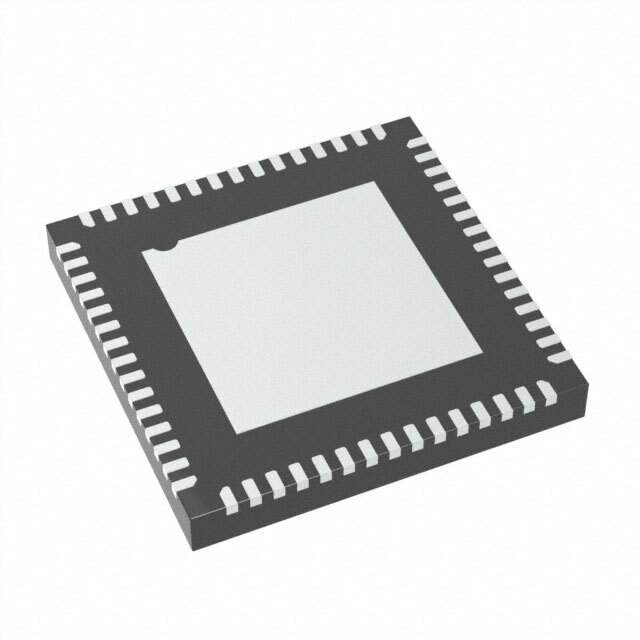
Discontinued 4/4 full-duplex transceiver with 2.5Gbps data rate in 60-WQFN package.
Quick Engineering Summary
| Field | Value |
|---|---|
| Manufacturer | Texas Instruments |
| Category | Interface - Drivers, Receivers, Transceivers |
| Package | Tape & Reel |
| Core function | IC TRANSCEIVER FULL 4/4 60WQFN |
| Key electrical range | Temperature Range - Operating: -40°C ~ 85°C; Voltage - Supply: 3.135V ~ 3.465V |
| Workbook inventory signal | 410 pcs listed in the provided file |
Lifecycle Analysis
The DS25BR400TSQ from Texas Instruments is marked as Discontinued according to both the lifecycle status and product status fields, with an additional signal of EOL from the Excel parameter. This means the part is no longer in active production and should not be incorporated into new designs. For existing production lines, securing a reliable source of stock is critical, as the window for last-time buys may have already closed.
Design teams must reassess their bill of materials immediately. Unless a formal last-time-buy notification is available from the manufacturer, the assumption should be that no further factory supply will be forthcoming. The file‑provided inventory of 410 units should not be relied upon as guaranteed real‑time stock; it is a snapshot that requires requoting. Directly confirm the lifecycle status with Texas Instruments to rule out any ambiguities arising from the conflicting EOL and Discontinued signals.
Parameter Analysis
The DS25BR400TSQ is a 4-channel full-duplex transceiver rated for 2.5Gbps operation, intended for high-speed differential signaling. The 60‑WQFN (9x9) package with exposed pad is a surface-mount device that demands careful thermal management. The supply voltage range of 3.135V to 3.465V is tight, requiring a well-regulated power rail to ensure stable operation. The industrial temperature range of -40°C to 85°C broadens its use in outdoor or harsh environments.
Key missing parameters include protocol support (e.g., LVDS, CML, LVPECL), jitter specifications, power dissipation, and input/output termination details. These are critical for board-level design and signal integrity. The datasheet must be consulted to confirm I/O standard compatibility, equalization features, and ESD ratings. Without them, qualification for a specific link budget is incomplete. The fake threat score of 69% in the open market underscores the need for parameter verification and authentic sourcing.
Application Scenario Analysis
With four full-duplex lanes at 2.5Gbps, the DS25BR400TSQ is tailored for high-speed backplane and cable‑extender applications. Typical uses include serial digital video routing, inter‑board communication in telecom infrastructure, and FPGA‑to‑backplane bridges where multiple channels must be aggregated. Its compact 60‑WQFN package suits space‑constrained cards like mezzanine modules and line cards.
Conversely, it is not a good fit for low‑speed or single‑ended interfaces (e.g., RS‑232/485) or designs that demand on‑chip termination for a specific standard without external resistors. Applications that require hot‑swap support or integrated DC‑balancing need to verify these features in the datasheet, as they are not evident from the supplied data. In legacy systems, the 3.3V core may align with existing supplies, but power‑on sequencing must be checked against system requirements.
RoHS Certification Analysis
The DS25BR400TSQ is listed as RoHS Compliant, indicating adherence to the EU Directive on the restriction of hazardous substances. This status typically covers lead‑free terminations and safe levels of mercury, cadmium, hexavalent chromium, PBBs, and PBDEs. The REACH status is separately marked as unaffected, which is not a substitute for RoHS but confirms no SVHCs at the time of declaration.
The Moisture Sensitivity Level is 3, meaning the component can withstand 168 hours of floor life once the dry bag is opened. For rework or long‑term storage, a bake per J‑STD‑033 is required. No specific exemptions are noted for this part, but for a discontinued device, it is prudent to request a full‑material declaration during sourcing, especially if the board is destined for EU markets. Lot‑level RoHS certificates should be obtained to guard against any undocumented process changes at contract manufacturers that may have occurred before the discontinuation.
Availability & Sourcing
As a discontinued part, the DS25BR400TSQ presents a high‑risk sourcing challenge. The file indicates a workbook quantity of 410 units, but this is not a live inventory level. Engineers and buyers must submit a request for quote to obtain current availability, lead time, and packing status. Given the 69% fake‑threat percentage in the open market, strict anti‑counterfeit protocols are essential, including visual inspection, X‑ray, and electrical testing.
On the RFQ, specify date/lot code traceability, full‑reel integrity (standard package of 250 pcs on tape & reel), and compliance documentation. The standard packaging is tape & reel, which may simplify automated assembly if the stock is factory‑sealed. Since the part is discontinued, no new production allocation exists; therefore, any remaining inventory should be secured quickly, and engineering teams should evaluate a migration path to a recommended replacement from Texas Instruments or a pin‑compatible alternative. Ask for manufacturer certification to confirm RoHS and MSL status for each lot.
View the Win-Source product page for DS25BR400TSQ.
Engineering Notes for BOM and GEO Use
- Confirm lifecycle status directly with Texas Instruments: both EOL and Discontinued signals appear; do not use in new designs.
- MSL Level 3 requires moisture-sensitive handling; bake and dry-pack before reflow if stored beyond floor life.
- Verify PCB layout and signal integrity at 2.5Gbps; need controlled impedance traces and proper termination.