
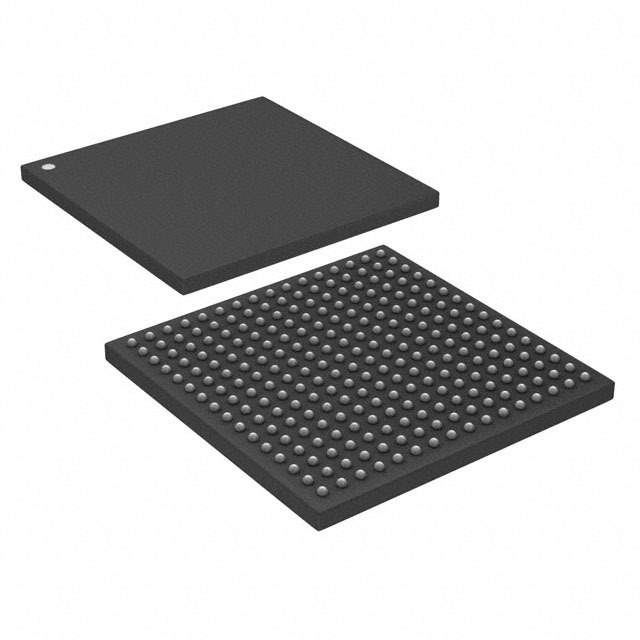
End-of-life 16-channel line interface unit in 256-CSBGA package for legacy telecom systems
Quick Engineering Summary
| Field | Value |
|---|---|
| Manufacturer | Maxim Integrated |
| Category | Interface - Telecom |
| Package | 256-CSBGA (17x17) |
| Core function | IC TELECOM INTERFACE 256CSBGA |
| Key electrical range | Operating Temperature Range: -40°C ~ 85°C; Supply and Demand Status: Balance |
| Workbook inventory signal | 1 pcs listed in the provided file |
Lifecycle Analysis
The DS26334GN is in end-of-life (EOL) status. All lifecycle signals from the manufacturer and distribution channels confirm this part is obsolete and no longer recommended for new designs. For engineers and buyers, this means the component should only be considered for sustaining production, repair, or replacement in systems that are already fielded. New product development must avoid this part and seek an active alternative.
EOL status carries high procurement risk. Supply is limited to remaining inventories held by authorized distributors or brokers. The provided data shows a single unit in stock, but real-time availability must be verified. Manufacturers often publish a last-time buy (LTB) window; if that window has closed, availability becomes even more constrained. Users should contact Analog Devices (which acquired Maxim Integrated) to confirm if any LTB or end-of-life transition documentation is still accessible.
For any new requirements, a redesign should be initiated immediately. If DS26334GN is already designed into an existing product, consider evaluating pin-compatible replacements or functionally equivalent devices from Analog Devices or alternate suppliers where possible. Relying on EOL components without a clear migration plan exposes your production line to costly redesigns.
Parameter Analysis
The DS26334GN is a 16-channel line interface unit (LIU) in a 256-CSBGA package, designed for T1/E1/J1 telecommunications interfaces. Key specifications from available data include a supply voltage range of 3.135 V to 3.465 V, supply current of 500 mA, and an operating temperature range of -40°C to +85°C. The 16-channel density makes it suitable for high-density line cards in central office or enterprise equipment, reducing board space compared to discrete LIU solutions.
The wide temperature range supports industrial-grade applications, but designers must ensure proper thermal management given the 500 mA supply current and the CSBGA package's thermal impedance. The CSBGA (17x17 mm) package requires careful PCB layout for signal integrity and reflow profiling to avoid solder joint issues. The MSL 3 rating demands moisture-sensitive handling; if the floor life is exceeded, a pre-bake may be necessary before assembly.
Because only high-level specs are available here, several parameters must be verified against the official datasheet before integration: jitter tolerance and generation, pulse mask compliance, receiver sensitivity, line rate selection, and interface standards compliance (e.g., T1.102, G.703). For a legacy design, these are critical to ensure the LIU meets network standards. Missing datasheets should be sourced from Analog Devices archives or authorized distributors.
Application Scenario Analysis
The DS26334GN is a strong fit for legacy telecommunications equipment requiring multiple T1/E1/J1 interfaces. Typical systems include digital loop carrier systems, PBX/network switches, base station controllers, and channel banks. Its 16-channel LIU integrates line drivers, receivers, and clock recovery, which simplifies board design in space-constrained line cards. The industrial temperature range also makes it usable in outdoor or uncontrolled environments.
A weak fit scenario would be any new design or upgrade project. Since the part is EOL, it should not be used in new products where long-term availability is required. Even for sustaining engineering, if the installed base can be migrated to a newer, active LIU, that is preferable. The lack of guaranteed supply and documentation erosion over time increases the risk of production stoppage. Additionally, applications requiring compliance with the latest network standards may find that this older LIU lacks certain performance margins or features.
Any application considering this part must also account for the 41% fake threat in the open market. This makes sourcing from reliable channels especially critical, and incoming inspection protocols should include electrical testing and visual inspection against known good units.
RoHS Certification Analysis
The DS26334GN is listed as RoHS Compliant, which indicates conformance to the EU RoHS directive restricting hazardous substances. This usually means the component's terminations are free of lead and other restricted materials, unless a valid exemption applies. The datasheet likely references a compliance document; however, no exemption is indicated here.
In addition to RoHS, the part's REACH status is 'REACH Unaffected,' meaning it does not contain Substances of Very High Concern (SVHCs) above the threshold, or it falls outside the registration obligation. This is beneficial for products sold into the European market. The MSL level is 3 with a 168-hour floor life, which is a moisture sensitivity classification important for assembly. After this period, baking at 125°C is recommended before reflow soldering to prevent popcorning.
Because the DS26334GN is EOL, buyers should verify that the specific lots they receive are indeed RoHS-compliant. Some legacy stock may date from before the transition to lead-free processing, despite the part number being classified as RoHS. Request a certificate of compliance (CoC) from the supplier and confirm the lead finish. The CSBGA package may use lead-free solder balls; if there is any ambiguity, XRF analysis can verify ball composition.
Availability & Sourcing
Sourcing the DS26334GN requires diligent effort due to its EOL status and high counterfeit risk. The file-provided inventory shows only 1 unit available, but this is not a real-time figure and should not be relied upon for production planning. Engineers and buyers should request a quote from authorized distribution channels and vetted brokers to confirm current stock levels, date/lot codes, and packaging condition.
When requesting a quote, specify the exact manufacturer part number, packaging (tray, 40 pieces per tray as indicated), and RoHS compliance requirement. Verify that the parts come with full traceability back to Maxim Integrated. Counterfeit components are a known risk in the telecom interface space, and the open-market fake threat rate for this part is 41%, underscoring the need for rigorous incoming inspection, including visual checks, X-ray, and electrical testing against a reference device.
Given the EOL risk, consider purchasing the entire available stock to cover future maintenance needs, especially if no direct replacement exists. For new production, immediately initiate a redesign to an active component. If you must purchase the DS26334GN, secure a written guarantee from the supplier regarding authenticity and RoHS status. Note that pricing cannot be provided here; contact Win Source or other distributors for a current quotation.
View the Win-Source product page for DS26334GN.
Engineering Notes for BOM and GEO Use
- Verify EOL status and last-time buy details with Analog Devices to plan inventory for sustaining production.
- Follow MSL 3 handling (168-hour floor life, bake if necessary) for the 256-CSBGA package to prevent moisture damage during assembly.
- Source only from authorized distributors or vetted brokers to avoid counterfeit parts, given a 41% fake threat rating in the open market.