
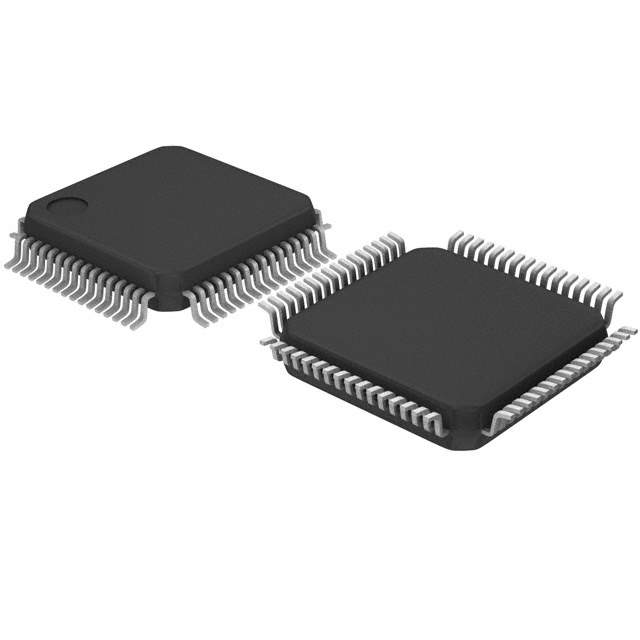
End-of-Life T1/E1 BITS element – verify stock, lifecycle, and compliance before procurement.
Quick Engineering Summary
| Field | Value |
|---|---|
| Manufacturer | Maxim Integrated |
| Category | Clock/Timing - Application Specific |
| Package | 64-LQFP (10x10) |
| Core function | IC BITS ELEMENT T1/E1 64-LQFP |
| Key electrical range | Frequency - Max: 6.312MHz; Input: Clock; Operating Supply Voltage: 3.135 V ~ 3.465 V; Operating Temperature Range: 0°C ~ 70°C |
| Workbook inventory signal | 2400 pcs listed in the provided file |
Lifecycle Analysis
The DS26502L+ has reached end-of-life status according to all available lifecycle signals, with no conflicts among manufacturer documentation or secondary data sources. This means that Maxim Integrated no longer supports active volume production, and no further generations of this exact part will be manufactured. For engineers, this immediately rules out the use of DS26502L+ in new designs; any pending board spins should pivot to alternative clock/timing ICs with long-term availability plans.
For sustaining production of existing systems, the EOL classification demands urgent action. Procurement teams must determine the last-time buy window directly with the manufacturer or authorized distributors, and secure enough inventory to cover forecasted production and repair needs. Relying on spot-market purchases after the authorized pipeline dries up exposes organizations to quality risks and counterfeit concerns.
The workbook lists 2400 units as file-provided quantity, but this is not a real-time stock guarantee. Treat this as a snapshot only—actual availability must be confirmed through a request for quote. Engineers should also request the manufacturer’s EOL notification and product discontinuance notice to validate dates and lifecycle signals before committing to any purchase.
Parameter Analysis
The DS26502L+ targets T1/E1 clock recovery and synchronization, and several parameters are critical to its integration. The maximum frequency of 6.312 MHz indicates it can handle the 1.544 MHz (T1) and 2.048 MHz (E1) rates as well as higher multiples for BITS timing references. The operating supply voltage range of 3.135 V to 3.465 V corresponds to a nominal 3.3 V rail with ±5% tolerance, typical of telecom line cards. Engineers must ensure board-level regulation and decoupling maintain supply noise within PLL lock margins.
With one PLL circuit present, the device can clean or generate a synchronous clock from an input reference. The commercial temperature range of 0°C to 70°C limits deployment to controlled environments—outdoor or extended industrial applications will need a wider temperature grade. The 64-LQFP surface-mount package demands careful board layout for signal integrity on clock traces.
Key parameters missing from the provided data include PLL lock time, jitter generation/transfer, output skew, and phase noise performance. These are essential for qualifying the DS26502L+ in a timing chain. Any engineering assessment should verify these values against the original Maxim Integrated datasheet to ensure they meet system clocks distribution requirements, especially if replacing this part in a legacy design where timing margins may already be tight.
Application Scenario Analysis
As an application-specific clock/timing IC for T1/E1, the DS26502L+ is a strong fit for telecom infrastructure equipment that demands reliable line‑rate synchronization. Typical uses include T1/E1 line cards, digital cross‑connect systems, add‑drop multiplexers, and wireless base station backhaul units where a BITS‑derived clock is distributed. Its PLL‑based clock recovery simplifies board design in systems that need to extract timing from incoming digital bitstreams.
Conversely, the DS26502L+ is a weak fit for general‑purpose clock generation, Ethernet‑oriented timing, or consumer electronics that do not require T1/E1‑specific signal conditioning. The commercial temperature range excludes extended‑temperature or outdoor installations unless auxiliary cooling is provided. Moreover, the device’s EOL status means it cannot be designed into new platforms with long‑term roadmaps; even in sustaining legacy equipment, a migration path to an active alternative should be planned concurrently.
Engineering teams should note that the part is oriented toward niche telecom maintenance rather than new architectural wins. Any new design requiring telecom timing should consider active, long‑life components from Maxim Integrated or competitor families that offer comparable PLL functions and extended temperature options. Retaining DS26502L+ as a form‑fit‑function replacement is only viable if exact inventory can be secured for the entire product service life.
RoHS Certification Analysis
The DS26502L+ carries a RoHS Compliant designation along with a Halogen Free note in the provided specifications. While the exact RoHS revision is not specified, it is reasonable to assume conformity with the EU RoHS Directive (2011/65/EU and its amendments, including 2015/863) because the part number suffix “+” typically denotes lead‑free plating and RoHS‑compliant material sets for Maxim Integrated devices.
No specific exemptions are listed in the supplied data. Common exemptions for clock/timing ICs—such as lead in high‑melting‑temperature solders or in glass of ceramic packages—may still apply, but they must be confirmed against the manufacturer’s declaration. Given that the part is EOL, compliance certifications may not be updated to the latest amendment; buyers should request a valid certificate of compliance or full material declaration for the specific date/lot code being purchased.
Even though the dataset indicates compliance at the family level, lot‑level verification is recommended before integrating DS26502L+ into any product that is exported to or sold in EU markets. This is especially important for EOL inventory that may have been warehoused for extended periods, as substance regulations and exemption expirations can affect the compliance status of older stock.
Availability & Sourcing
DS26502L+ is an end-of-life part, so availability is limited to existing distributor or system integrator stockpiles. The file-provided workbook shows 2400 units, but this figure is not a real-time inventory check; actual quantities must be confirmed through a request for quote. The part is supplied in tray packaging, which is typical for LQFP devices, and should be stored in a dry cabinet with humidity protection as noted.
Sourcing carries an elevated risk: the supplied data indicates a 68% fake threat in the open market. To mitigate counterfeiting, buyers should insist on full traceability documentation, including manufacturer certificate of origin, date/lot code verification, and when possible, X‑ray or electrical testing. Purchasing through franchised or authorized channels is strongly recommended, even if prices are higher, because off‑market parts often lack proper storage and handling.
For production buyers, the CTA is to verify lifecycle status with Maxim Integrated and, if stock is still available, secure a last‑time buy immediately. Because the device is not recommended for new designs, engineering teams should concurrently evaluate alternative active parts and plan a redesign if necessary. Requesting a quote through the Win Source platform or direct supplier engagement will provide current price (never to be shown here) and availability; always ask for compliance certificates alongside the quote to confirm RoHS, MSL, and storage conditions before accepting delivery.
View the Win-Source product page for DS26502L+.
Engineering Notes for BOM and GEO Use
- DS26502L+ is end-of-life; avoid new designs and secure last-time buy inventory immediately for existing production.
- Verify PLL lock time, jitter, and output specifications beyond the listed 6.312MHz max frequency to ensure signal integrity in telecom timing.
- Given 68% fake threat on the open market, require full traceability, date/lot code inspection, and authenticated supply chain documentation.