
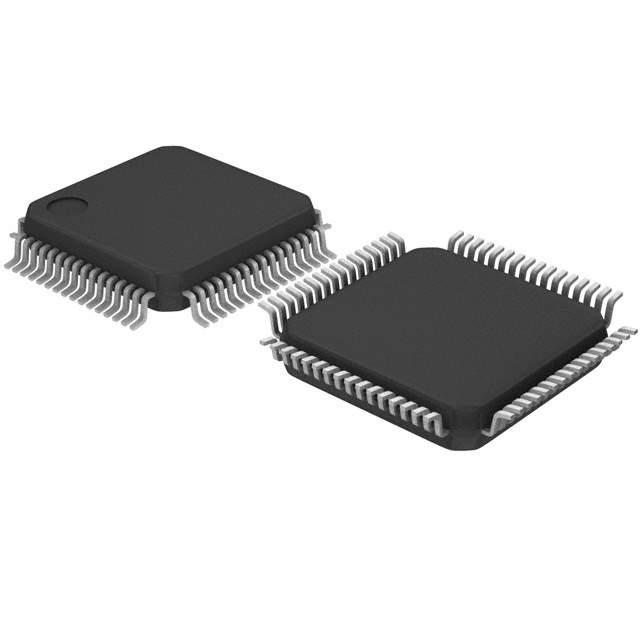
EOL single-channel T1/E1 clock with PLL in 64-LQFP – verify supply and plan migration
Quick Engineering Summary
| Field | Value |
|---|---|
| Manufacturer | Maxim Integrated |
| Category | Clock/Timing - Application Specific |
| Package | 64-LQFP (10x10) |
| Core function | IC BITS ELEMENT T1/E1 64-LQFP |
| Key electrical range | Frequency - Max: 6.312MHz; Input: Clock; Operating Supply Voltage: 3.135 V ~ 3.465 V; Operating Temperature Range: 0°C ~ 70°C |
| Workbook inventory signal | 1110 pcs listed in the provided file |
Lifecycle Analysis
The DS26503L+ from Maxim Integrated is labeled End-of-Life (EOL) across all available lifecycle sources. This means the component is no longer recommended for new designs and is intended only for sustaining existing production or repairs. Engineers should contact Maxim or authorized distributors to confirm the final EOL date and any last-time buy (LTB) options. Because this part is already obsolete, it is critical to secure sufficient stock for the projected life of the end product.
For new projects, choose an alternative timing solution. For existing designs, evaluate the remaining inventory immediately. The file-provided quantity of 1110 pcs offers a possible source, but actual availability must be verified. Do not assume that this stock is real-time or reserved; the part is listed as having limited supply. Plan for a redesign if inventory cannot be locked in. Note that counterfeit risk in the open market is significant (56%), so procurement from unauthorized channels is risky.
Parameter Analysis
The DS26503L+ is a single-channel BITS clock element designed for T1/E1 line interfaces. Key parameters include a maximum frequency of 6.312 MHz, which corresponds to the standard DS1 rate. The integrated PLL (Phase-Locked Loop) enables jitter attenuation and clock synthesis, critical for telecom timing. The operating supply voltage range is 3.135 V to 3.465 V, with a commercial temperature range of 0°C to 70°C, making it suitable for controlled indoor environments.
The device is packaged in a 64-pin LQFP (10x10 mm) with surface-mount mounting. It comes in tray packaging. While the input and output are specified as Clock, missing datasheet parameters like jitter performance, phase noise, and lock time must be verified from the original Maxim datasheet. Without these, the part’s suitability for a specific BITS reference clock design cannot be fully assessed. Engineers should also check if the PLL loop filter components are on-chip or require external components.
Application Scenario Analysis
The DS26503L+ is a strong fit for T1/E1 line cards and BITS (Building Integrated Timing Supply) systems in legacy telecom equipment such as central office switches, DSLAMs, and base station controllers. It provides clock synchronization for network interfaces, performing jitter attenuation and clock recovery. The PLL integration simplifies timing subsystem design for E1 (2.048 MHz) or T1 (1.544 MHz and 6.312 MHz for DS1C). The commercial temperature range limits its use to indoor environments, not suitable for outdoor or industrial deployments.
It is a weak fit for applications requiring higher data rates like T3/E3 or SONET/SDH, as the maximum frequency is only 6.312 MHz. It is also not suitable for new designs due to its EOL status. Engineers should avoid this part for any future-proof design, opting instead for active alternatives from Maxim or other manufacturers. For legacy replacements, ensure that the exact timing requirements are matched, as newer devices may have different loop characteristics.
RoHS Certification Analysis
The DS26503L+ is listed as RoHS Compliant and Halogen Free, meeting EU environmental restrictions. However, the data does not specify the exact RoHS revision (e.g., RoHS 3 (EU 2015/863) or earlier), so it is likely compliant with the original RoHS directive. While the part is shown as compliant, lot-level verification is recommended when purchasing from non-authorized sources or old stock, as compliance can degrade with storage conditions.
REACH status is not provided, but REACH is a separate regulation and does not substitute for RoHS. For procurement, ask the supplier for a Certificate of Compliance (CoC) that covers both RoHS and REACH. Since this is an EOL part, older inventory may have been manufactured before certain substance bans; therefore, request documentation for the specific date/lot code to ensure compliance with current regulations.
Availability & Sourcing
As an EOL part, the DS26503L+ is no longer in active production, and supply is limited. A workbook quantity of 1110 pcs is reported, but this is not a real-time guarantee. Engineers and buyers should request a quote to check current availability, authenticity, and date/lot codes. Given a high counterfeit risk (56% fake threat in the open market), sourcing should be restricted to authorized Maxim distributors or vetted specialty suppliers with traceability documentation.
When procuring, insist on full traceability, including the original manufacturer’s date/lot code, and request compliance documents (RoHS, REACH). For inventory management, store in dry, humidity-protected environment as indicated. For long-term production, evaluate a migration to an alternative active timing IC. Contact Maxim for the official EOL notice and any suggested replacement. Early last-time buy commitment is essential to avoid shortages.
View the Win-Source product page for DS26503L+.
Engineering Notes for BOM and GEO Use
- Verify actual jitter performance against your system’s timing requirements; the datasheet may provide maximum jitter tolerance values.
- Because lifecycle is EOL, lock in supply with a last-time buy order if this part is critical for existing production.
- For new designs, consult Maxim for recommended replacement or consider alternative T1/E1 clock ICs with active lifecycle status.