
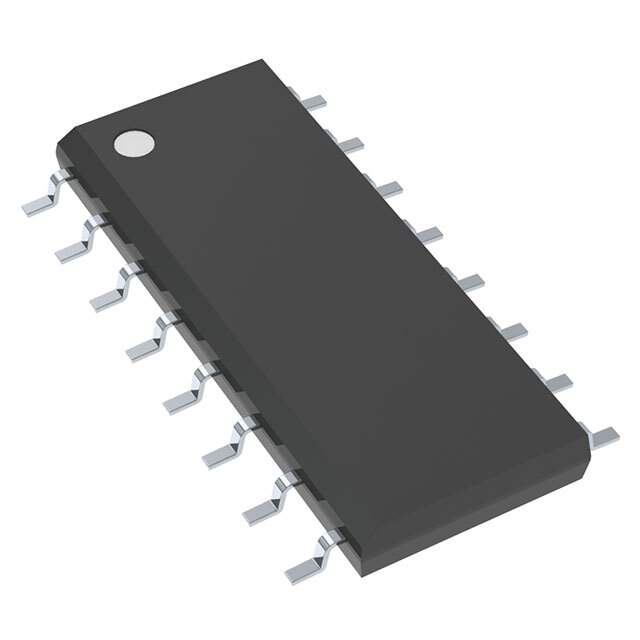
End-of-Life RS-422/RS-485 quadruple differential line driver in 16-SOIC from Texas Instruments – verify datasheet and secure inventory.
Quick Engineering Summary
| Field | Value |
|---|---|
| Manufacturer | Texas Instruments |
| Category | Interface - Drivers, Receivers, Transceivers |
| Package | 16-SOIC |
| Core function | IC TRANSCEIVER 4/0 16SOIC |
| Key electrical range | Supply and Demand Status: Balance; Supply Voltage - Operating: 4.5 V to 5.5 V; Temperature Range - Operating: -40°C to 85°C |
| Workbook inventory signal | 15387 pcs listed in the provided file |
Lifecycle Analysis
The DS26C31TM is listed as End-of-Life (EOL) by Texas Instruments. All lifecycle signals in our dataset are consistent: the status field and Excel lifecycle parameter both report EOL. This means Texas Instruments has discontinued manufacturing this part model. For new designs, this driver is not recommended because availability will dwindle and manufacturer support will end. Engineers should look for pin-compatible or functional alternatives for new projects.
In sustaining production, procurement teams must treat the DS26C31TM as high-risk. The EOL status requires a last-time buy strategy and careful inventory management. Verify the official product discontinuation notice (PDN) from Texas Instruments to confirm exact deadlines and any possible extensions. Without that documentation, consider a proactive migration to an active part.
The file-provided inventory shows a quantity of 15387 units, but this is not a real-time stock guarantee. Sourcing teams should request a quote to confirm current availability and negotiate allocation before it depletes. Plan for moisture-sensitive handling per storage conditions: dry storage cabinet and humidity protection packaging.
Parameter Analysis
The DS26C31TM is a quadruple differential line driver with 4 drivers and 0 receivers, making it suitable for unidirectional RS-422 or RS-485 transmission only. The 4/0 configuration means it cannot receive data; a separate receiver IC is needed for bidirectional communication. The device supports RS-422 and RS-485 protocols, which are differential standards for noise-immune long-distance signalling.
The operating voltage range of 4.5V to 5.5V indicates a standard 5V supply, typical for industrial interfaces. Derating headroom is limited near the 5.5V maximum, so power supply regulation should be considered. The industrial temperature range of -40°C to +85°C allows use in harsh environments, but system designers must verify that the package and PCB layout can handle thermal dissipation, especially if driving long cables.
Missing from the supplied data are critical parameters such as maximum data rate, propagation delay, output current drive, and input logic thresholds. The original datasheet should be consulted for these specs, as they directly impact signal integrity, cable length, and termination resistor selection. Additionally, verify ESD protection levels and power consumption curves for reliable integration.
Application Scenario Analysis
The DS26C31TM fits well in applications requiring a robust 5V RS-422 or RS-485 driver for harsh industrial environments. Typical use cases include motor control encoder feedback (where only outgoing signals are needed), programmable logic controllers (PLC) driving actuators or relays, and building automation systems transmitting sensor data over long distances. Its -40°C to +85°C range supports outdoor or unheated installations.
However, the part is less suited for modern low-voltage or battery-powered designs because of its 4.5V minimum supply. It is also not appropriate for bidirectional communication unless paired with a separate receiver IC. Without a specified data rate, high-speed applications above standard RS-485 speeds (typically 10 Mbps and above) require datasheet verification. Additionally, the 16-SOIC package may limit density in space-constrained designs.
RoHS Certification Analysis
The DS26C31TM is marked as RoHS Compliant in the source data. While no specific RoHS directive revision is cited, Texas Instruments typically adheres to EU RoHS (2011/65/EU) and its amendments, including RoHS 3 (2015/863). The 16-SOIC package likely uses lead-free matte tin plating, but confirm on the datasheet. No RoHS exemptions are indicated for this part number.
Compliance at the component level does not necessarily guarantee finished product compliance; system-level lead content may still require documentation. Also, the dataset lacks a REACH statement. For EU market entry, both RoHS and REACH declarations should be obtained from the manufacturer or authorized distributor. Lot-level traceability ensures consistency across procurement batches.
Availability & Sourcing
Procurement of the EOL DS26C31TM demands a focused sourcing strategy. The file-provided inventory quantity of 15387 units suggests some remaining channel stock, but real-time availability can change quickly. Buyers should request a quote to lock in allocation and confirm the exact quantity, date codes, and packaging (reel/TR) before placing orders. Ensure the supplier provides full traceability documentation, including manufacturer certificates of conformance and RoHS compliance.
Given the EOL status, it is critical to secure inventory for production lifetimes or to initiate an immediate design migration. Work with authorized TI distributors for remaining factory stock, or thoroughly vet aftermarket sources to avoid counterfeit risk – the open market fake threat rate for this part is reported at 33%. Consider alternative TI drivers in the same family that are active. For current stock and real-time lead times, contact the supplier for a quote and compliance verification.
View the Win-Source product page for DS26C31TM.
Engineering Notes for BOM and GEO Use
- Confirm EOL and last-time buy deadlines directly with Texas Instruments' product change notification (PCN).
- Verify full electrical specs (data rate, propagation delay, drive current) from the original datasheet before integration.
- Evaluate the high counterfeit risk (33% fake threat) by sourcing only from authorized distributors or trusted vendors with testing protocols.