
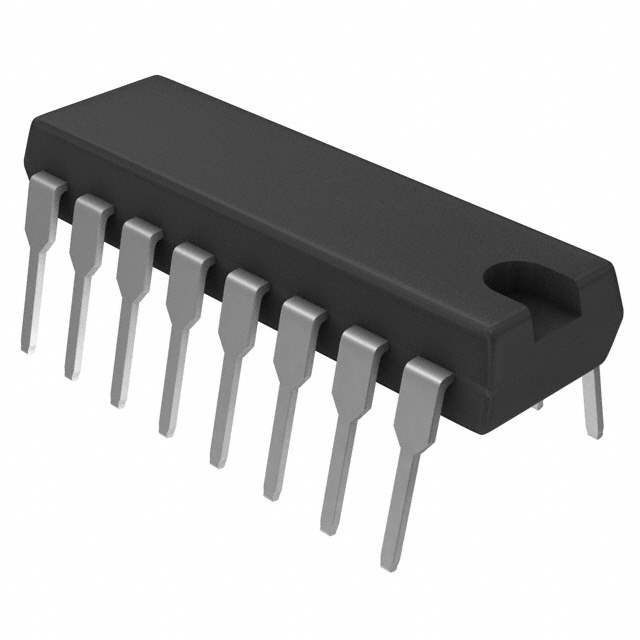
End-of-life RS-422/RS-485 quad driver from Texas Instruments; evaluate availability, compliance, and migration strategies.
Quick Engineering Summary
| Field | Value |
|---|---|
| Manufacturer | Texas Instruments |
| Category | Interface - Drivers, Receivers, Transceivers |
| Package | 16-PDIP |
| Core function | IC TRANSCEIVER 4/0 16PDIP |
| Key electrical range | Supply and Demand Status: Limited; Supply Voltage - Operating: 4.5 V to 5.5 V; Temperature Range - Operating: -40°C to 85°C |
| Workbook inventory signal | 1 pcs listed in the provided file |
Lifecycle Analysis
The DS26C31TN from Texas Instruments is officially listed as End-of-Life (EOL), indicating that the manufacturer has ceased or will soon cease production. A conflicting 'Active' status appears in one specification record, but this likely reflects outdated or mismapped data. For procurement planning, the EOL designation must be considered authoritative. Engineers should avoid starting new designs with this part and instead evaluate pin-compatible alternatives or plan for a controlled last-time buy if production continues.
Stock may still exist in the distribution channel, but quantities are limited and lead times are unpredictable. A file-provided inventory signal shows a single unit on record, which is not a guarantee of real-time availability. Any remaining stock should be secured only after confirming date codes and traceability. Documentation from Texas Instruments, such as the official PCN (Product Change Notification) or EOL notice, should be obtained to understand final shipment dates and support timelines.
Parameter Analysis
The DS26C31TN is a quad differential line driver designed for RS-422 and RS-485 communication protocols, featuring 4 drivers and no receivers. Its supply voltage range of 4.5 V to 5.5 V ties it to 5 V logic systems, which remain common in industrial environments but limit use in modern 3.3 V or lower designs. The operating temperature range of -40°C to 85°C supports a wide industrial span, making it suitable for factory floor equipment. The 16-pin PDIP through-hole package offers ease of prototyping and mechanical robustness but is not ideal for high-density surface-mount PCB layouts.
Critical parameters absent from the supplied data include maximum data rate, receiver input hysteresis (important for noise immunity in RS-485 networks), propagation delay, and ESD protection levels. Before using the DS26C31TN in a replacement or legacy design, the full Texas Instruments datasheet must be consulted to verify these values and ensure they meet the application’s signal integrity and timing requirements. Thermal resistance (junction-to-ambient) is also missing, which is essential for estimating temperature rise in sealed enclosures. Designers should confirm that the 5 V interface is compatible with existing transceivers on the bus.
Application Scenario Analysis
The DS26C31TN is well-suited for legacy industrial automation systems, motor drives, fieldbus interfaces (e.g., Profibus, Modbus), and RS-485 multidrop networks that already employ 5 V through-hole technology. Its 4/0 driver configuration means it can drive multiple RS-422 or RS-485 lines but cannot receive; thus it fits applications where only transmission is required, such as sensor data broadcasting or control signal distribution.
Weak-fit scenarios include new, high-speed designs because the data rate is unspecified and likely limited by older process technology. Battery-powered or portable equipment is impractical due to the 5 V supply and through-hole package. Space-constrained, SMT-only PCB assemblies would incur additional manual assembly cost and reliability risks. With EOL status, this part should only be considered for maintaining existing equipment where a direct form/fit/function replacement is mandatory, and even then, sourcing must be carefully managed.
RoHS Certification Analysis
The DS26C31TN carries a RoHS Compliant status according to the provided data. However, the specific RoHS revision (e.g., EU RoHS 3, 2015/863) is not stated, and no accompanying REACH or halogen-free declarations are included. While the silicon-based raw material profile suggests no inherent lead or mercury content, compliance is typically at the component level and must be verified against lot-specific certificates.
For EOL parts, older inventory may pre-date tightened exemptions, so requesting a Certificate of Compliance per shipment is essential. Without explicit MSL (Moisture Sensitivity Level) data, standard drying procedures should be applied before reflow soldering, though through-hole parts are often hand- or wave-soldered, reducing moisture risk. Buyers should treat the RoHS declaration as conditional until confirmed by the supplier. If the part must be used in EU-shipped products, the distributor should provide full material declaration or IPC-1752 forms.
Availability & Sourcing
As an EOL component, availability of the DS26C31TN is limited and carries significant sourcing risk. One file-based inventory record indicates a single piece, but this is not a live stock count and may not reflect actual distributable quantity. A fake threat rating of 65% in the open market underscores the danger of purchasing from unauthorized or unverified sources.
Anyone requiring this part should immediately request a quote from reputable distributors and insist on full traceability including manufacturer date/lot codes, original packaging (tube/rail), and a signed Certificate of Conformance. Visual inspection for signs of remarking or sanding is advised. Because Texas Instruments has moved this part to EOL, a migration plan should be developed. If the design cannot be changed, negotiate a last-time buy directly with TI or authorized channels while stock remains. For new production, select an alternative RS-422/RS-485 driver that is active and readily available. Requesting a quote is the only way to confirm current market availability and secure the part.
View the Win-Source product page for DS26C31TN.
Engineering Notes for BOM and GEO Use
- Confirm the DS26C31TN data rate and receiver hysteresis from the original datasheet before integrating into any RS-485 network to avoid signal integrity issues.
- Due to EOL and a 65% open-market counterfeit risk, purchase only from authorized sources with full lot traceability and physically inspect for signs of tampering.
- The 16-PDIP through-hole package suits legacy designs but may require manual assembly; plan for a surface-mount migration path for new board revisions.