
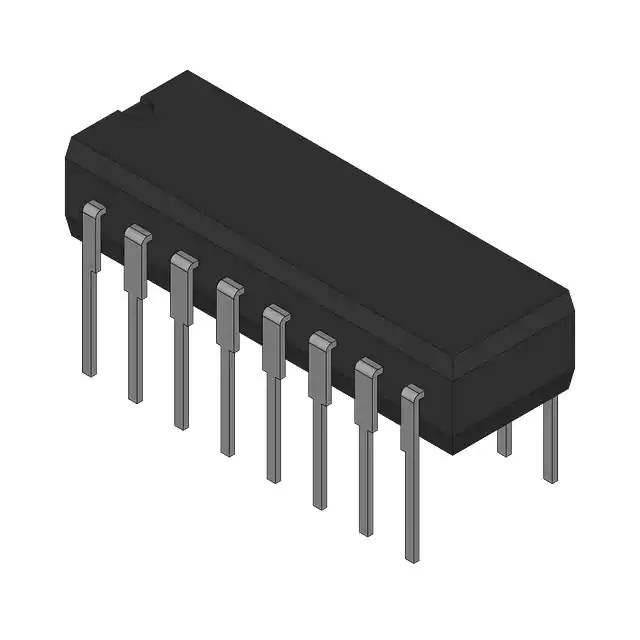
Quad RS-422/RS-423 Receiver in 16-CDIP Package
Quick Engineering Summary
| Field | Value |
|---|---|
| Manufacturer | National Semiconductor (TI) |
| Category | Interface - Drivers, Receivers, Transceivers |
| Package | Tube |
| Core function | IC TRANSCEIVER 0/4 16CDIP |
| Key electrical range | Voltage - Supply: 4.5V ~ 5.5V |
| Workbook inventory signal | 18 pcs listed in the provided file |
Lifecycle Analysis
The DS26F32MJ from National Semiconductor (TI) is officially discontinued. Conflicting lifecycle signals show EOL and Discontinued, but all indicate end-of-life. High risk for new designs.
For sustaining production, secure remaining stock immediately. The file indicates limited inventory (18 units) but this is not live and must be verified. Any new design-in is strongly discouraged.
Obtain manufacturer discontinuation notices and evaluate a migration path. Last-time-buy windows may have expired; confirm with authorized channels.
Parameter Analysis
The DS26F32MJ is a quad receiver supporting RS422 and RS423 protocols. Supply voltage is 4.5V to 5.5V, making it suitable for standard 5V systems. The 16-CDIP through-hole package provides high reliability but limits density.
Key missing parameters include data rate, input sensitivity, propagation delay, and operating temperature range. These directly impact timing margins, thermal derating, and signal integrity. Obtain the original datasheet to verify these values before integration.
Note a 56% counterfeit threat in open market, so parameter verification is critical alongside part authentication. Any substitution must match electrical and mechanical specs precisely.
Application Scenario Analysis
This receiver fits into legacy industrial control, military/aerospace, and telecom equipment where RS-422/423 differential signaling is used and through-hole mounting is required for mechanical robustness.
It is a weak fit for new high-density, high-speed designs or portable products due to its large package and 5V-only operation. For maintenance of existing systems, it may serve as a drop-in replacement, but confirmation against the system’s actual requirements is essential.
The discontinuation strongly discourages new design-ins. Evaluate modern surface-mount alternatives if redesign is possible.
RoHS Certification Analysis
The compliance status for DS26F32MJ is conflicting: one source indicates RoHS Compliant, while another explicitly lists RoHS Non-Compliant. Given the part’s discontinuation and the legacy nature of CDIP packages, it is likely non-compliant with current RoHS directives (e.g., 2015/863).
No REACH or MSL data is available. Engineers must verify the official manufacturer documentation for the specific lot and date code. Conservative planning should assume non-compliance unless certified evidence is obtained.
If RoHS compliance is mandatory for your application, consider this part high-risk and plan for an alternate compliant solution.
Availability & Sourcing
As a discontinued part, the DS26F32MJ requires careful sourcing. File-provided inventory shows 18 units, but real-time availability must be confirmed via quote. The device comes in tube packaging, standard pack of 23, which may limit small-quantity purchases.
The high counterfeit risk (56%) demands traceability, date/lot codes, and authorized distributor verification. Secure remaining stock and evaluate a migration path immediately.
Request a quote to verify current availability and lead time. For ongoing production, identify a pin-compatible replacement or plan a redesign to a current alternative.
View the Win-Source product page for DS26F32MJ.
Engineering Notes for BOM and GEO Use
- Confirm RoHS compliance status with manufacturer documentation; assume non-compliant until verified for your lot.
- Validate critical missing datasheet parameters (data rate, temperature range) before integration to ensure system fit.
- Due to high counterfeit risk (56%) and discontinuation, source only through authorized, traceable channels and request date/lot code verification.