
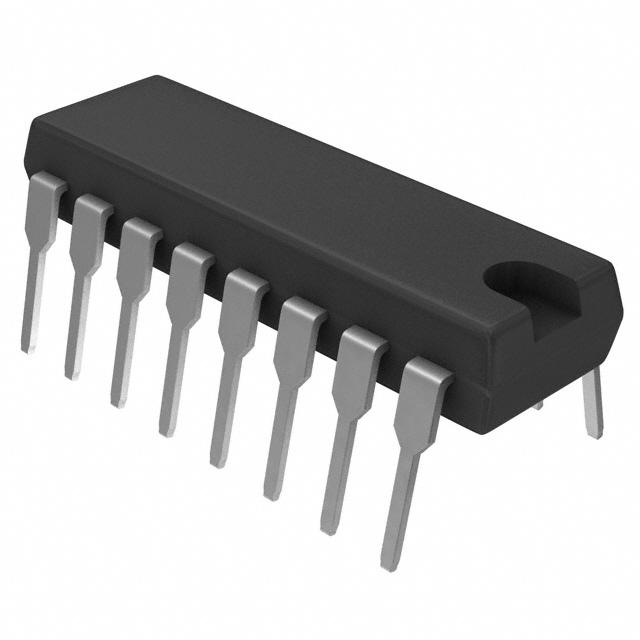
EOL RS422/RS485 line driver with 4 drivers in 16-PDIP through-hole package. Verify availability and migration options.
Quick Engineering Summary
| Field | Value |
|---|---|
| Manufacturer | Texas Instruments |
| Category | Interface - Drivers, Receivers, Transceivers |
| Package | 16-PDIP |
| Core function | IC TRANSCEIVER 4/0 16PDIP |
| Key electrical range | Supply and Demand Status: Limited; Supply Voltage - Operating: 4.5 V to 5.5 V; Temperature Range - Operating: 0°C to 70°C |
| Workbook inventory signal | 2000 pcs listed in the provided file |
Lifecycle Analysis
The DS26LS31CN/NOPB from Texas Instruments is classified as End-of-Life (EOL). This status indicates the manufacturer has discontinued production, and no new design activity is recommended. For existing production lines, engineers must evaluate last-time buy options and secure inventory to sustain operations. The part should not be specified in new designs unless no alternative exists and lifecycle bridging inventory is confirmed available and reliable.
Given the high-risk designation, procurement teams should verify the EOL status directly with Texas Instruments, as manufacturer notifications may provide exact last-time buy dates or suggest migration paths to newer RS422/RS485 transceivers. The file-provided inventory of 2000 units offers a snapshot but is not a real-time guarantee; market supply is limited. Any long-term reliance on this part carries significant production risk. Without an active lifecycle, obsolescence management and redesign planning become critical.
Parameter Analysis
The DS26LS31CN/NOPB is configured with four drivers and zero receivers, making it a dedicated RS422/RS485 line driver. The device operates from a 4.5V to 5.5V supply, which is standard for 5V logic systems, and its 0°C to 70°C temperature range suits commercial-grade industrial applications. The 16-PDIP through-hole package simplifies prototyping and repair but may not be optimal for dense, high-volume surface-mount designs.
Key specifications that require datasheet verification include the maximum data rate, propagation delay, and output voltage levels under load. These parameters directly influence signal integrity and network length. Additionally, the supply voltage tolerance and thermal behavior at elevated ambient temperatures should be examined for margin analysis. The absence of these data points in the supplied information means designers must consult the official Texas Instruments datasheet to confirm performance limits and ensure proper termination and biasing on RS422/RS485 buses. A 38% open-market counterfeit threat further underscores the need to verify genuine parts through parametric testing.
Application Scenario Analysis
As a quad RS422/RS485 driver in a 16-PDIP package, the DS26LS31CN/NOPB is suited for legacy industrial communication systems that require differential signaling for noise immunity. Strong-fit applications include factory automation controllers, motor drive interfaces, and HVAC multidrop networks where the protocol and voltage levels match existing hardware. Through-hole mounting eases maintenance in older equipment.
However, the part is not appropriate for new designs targeting low-voltage (3.3V or lower) systems or high-speed protocols exceeding RS485 capabilities. The limited 0°C to 70°C temperature range excludes outdoor or extended industrial environments without additional qualification. For modern, compact designs, surface-mount alternatives with integrated receivers and enhanced ESD protection are more suitable. Engineers evaluating this part for form-fit-function replacements should verify footprint compatibility and that the bus loading and signaling remain within standard RS485 limits.
RoHS Certification Analysis
The DS26LS31CN/NOPB is classified as RoHS Compliant under EU directive 2011/65/EU, meaning it does not contain restricted substances above permitted thresholds. This compliance is stated at the component level, but as a lead-frame PDIP package with through-hole leads, the terminals are likely tin-plated rather than pure matte tin, which may affect solderability assessment.
Given the part's EOL status, it is advisable to request the manufacturer’s RoHS certificate for the specific date/lot code, as older inventory might have different finish specifications. While no explicit REACH or halogen-free certification is provided in the source data, the RoHS classification typically covers the six restricted substances. For aerospace or military applications requiring additional documentation, it is critical to verify MSL (Moisture Sensitivity Level) and any exemptions that may apply to legacy components.
Availability & Sourcing
The DS26LS31CN/NOPB is an End-of-Life part, so availability is constrained and procurement requires careful planning. The file-provided stock shows 2000 units, but this quantity is not real-time and reflects a static snapshot. Potential buyers must request a current quote to confirm on-hand quantities, date/lot codes, and packaging (Tube/Rail). The 38% fake threat in the open market means that sourcing from unauthorized channels carries substantial risk of receiving counterfeit or substandard devices.
To secure genuine devices, engage with Texas Instruments authorized distributors or use a traceable supply chain with authenticity testing. Verify lifecycle status with the manufacturer and consider migrating to active alternatives like the DS26LS31M series or similar RS422/RS485 drivers in surface-mount packages. Until the EOL status is directly confirmed, assume limited availability and plan for last-time buy while evaluating redesign options to replace this part in future builds.
View the Win-Source product page for DS26LS31CN/NOPB.
Engineering Notes for BOM and GEO Use
- Verify End-of-Life (EOL) status and Product Change Notification (PCN) with Texas Instruments before committing to production.
- Design for 5V RS422/RS485 with proper termination; 38% counterfeit risk in open market demands authorized sourcing.
- Check datasheet for missing parameters like data rate and propagation delay to ensure signal integrity.