
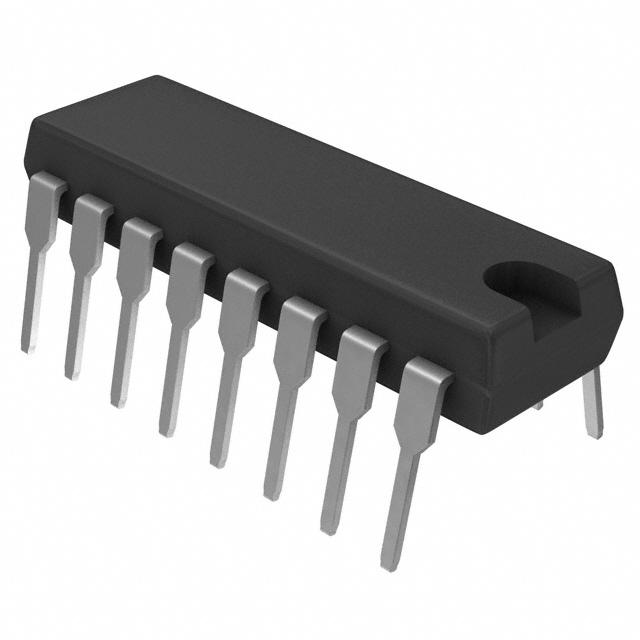
RS-422/RS-423 Quad Receiver in 16-PDIP Package from Texas Instruments
Quick Engineering Summary
| Field | Value |
|---|---|
| Manufacturer | Texas Instruments |
| Category | Interface - Drivers, Receivers, Transceivers |
| Package | 16-PDIP |
| Core function | IC TRANSCEIVER 0/4 16PDIP |
| Key electrical range | Supply and Demand Status: Limited; Supply Voltage - Operating: 4.5 V to 5.5 V; Temperature Range - Operating: 0°C to 70°C |
| Workbook inventory signal | 1 pcs listed in the provided file |
Lifecycle Analysis
The DS26LS32ACN/NOPB from Texas Instruments has been classified as End-of-Life (EOL). For new designs, this part should not be considered; existing designs must evaluate the remaining supply and plan a migration to an active receiver. The file-provided inventory indicates a quantity of 1, but this is a static snapshot and not a real‑time guarantee. Procurements should verify availability and authenticity before committing, especially given a high open‑market fake threat of 69%. A formal last‑time buy notice from the manufacturer is the definitive source for remaining stock.
Parameter Analysis
The DS26LS32ACN/NOPB is a quad RS‑422/RS‑423 receiver with a 100mV hysteresis that improves noise rejection, making it suitable for industrial data links. Its operating supply voltage of 4.5–5.5V ties it to 5V logic systems, and the commercial temperature range of 0°C to 70°C limits deployment to controlled environments. The 16‑PDIP through‑hole package is robust for prototyping or repairs but consumes more board space than modern surface‑mount alternatives. Critical parameters not confirmed in the sourced data include maximum data rate, input common‑mode range, and propagation delay; these must be verified from the original datasheet before final design‑in or replacement qualification.
Application Scenario Analysis
The DS26LS32ACN/NOPB fits legacy RS‑422 and RS‑423 multi‑drop industrial communication buses, such as factory automation, process control, and instrumentation, where noise immunity and differential signaling are required. Its through‑hole package is advantageous in vibration‑prone environments or where hand soldering is preferred. However, the device is not suited for new high‑speed designs because the data rate is unspecified and likely low compared to modern receivers. For applications demanding extended temperature ranges or miniaturized form factors, alternate receivers in SOIC or smaller packages should be evaluated.
RoHS Certification Analysis
The DS26LS32ACN/NOPB is labeled RoHS Compliant, indicating it meets EU Directive 2011/65/EU or later amendments, including RoHS 3 (EU 2015/863). The source data does not detail exemptions or specific restricted substance declarations; therefore, compliance should be verified for each production lot, especially when purchasing from non‑authorized channels. No REACH or halogen‑free statements are provided, so buyers should request the full material declaration if those are critical. Soldering and storage per MSL guidelines are not specified, but through‑hole parts are generally less sensitive to moisture.
Availability & Sourcing
The DS26LS32ACN/NOPB is an end‑of‑life receiver with limited availability. The supplied workbook indicates only 1 unit on hand, subject to prior sale. Buyers should request a formal quote to confirm current stock and lead time. Given the 69% fake threat rate on the open market, sourcing from authorized distributors or performing detailed incoming inspection—including date/lot code verification and X‑ray or decapsulation testing—is strongly advised. The device is supplied in tubes (25 per package), and storage should follow the manufacturer’s guidelines (dry, humidity‑protected). For new production, migrating to a catalog‑active RS‑422 receiver is the prudent long‑term path.
View the Win-Source product page for DS26LS32ACN/NOPB.
Engineering Notes for BOM and GEO Use
- Verify actual inventory and lifecycle status with an authorized distributor before placing orders.
- Authenticate parts rigorously due to 69% open-market counterfeit risk; insist on traceability documentation.
- Plan a design migration to an active RS-422 receiver with similar or improved specifications.