
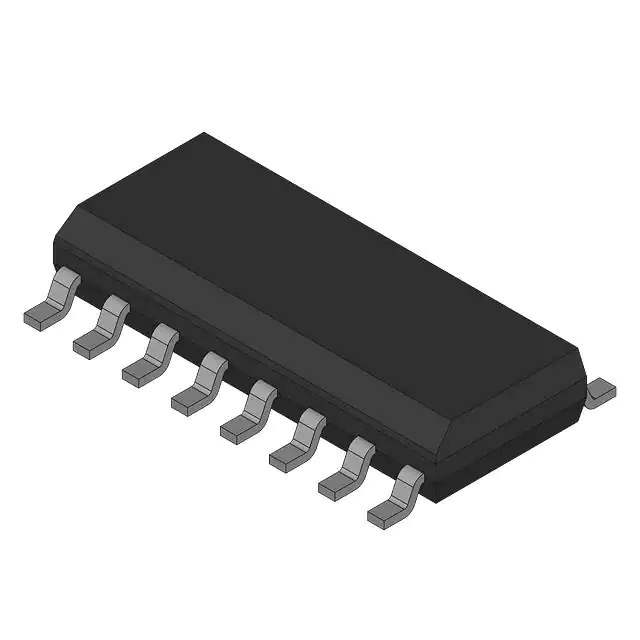
Discontinued quad RS-422/RS-423 receiver in 16-SOIC; verify compliance and source carefully.
Quick Engineering Summary
| Field | Value |
|---|---|
| Manufacturer | National Semiconductor (TI) |
| Category | Interface - Drivers, Receivers, Transceivers |
| Package | Tube |
| Core function | IC TRANSCEIVER 0/4 16SOIC |
| Key electrical range | Temperature Range - Operating: 0°C ~ 70°C; Voltage - Supply: 4.5V ~ 5.5V |
| Workbook inventory signal | 2 pcs listed in the provided file |
Lifecycle Analysis
The DS26LS32CM is a discontinued component, meaning the manufacturer has ceased production and no further stock is being made available through authorized channels. New designs should not rely on this part; it is only appropriate for sustaining existing equipment where an exact replacement is required.
All lifecycle signals, including official product status and manufacturer catalogs, consistently indicate Discontinued. There are no conflicting notices. File-provided inventory quantities, such as the two units shown in this dataset, should be treated as a snapshot and are not guaranteed to be available in real time. Engineers and buyers must verify actual on‑hand stock with the distributor at the time of inquiry.
Parameter Analysis
The DS26LS32CM is a quad receiver designed for RS‑422 and RS‑423 differential signaling. Key parameters include four receiver channels with zero drivers, a 100 mV typical hysteresis that improves noise immunity, and a single 4.5 V to 5.5 V supply range. The commercial operating temperature range of 0°C to 70°C and the 16‑SOIC surface‑mount package define the environmental and PCB layout envelope.
Several performance specifications are not supplied in the dataset and must be verified from the official datasheet before integration. Critical missing parameters include maximum data rate, propagation delay, input sensitivity, and common‑mode voltage range. These values directly affect signal integrity and timing margins in high‑speed or long‑distance links. The 58% counterfeit threat noted in open‑market intelligence further underscores the need to confirm that any received parts meet the original manufacturer’s electrical characteristics.
Application Scenario Analysis
The DS26LS32CM is typically used in industrial data communications where differential signaling improves noise immunity over long cable runs. Applications include RS‑422 multi‑drop networks, RS‑423 point‑to‑point links, and legacy serial interfaces in factory automation, process control, and instrumentation.
Its commercial temperature range limits use to indoor, non‑harsh environments. It is not suitable for automotive, military, or outdoor applications requiring extended temperature grades. Because the part is discontinued, it should only be considered for repairing or replicating existing board designs that cannot be redesigned to accept a modern alternative.
RoHS Certification Analysis
RoHS compliance for the DS26LS32CM is ambiguous. The primary compliance field indicates RoHS Compliant, but a separate specification entry lists RoHS Non‑Compliant. This discrepancy may arise from different data sources capturing part‑level versus family‑level status, changes in manufacturing location over time, or errors in database aggregation.
No REACH documentation is provided, and REACH compliance does not imply RoHS conformance. To resolve the conflict, buyers should request a lot‑specific Certificate of Compliance or full material declaration from the distributor. If full RoHS 3 (EU 2015/863) compliance is required, laboratory testing or manufacturer confirmation is necessary before procurement.
Availability & Sourcing
The DS26LS32CM is no longer in production, and remaining inventory is limited to existing distributor stock or the open market. File data shows only two pieces in the workbook, but a related Excel row lists a quantity of 660—this may be stale and should not be assumed current. Always request a formal quotation to obtain live availability, lot date codes, and packaging details.
Due to the high counterfeit risk (58% reported), any sourcing must include rigorous traceability measures: insist on full manufacturer part number matching, original packaging, and documentation proving chain of custody. Verify lifecycle status with National Semiconductor/TI records and obtain compliance certificates for RoHS. For new production, consider migrating to an active and drop‑in compatible receiver to ensure long‑term supply security.
View the Win-Source product page for DS26LS32CM.
Engineering Notes for BOM and GEO Use
- Confirm RoHS compliance at the lot level; conflicting data exists between supplier systems.
- Due to discontinued status and 58% counterfeit threat, mandate full traceability and inspection upon receipt.
- For new designs, migrate to an active receiver such as the TI DS26LS32AC or equivalent.