
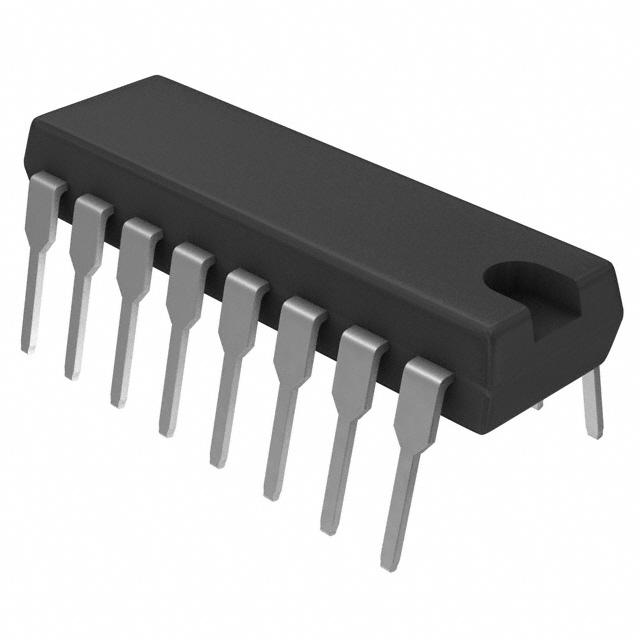
Quad differential line receiver with 0/4 drivers/receivers, RS422/RS423 protocol, and 16-PDIP package.
Quick Engineering Summary
| Field | Value |
|---|---|
| Manufacturer | Texas Instruments |
| Category | Interface - Drivers, Receivers, Transceivers |
| Package | 16-PDIP |
| Core function | IC TRANSCEIVER 0/4 16PDIP |
| Key electrical range | Supply and Demand Status: Limited; Supply Voltage - Operating: 4.5 V to 5.5 V; Temperature Range - Operating: 0°C to 70°C |
| Workbook inventory signal | 640 pcs listed in the provided file |
Lifecycle Analysis
All supplied lifecycle signals except one indicate an Active status for the DS26LS32CN/NOPB. A single specification field lists the status as Obsolete(EOL), which creates a conflict with the Active designation. For new designs, an Active part is typically suitable, but the presence of an EOL marker demands conservative sourcing practices. Engineers should revalidate the product lifecycle directly with Texas Instruments before committing to production volumes.
The part is documented as a quad RS422/RS423 receiver in a 16-PDIP package, and a workbook inventory of 640 units is noted, but real-time availability cannot be guaranteed solely from file-provided figures. Until the lifecycle conflict is resolved, treat this device as a candidate for sustaining production rather than unqualified new design use.
Parameter Analysis
The DS26LS32CN/NOPB is configured with zero drivers and four receivers, making it a dedicated differential line receiver. It supports RS422 and RS423 protocols, which are common in balanced, noise-immune data transmission. The receiver hysteresis is specified at 100mV, a moderate value that provides adequate noise margin for many industrial environments. Operating supply voltage spans 4.5V to 5.5V, aligning with standard 5V logic systems, while the temperature range of 0°C to 70°C suits commercial and light industrial applications. The device comes in a through-hole 16-PDIP package, requiring careful layout consideration for signal integrity in legacy designs.
Key parameters not included in the available data are the maximum data rate and input impedance. The data rate directly impacts the maximum transmission distance and speed, while input impedance affects bus loading in multi-receiver configurations. Engineers should consult the manufacturer datasheet to confirm these values and ensure compatibility with target system frequencies and bus topologies. The 100mV hysteresis, while typical, should be evaluated against the expected common-mode noise in the application.
Application Scenario Analysis
This quad receiver is well suited for industrial automation, process control, and instrumentation systems that rely on RS422 or RS423 multidrop or point‑to‑point differential signaling. The 100mV hysteresis helps reject low‑level noise, making it appropriate for factory‑floor data links over moderate cable lengths. The through‑hole PDIP package lends itself to prototyping, legacy equipment, and ruggedized assemblies where mechanical stress tolerance is valued.
Applications involving high‑speed data beyond the device’s unspecified data rate limit may be poorly served, as signal integrity could degrade. Moreover, compact, surface‑mount‑only designs would not easily accommodate the PDIP footprint. While the commercial temperature range limits deployment in extreme cold or hot environments, it covers the majority of indoor industrial tasks. Designers should verify the maximum data rate and consider whether a newer surface‑mount alternative better fits high‑density, automated production lines.
RoHS Certification Analysis
The DS26LS32CN/NOPB is flagged as RoHS Compliant in the provided specification set. This suggests that the part meets the requirements of the EU RoHS directive, most likely RoHS 3 (EU 2015/863), which restricts hazardous substances such as lead, mercury, and cadmium. No explicit standard version or exemption details are given in the data, so the precise scope of compliance should be confirmed with Texas Instruments or an authorized distributor.
The absence of a manufacturer certificate or test report means that lot‑level compliance cannot be assumed without additional documentation. Buyers should request a full RoHS compliance certificate for each shipment to satisfy audit requirements. Additionally, no REACH or halogen‑free declarations are present, so those inquires must be directed to the supplier.
Availability & Sourcing
File‑provided inventory shows 640 units of the DS26LS32CN/NOPB, but this figure is not a real‑time stock level and must be confirmed through a request for quote. The part is packaged in tubes, which is standard for through‑hole DIP devices and supports manual assembly or small‑batch production. With a reported open‑market fake threat level of 68 percent, sourcing from authorized channels is critical to avoid counterfeit components.
Buyers should verify traceability, date/lot codes, and request full compliance documentation including RoHS certificates and manufacturer lifecycle confirmation. Given the conflicting lifecycle signals, any procurement for new production should be preceded by direct communication with Texas Instruments to validate that the device is indeed Active and not approaching discontinuation. For risk‑sensitive applications, securing inventory from authorized distributors and implementing incoming inspection protocols is strongly recommended.
View the Win-Source product page for DS26LS32CN/NOPB.
Engineering Notes for BOM and GEO Use
- Resolve lifecycle conflict by contacting TI directly before relying on this part in new designs.
- The 100mV receiver hysteresis provides adequate noise immunity for standard RS422/RS423 industrial links.
- Through-hole PDIP package requires manual assembly and is less suitable for high-volume SMT lines.