
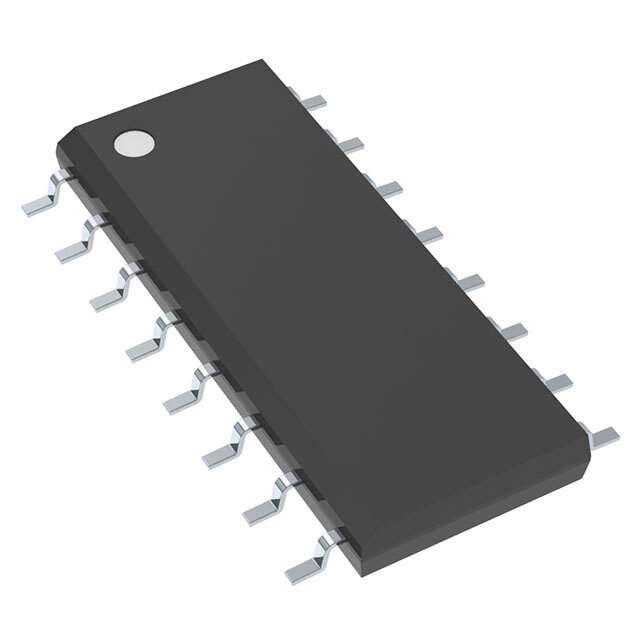
Quad RS-485/RS-422 driver in 16-SOIC – end-of-life analysis and procurement considerations
Quick Engineering Summary
| Field | Value |
|---|---|
| Manufacturer | Texas Instruments |
| Category | Interface - Drivers, Receivers, Transceivers |
| Package | 16-SOIC |
| Core function | IC TRANSCEIVER 4/0 16SOIC |
| Key electrical range | Supply and Demand Status: Limited; Supply Voltage - Operating: 3 V to 3.6 V; Temperature Range - Operating: -40°C to 85°C |
| Workbook inventory signal | 5390 pcs listed in the provided file |
Lifecycle Analysis
The DS26LV31TM/NOPB from Texas Instruments is confirmed as End-of-Life (EOL) based on all supplied lifecycle signals. An EOL status means the manufacturer has discontinued production and new orders are no longer being accepted. For new designs, this part should not be used; engineers must select an alternative with active lifecycle status. For sustaining production, immediate action is required to evaluate remaining inventory, plan a last-time buy if possible, and initiate a qualification of a replacement device.
File-provided inventory of 5390 units exists in the data, but this is a snapshot and not guaranteed to be available or current. Given the EOL state, any remaining stock may be allocated to existing commitments, so actual availability can vary. Procurement teams should directly verify with authorized distributors or the manufacturer to confirm if last-time buy orders are still possible.
Failure to transition away from an EOL component risks production gaps, increased costs from the grey market, and potential reliability concerns. The high-risk rating reflects the immediate need to secure sufficient inventory and finalize a migration plan. Close monitoring of any manufacturer notices regarding final shipment dates or end-of-support is strongly advised.
Parameter Analysis
Key parameters for the DS26LV31TM/NOPB include its quad driver configuration (4 drivers, 0 receivers), RS‑422 and RS‑485 protocol support, and a supply voltage range of 3 V to 3.6 V. The 4/0 driver/receiver count means this device is intended for differential line driving only, making it suitable for point‑to‑point or multidrop communication buses where high‑speed data transmission and noise immunity are required.
The 3 V to 3.6 V operating voltage is a critical fit parameter, as it aligns with low‑voltage logic families. Designers must ensure that the VCC rail stays within this tight tolerance, factoring in voltage drop and transient conditions. The operating temperature range of -40°C to 85°C suggests industrial‑grade suitability, but for applications near the extremes, derating and thermal analysis may be needed.
Important parameters not provided include maximum data rate, receiver hysteresis, output drive current, and propagation delay. These values directly affect signal integrity and timing margins in high‑speed designs. Before committing to a design that relies on this part, consult the original Texas Instruments datasheet to verify these specifications and ensure they meet system requirements.
Application Scenario Analysis
The DS26LV31TM/NOPB fits strongly in industrial automation and process control applications that use RS‑485 multidrop networks for sensor arrays, actuator controls, and PLC communication. Its quad driver configuration and extended temperature range make it a candidate for harsh environments such as factory floors or outdoor enclosures where noise immunity and reliability are paramount. The mention of defence and aerospace fields in the supplied data suggests suitability for ruggedized communication links, though additional qualification data would be required.
Weak‑fit scenarios include applications that require receiver functionality, as this device contains only drivers. It is also less ideal for portable or battery‑operated designs that demand ultra‑low quiescent current, since no power‑saving features are indicated. For very high‑speed protocols beyond standard RS‑485 limits, the undefined data rate may be a constraint, and a more modern transceiver with known bandwidth would be preferable.
In legacy systems where the DS26LV31TM/NOPB is already designed in, it may continue to operate reliably, but the EOL status limits long‑term support. New projects should avoid it, while existing maintenance and repair operations may need to stockpile devices to sustain fielded units.
RoHS Certification Analysis
The RoHS compliance status for DS26LV31TM/NOPB is inconsistent in the provided data. The top‑level compliance field indicates 'RoHS Compliant', but a specification entry explicitly states 'RoHS Non‑Compliant'. This conflict requires immediate resolution before procurement or design‑in.
Typically, the 'NOPB' suffix on Texas Instruments parts denotes ‘No Lead’ and implies RoHS compliance, but the conflicting detail suggests either a data error or a lot‑specific variation. Without clear manufacturer documentation, the conservative assumption is that the part may not meet RoHS requirements. If a design requires certified RoHS compliance, obtain a valid certificate of conformity or full material declaration from an authorized distributor.
No REACH, halogen‑free, or MSL data is supplied. Do not assume compliance based on partial signals. For any high‑volume ordering, request lot‑level compliance evidence to ensure each batch meets regulatory standards.
Availability & Sourcing
As an EOL component, the DS26LV31TM/NOPB presents significant sourcing challenges. File‑provided quantity of 5390 units is listed, but this number is not a live inventory guarantee. Demand is classified as limited, and the open‑market fake threat is rated at 52%, making non‑authorized sourcing highly risky.
To secure legitimate parts, work through Texas Instruments’ authorized distribution network. Initiate an RFQ specifying the exact part number, required date/lot codes, and compliance documentation. Request factory‑sealed packaging (tube/rail) with dry‑storage handling as recommended. Verify that any purchased stock comes with a manufacturer’s certificate of conformance and RoHS/REACH statements.
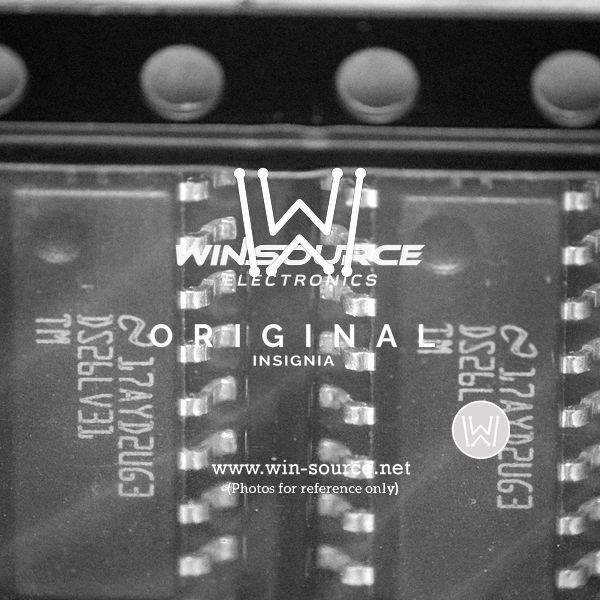
Given the EOL status, the primary action is to determine the remaining genuine stock and execute a last‑time buy if possible. In parallel, begin a redesign effort to replace this part with an active alternative. If inventory must be sourced from independent distributors, insist on robust counterfeit mitigation: authenticity testing, photographic inspection, and a return policy for non‑conforming parts.
View the Win-Source product page for DS26LV31TM/NOPB.
Engineering Notes for BOM and GEO Use
- Verify receiver hysteresis and data rate specifications from the manufacturer datasheet, as they are not provided in the supplied data.
- The reported 52% fake threat in the open market warrants thorough authentication when sourcing from non-authorized channels.
- Confirm RoHS compliance status directly with Texas Instruments, as supplied data shows conflicting information.