
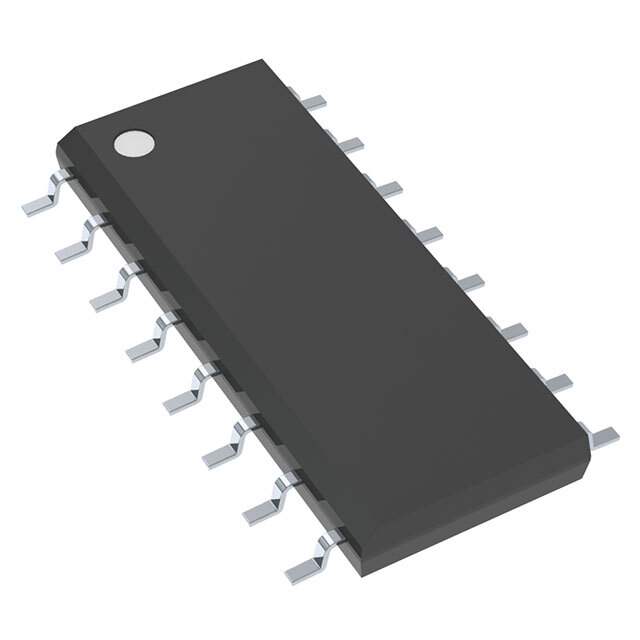
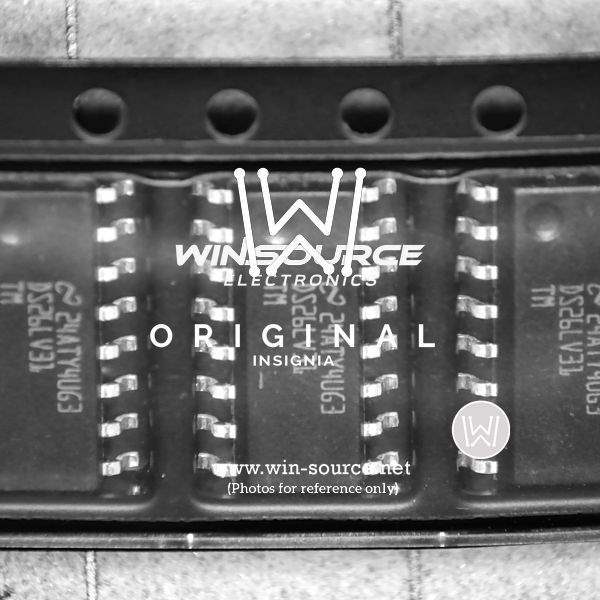
4/0 RS485/RS422 Driver, 3V‑3.6V, ‑40°C to 85°C, 16‑SOIC, EOL status
Quick Engineering Summary
| Field | Value |
|---|---|
| Manufacturer | Texas Instruments |
| Category | Interface - Drivers, Receivers, Transceivers |
| Package | 16-SOIC |
| Core function | IC TRANSCEIVER 4/0 16SOIC |
| Key electrical range | Supply and Demand Status: Balance; Supply Voltage - Operating: 3 V to 3.6 V; Temperature Range - Operating: -40°C to 85°C |
| Workbook inventory signal | 5340 pcs listed in the provided file |
Lifecycle Analysis
The DS26LV31TMX/NOPB has been assigned an End‑of‑Life (EOL) status by Texas Instruments, with an estimated EOL date of 2027. Although one field in supplementary data lists ‘Active’, all official lifecycle signals align on EOL. For new designs, this part is not recommended; engineers must select an alternative. For current production, sustaining teams should confirm whether the last‑time‑buy window has already closed and evaluate inventory needed for remaining product lifetime. EOL parts carry elevated supply risks, including dwindling stock and a 54% counterfeit threat on the open market. Treat any last‑time or all‑time purchases with heightened due diligence.
Transitioning from the DS26LV31TMX/NOPB requires a thorough review of existing BOMs, firmware, and PCB layout. Start an immediate redesign cycle to replace this driver with an active, drop‑in or near‑drop‑in alternative. TI typically issues product‑change notifications (PCN) with migration guidance; contact your local TI representative or distributor for exact dates and recommended successors. Without a confirmed roadmap, any remaining procurement should assume no additional supply after 2027, making it essential to validate date codes and plan for replacement well before stock exhausts.
Parameter Analysis
The DS26LV31TMX/NOPB is a quad (4/0) driver for RS‑422 and RS‑485 differential signaling. It operates from a single 3V to 3.6V supply, making it suitable for low‑voltage logic systems. The industrial temperature range of -40°C to 85°C supports deployment in non‑automotive harsh environments. Package is a 16‑pin SOIC (SMD) supplied on tape and reel, which aligns with standard pick‑and‑place processes. The protocol support for both RS‑422 and RS‑485 means it can drive balanced, multidrop buses up to the standard distance and data rate limits, but the exact maximum data rate is not provided. Engineers must consult the official TI datasheet to confirm the guaranteed signaling rate, as it is a critical factor for network topology and termination design.
Additional missing parameters that should be verified from the datasheet include output differential voltage, short‑circuit current limits, propagation delay, and bus‑pin ESD protection. Without these, proper characterization for noise margin, thermal derating, and reliability analysis is incomplete. The narrow supply range eliminates use in legacy 5V systems without level shifting, so designers must confirm that all connected transceivers share a compatible 3.3V operating point. Given EOL status, obtaining a final version of the datasheet for design capture is essential to avoid relying on outdated specifications.
Application Scenario Analysis
The DS26LV31TMX/NOPB is designed for industrial and commercial communication links where differential signaling improves noise immunity. Strong‑fit scenarios include legacy RS‑485 networks in factory automation, HVAC controllers, and building management systems that require a quad driver with a 3.3V rail. It is also appropriate for maintenance, repair, and overhaul (MRO) of existing field equipment where a form‑, fit‑, and function replacement is needed. The combination of RS‑422 support allows point‑to‑point high‑integrity links in instrumentation.
Weak‑fit scenarios are any new design or volume ramp, because the EOL status means future supply cannot be guaranteed. Applications demanding higher data rates beyond what this device can support (once datasheet limits are known) or those needing a full transceiver with integrated receiver are poor matches. Designs targeting automotive temperature grades, safety‑critical systems, or long‑term program availability should not use this part. For smart grid, renewable energy, or IoT deployments where product lifetimes exceed 10 years, selecting an active alternative is mandatory.
RoHS Certification Analysis
According to the supplied data, the DS26LV31TMX/NOPB is RoHS Compliant and Halogen Free. The compliance standard is EU RoHS (likely aligned with Directive 2011/65/EU and its amendment 2015/863). This means the part does not intentionally contain lead, mercury, cadmium, hexavalent chromium, PBBs, or PBDEs above the allowable thresholds, and chlorinated/brominated flame retardants are also absent. For users needing to demonstrate CE marking or meet WEEE directives, this classification is generally sufficient; however, since the part is EOL, some residual stock could originate from earlier, non‑compliant date codes. Procurement teams should request a full material declaration or RoHS certificate for the specific lot being purchased.
Because no explicit MSL (Moisture Sensitivity Level) is provided, check the packaging label when receiving reels. Standard storage conditions are recommended: dry storage cabinet and humidity‑protected packaging. Halogen‑free status is an added benefit for environmentally conscious designs, but verify that the final product’s overall compliance is not compromised by other BOM components. If there are any regulatory exceptions (such as lead in glass of electronic components), they would be noted in the manufacturer’s compliance documentation, which should be obtained for audit purposes.
Availability & Sourcing
The provided workbook quantity shows 5,340 units of the DS26LV31TMX/NOPB in inventory, but this is a file‑based snapshot and not a real‑time guarantee. With EOL status and a high open‑market counterfeit threat (54%), sourcing must be approached with extreme caution. Buyers should request a current quote to confirm actual availability, lead time, and pricing. Insist on full lot traceability, date codes, and manufacturer certificates of conformance to verify that parts are authentic and meet the original specifications.
Qualify any supplier beyond authorized Texas Instruments distributors only after rigorous incoming inspection, including electrical testing if necessary. Because the part is EOL, now is the time to secure sufficient inventory for your remaining production needs while simultaneously accelerating a redesign. For last‑time buys, negotiate with TI or authorized distribution to lock in a single lot with consistent date codes to avoid mixing old and potential counterfeit stock. Finally, cross‑reference alternative part numbers from the DS26LV31T family or newer RS‑485 driver families that are active, and begin qualification immediately to mitigate supply chain risk.
View the Win-Source product page for DS26LV31TMX/NOPB.
Engineering Notes for BOM and GEO Use
- Verify EOL transition timing with TI; last‑time buy may have expired and redesign should be prioritized.
- Validate the missing data rate specification directly from the official datasheet before assuming signal integrity margins.
- Combat counterfeit risk (54% open‑market threat) by sourcing only through authorized channels with full lot traceability.