
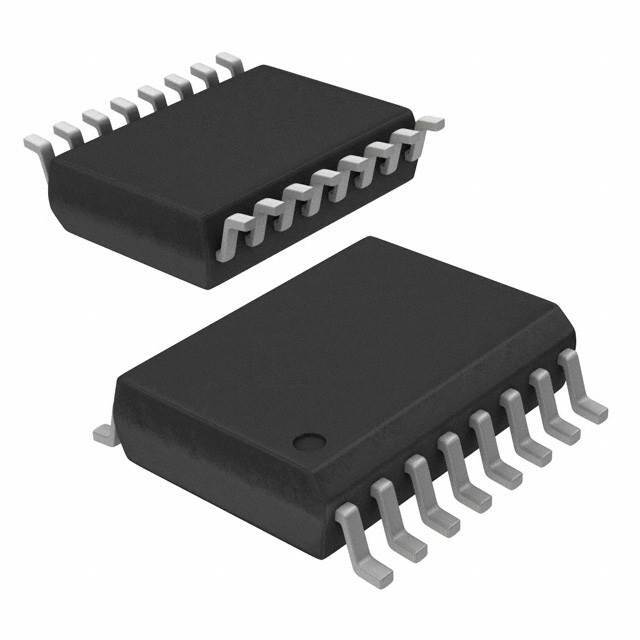
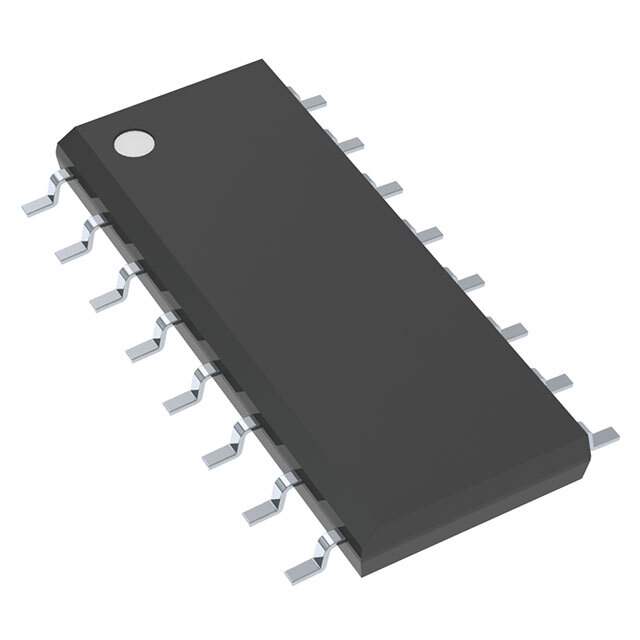
EOL 4-Channel RS-422/RS-485 Receiver – Verify Before Use
Quick Engineering Summary
| Field | Value |
|---|---|
| Manufacturer | Texas Instruments |
| Category | Interface - Drivers, Receivers, Transceivers |
| Package | 16-SOIC |
| Core function | IC TRANSCEIVER 0/4 16SOIC |
| Key electrical range | Supply and Demand Status: Sufficient; Supply Voltage - Operating: 3 V to 3.6 V; Temperature Range - Operating: -40°C to 85°C |
| Workbook inventory signal | 9450 pcs listed in the provided file |
Lifecycle Analysis
The DS26LV32ATMX from Texas Instruments is confirmed End-of-Life (EOL) across all available lifecycle signals. This status means the device is no longer recommended for new designs and may have limited or no future production support. For sustaining production lines, engineers should immediately validate the manufacturer’s formal EOL notice and any associated last-time buy (LTB) windows.
While the supplied inventory shows 9,450 units, this quantity is file-provided and not a real-time stock guarantee. The EOL timeline should be cross-checked with Texas Instruments, and any remaining stock should be secured with full traceability to authorized sources. Using EOL parts in new projects creates long-term supply risks and requalification overhead.
Procurement teams should evaluate a migration path to a compatible active replacement if available, parallel to securing sufficient stock for ongoing needs.
Parameter Analysis
The DS26LV32ATMX is a quad receiver designed for RS-422 and RS-485 differential signaling at a supply voltage of 3 V to 3.6 V. This narrow 3.3 V operating range simplifies integration with modern logic but requires tight regulation. The 35 mV typical receiver hysteresis helps reject low-level noise and glitches on long buses, which is critical in industrial environments.
The 16‑SOIC package is a standard surface-mount footprint, simplifying board layout for automated assembly. Temperature span of -40 °C to +85 °C fits most industrial and extended commercial applications. Critical parameters missing from the provided data include maximum data rate, input common-mode range, ESD withstand voltage, and propagation delay. These influence bus length, node count, and interoperability.
Engineers must consult the official Texas Instruments datasheet to confirm that the device meets the exact timing and protection requirements of the intended system before committing to a last-time buy.
Application Scenario Analysis
The DS26LV32ATMX is naturally suited to four-channel RS-422 or RS‑485 differential reception, commonly used in industrial automation, building control, remote sensors, and factory data networks. It fits well in 3.3 V logic environments where multiple receivers share a half-duplex or full-duplex bus. Because of its receiver-only architecture (0/4 drivers/receivers), it pairs with a separate RS-485 driver or transceiver chip.
Weak-fit applications include high-speed backplanes that demand guaranteed data rates above what the unverified receiver can support, or systems requiring integrated terminations and ESD protection which must be added externally. Designers should also note the EOL status: this part is not suitable for new designs that require long-term availability. For existing equipment, the part may still serve as a drop-in repair component provided lifecycle planning is in place.
Any application expecting a continuous supply should shift to an active alternative immediately.
RoHS Certification Analysis
The DS26LV32ATMX is listed as RoHS Compliant and Halogen Free according to the supplier data. This indicates that homogeneous materials within the device meet EU RoHS substance restrictions, likely including the updated Directive 2015/863 (RoHS 3). However, the specific directive version and any exemption details are not provided in the sourcing file.
The lack of a REACH statement means conformance to Regulation (EC) No 1907/2006 must be verified separately. Because environmental compliance can vary by production lot and date code, especially for an EOL part that may include older inventory, procurement should request current certificates of compliance from the distributor or manufacturer.
If the part is intended for EU market placement, confirm that the lot in question does not fall under any expired exemptions and meets the latest lead-free and halogen-free thresholds per IEC 61249-2-21.
Availability & Sourcing
The DS26LV32ATMX is an End-of-Life part from Texas Instruments. The supplied workbook lists 9,450 units, but this inventory figure is not real-time and must be confirmed through an immediate RFQ. Due to the EOL status, true market availability may be limited to remaining distributor stock or surplus channels.
Engineers and buyers should verify life‑cycle validity directly with Texas Instruments, including the original EOL notification date and any last-time buy expiration. When purchasing EOL parts, insist on full traceability: original manufacturer packaging, date code, and lot code. The high counterfeit risk indicator (60%) underscores the need for strict supplier qualification, visual inspection, and ideally, electrical sample testing.
Request a quote now to check current stock and confirm compliance documentation before committing to production. Consider allocating any verified stock as safety buffer for legacy system maintenance while transitioning to a pin‑compatible or functionally equivalent active receiver.
View the Win-Source product page for DS26LV32ATMX.
Engineering Notes for BOM and GEO Use
- Confirm EOL timeline with Texas Instruments and consider lifetime buy to secure production needs.
- Verify critical missing parameters (data rate, ESD, propagation delay) from the official DS26LV32AT datasheet.
- Due to a 60% counterfeit risk flag, insist on traceable date/lot codes and authorized distribution.