
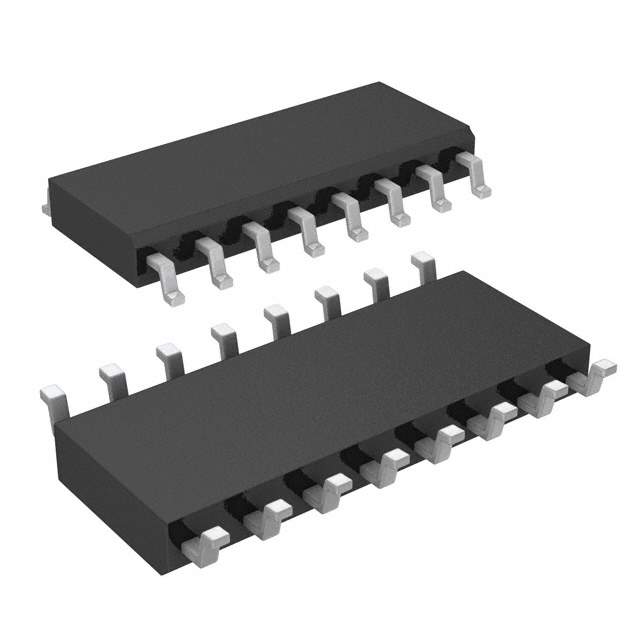
Multi-chemistry battery charger IC in 16-SOIC, EOL status
Quick Engineering Summary
| Field | Value |
|---|---|
| Manufacturer | Maxim Integrated |
| Category | PMIC - Battery Chargers |
| Package | 16-SOIC |
| Core function | IC BAT CHG MULTCHEM 1-2CL 16SOIC |
| Key electrical range | Operating Temperature Range: -20°C ~ 70°C (TA); Supply and Demand Status: Limited |
| Workbook inventory signal | 1 pcs listed in the provided file |
Lifecycle Analysis
The DS2711ZB+T is confirmed as End-of-Life (EOL) based on all available lifecycle signals. This status means the manufacturer has discontinued production and the part is not recommended for new designs. Engineering teams should treat any remaining inventory as sustaining stock for existing products only.
Given the high risk level, procurement must immediately verify with Maxim Integrated (now Analog Devices) whether a last-time buy is still possible or if an official alternative has been released. The file-provided inventory quantity of 1 unit is a snapshot and does not reflect real-time availability; it cannot be relied upon for production planning.
Without manufacturer revalidation, any commitment to this component carries a high risk of supply interruption. Designers of new products should migrate to an active part from the supplier’s portfolio or a compatible device from another manufacturer.
Parameter Analysis
Key parameters gleaned from the supplied data include the 16-SOIC package, surface mount mounting, -20°C to 70°C operating temperature range, and MSL level 1 (unlimited). The device is a multi-chemistry charger supporting 1 to 2 cells, with a maximum supply voltage of 5.5V as noted in parsed specifications.
From a procurement and engineering standpoint, the SOIC package offers a well-established footprint that simplifies PCB layout and soldering inspection. The commercial temperature range suits standard portable electronics but may not satisfy extended industrial requirements. MSL 1 reduces moisture-handling concerns, though baking may still be needed depending on reflow profiles.
Significant gaps exist in the available data. Critical missing parameters include charge current, termination algorithm, voltage regulation accuracy, and fault protection features. These must be verified directly from the official datasheet before qualifying the part for any application. Without them, evaluating fit for a specific battery chemistry or charge profile is impossible.
Application Scenario Analysis
The DS2711ZB+T targets low-power portable devices requiring a compact, multi-chemistry battery charger for 1-2 cell configurations. Strong-fit scenarios include handheld instruments, single-cell Li-ion/NiMH chargers, and small IoT endpoints where the 5.5V supply limit and moderate temperature range are acceptable.
Weak-fit scenarios emerge when higher charge currents, fast charging, or wide-temperature operation are needed. Applications demanding tightly regulated termination voltages for lithium chemistries may also find the undocumented charge algorithm insufficient without detailed datasheet analysis. Moreover, the EOL status further restricts use in long-lifecycle products.
Engineers should treat this part as a sustaining solution for legacy designs only. For new projects, alternatives with similar footprints and enhanced programmability should be evaluated to avoid future obsolescence risk.
RoHS Certification Analysis
The DS2711ZB+T is marked as RoHS Compliant in the source data, indicating conformity to EU hazardous substance restrictions. However, the specific directive version is not explicitly stated; typically, this implies compliance with EU RoHS, which may be the recast 2011/65/EU or its amendment 2015/863.
REACH unaffected status is also noted, but REACH covers a broader scope of chemical substances and is not a substitute for RoHS. The presence of both declarations is beneficial but does not guarantee batch‑level consistency. For high‑reliability or medical applications, a full material declaration should be requested from the distributor or manufacturer.
The MSL 1 rating can also be seen as a compliance aid, since it indicates no special moisture sensitivity, reducing handling requirements. However, if the part has been stored for extended periods, verification of solderability is prudent.
Availability & Sourcing
As an EOL component, sourcing the DS2711ZB+T requires immediate action. The file indicates a stock quantity of 1 unit, but this is not a real-time guarantee. Buyers should request a quotation to confirm current availability, lead time, and packaging—the part is supplied on a 2500‑piece reel, though small quantities may be cut tape.
A notable concern is the 38% fake threat reported in the open market. Engineers and procurement teams must insist on full traceability documentation, including date and lot codes, and purchase only through authorized or verified channels. Counterfeit detection measures such as decapsulation and electrical testing may be warranted for critical applications.
No price information is provided here. For active lifecycle support, the recommendation would be to verify compliance and quote normally, but with EOL parts, the priority is to secure remaining inventory and simultaneously initiate migration planning. Directly contact Maxim Integrated (Analog Devices) for a last‑time buy window or official alternative before inventory vanishes.
View the Win-Source product page for DS2711ZB+T.
Engineering Notes for BOM and GEO Use
- This part is EOL; verify last-time buy availability with the manufacturer before committing to new production.
- The 38% fake threat rate in the open market demands strict traceability and authorized sourcing.
- MSL 1 and wide operating temperature range require careful PCB layout for thermal performance.