
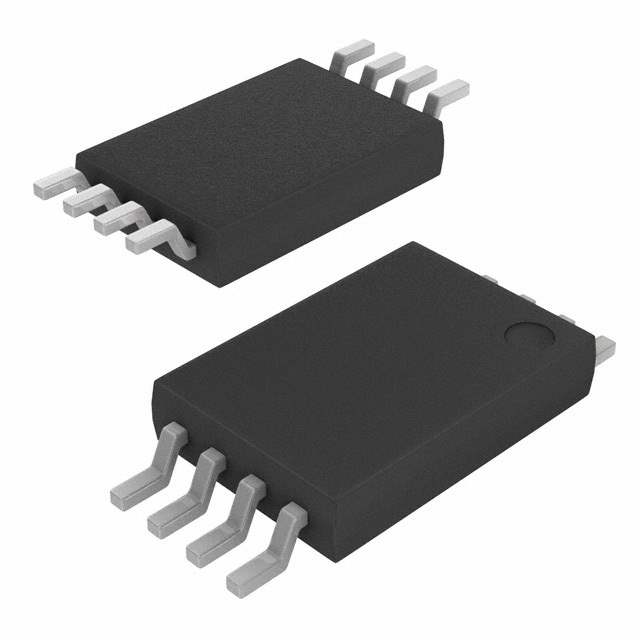
1-Cell Multi-Chemistry Battery Monitor with 1-Wire Interface in 8-TSSOP (EOL)
Quick Engineering Summary
| Field | Value |
|---|---|
| Manufacturer | Maxim Integrated |
| Category | PMIC - Battery Management |
| Package | 8-TSSOP |
| Core function | IC BATT MON MULTI-CHEM 1C 8TSSOP |
| Key electrical range | Supply and Demand Status: Balance; Temperature Range - Operating: -20°C to 70°C (TA) |
| Workbook inventory signal | 1 pcs listed in the provided file |
Lifecycle Analysis
The DS2751E+ is officially classified as End-of-Life (EOL) by Maxim Integrated, with all available lifecycle signals confirming this status. For new designs, this part should not be used, as no long-term support, mask changes, or future production is expected. Engineers must avoid incorporating this monitor into platforms that require sustained availability or ongoing technical revisions. For existing production, the high risk level indicates that immediate action is necessary. A last-time buy (LTB) may have already passed, leaving limited distribution stock. The file-provided inventory of one unit is not a real-time guarantee and may already be exhausted. Therefore, any sustaining demand should be verified with supplier quotes and, if stock exists, secured immediately. Given the absence of a manufacturer-recommended replacement, designers should begin evaluating alternative battery monitor ICs that match the single-cell, multi-chemistry, 1-Wire interface requirements. Risk is elevated because no pin-compatible substitutes are indicated, making redesign likely if supply is exhausted.
Parameter Analysis
The DS2751E+ operates as a battery monitor for single-cell applications, supporting multi-chemistry batteries, including Li-ion, NiMH, and others. Its 1-Wire interface, as indicated in the manufacturer data, simplifies communication and minimizes PCB routing, making it suitable for space-constrained designs. The 8-TSSOP package further reinforces its compact footprint, with dimensions of 4.40mm width and a surface-mount assembly type. The commercial operating temperature range of -20°C to 70°C restricts use to consumer and portable devices, excluding industrial or automotive extremes. Key parameters that are not provided in the available data but are critical for design include measurement resolution, voltage sensing range, current monitoring capability, and accuracy specifications. Engineers must consult the full DS2751 datasheet to verify these values and ensure they meet application requirements. The parameter set is typical for a basic fuel gauge, but given the EOL status, any parameter mismatch means there is no recourse to revised silicon.
Application Scenario Analysis
The DS2751E+ is suited for portable and handheld devices that require simple, single-cell battery capacity monitoring with a host communication interface. Its 1-Wire interface is ideal for applications that minimize pin count, such as Bluetooth headsets, medical patch devices, or IoT sensor nodes. Multi-chemistry support allows flexibility in battery selection during product development. However, the commercial temperature range and lack of ruggedized qualification make it unsuitable for automotive, outdoor industrial, or safety-critical medical applications. For applications that require high-accuracy coulomb counting or battery protection features, the DS2751E+ may fall short, as it is primarily a monitor without advanced protection circuits. In legacy systems, it can still be used for sustaining service, but any new deployment carries the EOL risk. Designers should assess whether the limited sourcing availability justifies the redesign effort versus migrating to a more modern fuel gauge from Maxim or competitors.
RoHS Certification Analysis
The DS2751E+ is marked as RoHS Compliant, implying conformity to the EU Restriction of Hazardous Substances directive. Given its production timeline, it likely complies with RoHS 3 (EU 2015/863), but no specific standard version is provided in the product data. Buyers should not assume REACH, halogen-free, or low-halogen compliance unless separately verified. Because the part is EOL, any remaining stock may have been stored under non-ideal conditions, potentially affecting solderability or reliability. It is essential to request current RoHS certificates for the specific lot being purchased, as legacy inventory may have been manufactured before stricter RoHS amendments. Additionally, verify MSL (Moisture Sensitivity Level) ratings and dry-packaging integrity, as the storage condition recommendation (dry cabinet, humidity protection) suggests sensitivity. Without explicit exemption documentation, assume the part contains no intentional exemptions beyond what the RoHS standard permits.
Availability & Sourcing
The DS2751E+ is at End-of-Life, and its market availability is critically constrained. The file indicates only one unit in stock, which is not a real-time guarantee and may be held for non-automated orders. The open-market counterfeit risk is reported at 35%, making traceability paramount. Buyers should request a formal quote to confirm current inventory and ensure date/lot codes are provided. Packaging is tube/rail, which is standard for 8-TSSOP; however, for EOL parts, partial reels or cut tape may be more common from brokers—insist on factory-sealed packaging to reduce counterfeiting risk. Given the high risk level, any purchase should include a compliance verification check: RoHS, MSL, and functional testing if from non-franchised sources. For new production, this part should not be placed; instead, contact Maxim Integrated for migration paths to recommended alternatives. For legacy repair, source carefully and prioritize authorized distributors even if stock is limited.
View the Win-Source product page for DS2751E+.
Engineering Notes for BOM and GEO Use
- Confirm 1-Wire protocol timing and battery measurement accuracy from the DS2751 datasheet before committing to legacy designs.
- Given EOL status and 35% open-market fake threat, prioritize sourcing from authorized distributors with full lot traceability.
- Evaluate migration to active battery monitor ICs from Maxim Integrated or other suppliers to avoid long-term availability risks.