
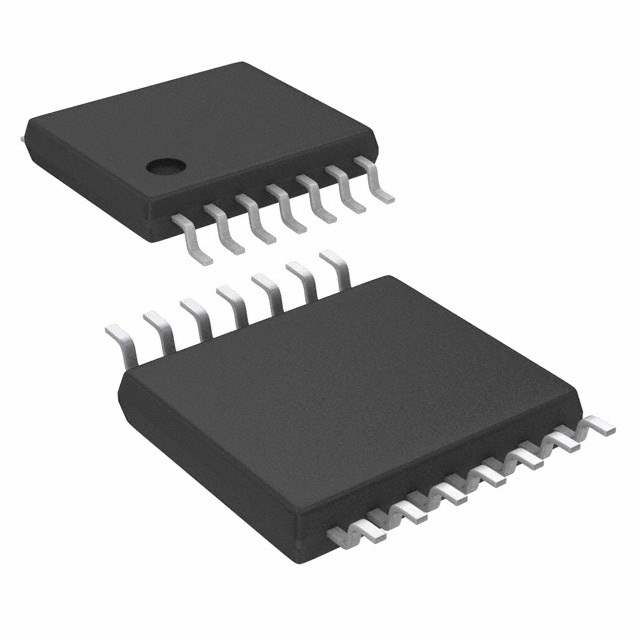
RS232 transceiver, 1/1 driver/receiver, 800mV hysteresis, 14-TSSOP
Quick Engineering Summary
| Field | Value |
|---|---|
| Manufacturer | Maxim Integrated |
| Category | Interface - Drivers, Receivers, Transceivers |
| Package | 14-TSSOP |
| Core function | IC TRANSCEIVER FULL 1/1 14TSSOP |
| Key electrical range | Supply and Demand Status: Limited; Supply Voltage - Operating: 4.5 V to 5.5 V; Temperature Range - Operating: 0°C to 70°C |
| Workbook inventory signal | 5000 pcs listed in the provided file |
Lifecycle Analysis
The DS275E from Maxim Integrated is rated End-of-Life (EOL) according to all supplied lifecycle signals. This designation indicates that the part is no longer recommended for new designs and is on a trajectory toward eventual discontinuation of production. For sustaining production lines, engineering teams should initiate immediate last-time buy (LTB) evaluation and secure remaining authorized stock. The file-provided inventory quantity of 5,000 units is a snapshot and does not guarantee real-time availability; direct verification with the manufacturer or authorized distributors is essential.
Because the lifecycle status is EOL, the risk level is high for procurement. Long-term availability is uncertain, and revalidation of alternate sources or drop-in replacements may be necessary. Designers should consult the manufacturer’s official product change notifications (PCN) and EOL notices to understand support timelines, final shipment dates, and any recommended migration paths. Proceeding with the DS275E in any production capacity requires careful inventory management and contingency planning to avoid unexpected line down situations.
Parameter Analysis
The DS275E is a full-duplex RS232 transceiver with one driver and one receiver. It operates from a supply voltage of 4.5V to 5.5V, which is typical for legacy RS232 interfaces, and over a commercial temperature range of 0°C to 70°C. A key parameter is receiver hysteresis of 800mV, providing improved noise immunity in electrically noisy environments. The device is housed in a 14-TSSOP package with surface-mount mounting, suitable for space-constrained designs but requiring careful thermal and layout considerations due to the small pitch.
Important missing parameters from the provided data include data rate, driver output rise/fall time, supply current, and ESD protection levels. These specifications are critical for ensuring signal integrity, power budgeting, and long-term reliability. Engineers should consult the official Maxim Integrated DS275E datasheet to obtain these values before beginning design integration or qualification testing. Without this information, the part’s suitability for a specific design cannot be fully assessed.
Application Scenario Analysis
The DS275E fits best in legacy or maintenance applications that require a straightforward RS232 serial interface with a single transmit and receive channel. Typical deployments include industrial automation controllers, point-of-sale terminals, instrumentation equipment, and legacy medical devices where RS232 protocol is still standard. The commercial temperature range is acceptable for indoor, office, or lab environments but not for extended industrial or automotive-grade conditions.
Weak-fit scenarios include new designs that demand low-voltage operation (3.3V or lower), higher data rates beyond baseline RS232, or wide temperature performance. Additionally, the EOL lifecycle status makes the DS275E an impractical choice for products with long production lifetimes, as securing a stable supply may become challenging. Designers of next-generation systems should instead select an active, preferably newer, RS232 transceiver with modern feature sets and assured availability.
RoHS Certification Analysis
The RoHS status of the DS275E presents conflicting evidence. The top-level compliance field indicates 'RoHS Compliant,' but a detailed specification entry explicitly lists 'RoHS Non-Compliant.' This contradiction must be resolved before procurement for any market requiring RoHS compliance, such as the European Union. REACH and halogen-free data are not provided, and the compliance standard (e.g., RoHS 3 or EU 2015/863) is not specified.
Given the ambiguity, engineers and buyers should request a certificate of compliance from the vendor and cross-reference with the manufacturer’s official documentation. Some lots or date codes may have been produced before RoHS compliance, while others are compliant. Additionally, the 'Storage Condition' field mentions dry storage cabinet and humidity protection package, which implies moisture sensitivity level (MSL) awareness, but the exact MSL level is not supplied. Verification of MSL is recommended for proper handling during assembly.
Availability & Sourcing
The DS275E is classified as EOL, making availability constrained and subject to remaining factory stock or secondary market channels. The file-provided quantity of 5,000 units is noted in the data but is not a guarantee of real-time stock. The open market carries a noted fake threat level of 51 percent, which is significant. Buyers must exercise heightened diligence when sourcing, including third-party testing and visual inspection, to avoid counterfeit components. Packaging is tube/rail, standard for small-outline ICs, and should be verified for integrity upon receipt.
To secure genuine DS275E parts, we recommend requesting a quote from authorized distributors and requiring full documentation: manufacturer certificate of conformance, lot/date code traceability, and RoHS compliance verification (given the conflicting data). For projects with ongoing production commitments, evaluate long-term stock availability and consider last-time-buy orders immediately. For new projects, transition away from this EOL component to an active alternative to avoid supply chain disruptions. Always confirm current inventory and lifecycle status directly with the supplier before placing orders.
View the Win-Source product page for DS275E.
Engineering Notes for BOM and GEO Use
- Verify RoHS compliance status with manufacturer; conflicting data indicates the need for lot-specific certification.
- High open-market fake threat (51%) necessitates rigorous authenticity checks including X-ray or decapsulation testing.
- EOL designation means last-time-buy planning is critical; explore active replacements for new designs.