
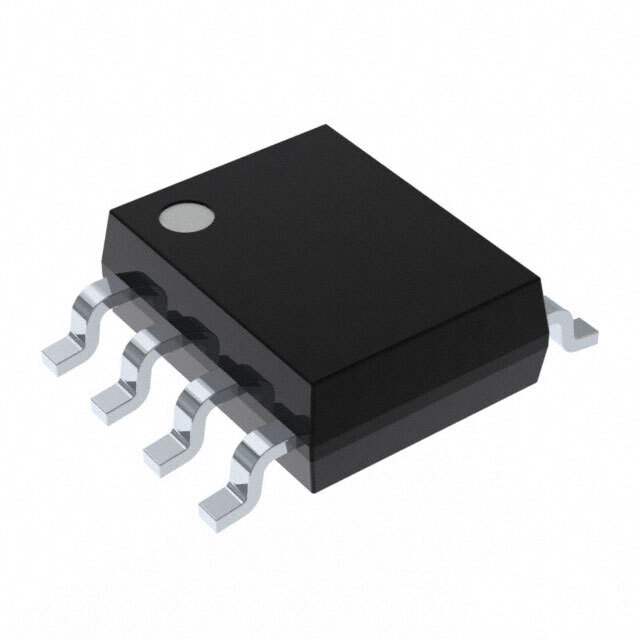
EOL RS232 transceiver - sourcing and compliance considerations
Quick Engineering Summary
| Field | Value |
|---|---|
| Manufacturer | Maxim Integrated |
| Category | Interface - Drivers, Receivers, Transceivers |
| Package | 8-SOIC |
| Core function | IC TRANSCEIVER FULL 1/1 8SOIC |
| Key electrical range | Supply and Demand Status: Balance; Supply Voltage - Operating: 4.5 V to 5.5 V; Temperature Range - Operating: 0°C to 70°C |
| Workbook inventory signal | 1 pcs listed in the provided file |
Lifecycle Analysis
The DS275SN from Maxim Integrated is classified as End-of-Life (EOL), meaning the manufacturer has ceased production and no new units are being fabricated. This status presents high procurement risk for new designs and requires immediate attention for sustaining production lines. Engineers should avoid integrating the DS275SN into new projects and instead identify an active drop-in or functional replacement with a guaranteed supply horizon.
For existing designs that still depend on the DS275SN, a last-time buy (LTB) should be initiated without delay. The file-provided inventory quantity of 1 unit is not a live stock guarantee and should not be relied upon for production planning. Always contact the manufacturer or authorized distributors for formal EOL notifications and to understand available lifetime buy options.
Revalidation of the BOM and qualification of alternative parts is strongly recommended to prevent production line stoppages. Given the EOL status, any remaining inventory may be limited to non-authorized brokers, increasing the risk of counterfeit or degraded components.
Parameter Analysis
The DS275SN is a single-channel RS232 transceiver with one driver and one receiver, supporting full duplex communication. It operates from a 4.5V to 5.5V supply, a standard voltage range for RS232 interfaces, and features a receiver hysteresis of 800mV, which enhances noise immunity in electrically noisy environments. The commercial temperature range of 0°C to 70°C limits its use to indoor or climate-controlled applications, such as office equipment or industrial controllers inside enclosures.
The 8-SOIC package is a surface-mount form factor that fits standard pick-and-place processes and occupies minimal board space. However, designers must consider thermal performance and derating if the ambient temperature approaches the upper limit. Importantly, the datasheet does not specify the maximum data rate; this parameter must be obtained from official Maxim Integrated documentation to ensure compatibility with the target baud rate.
Key electrical characteristics such as supply current and driver output swing are also absent from the supplied data. Engineers should verify these values directly from the manufacturer’s datasheet to avoid integration issues, especially when replacing an existing transceiver or designing a new system around remaining stock.
Application Scenario Analysis
As an RS232 transceiver, the DS275SN is suited for legacy serial communication links in embedded systems, point-of-sale terminals, networking gear, and industrial control units. Its full duplex capability allows simultaneous transmit and receive, which is essential for protocols requiring handshaking. The commercial temperature range confines it to controlled environments, making it appropriate for indoor electronics but not for automotive, outdoor, or extended-industrial applications.
Given its EOL status, the DS275SN should only be considered for maintaining existing products where a last-time buy has been secured. For new designs, engineers should migrate to a pin-compatible or functionally equivalent RS232 transceiver from Maxim Integrated (now Analog Devices) or other manufacturers with an active lifecycle. The 8-SOIC footprint is common, and many alternatives offer wider temperature ranges and higher data rates.
Weak-fit scenarios include applications requiring high-speed communication beyond the unspecified maximum data rate, or those needing extended temperature operation. If the target system must comply with rigorous industrial standards, verify the transceiver’s ESD rating and latch-up immunity, which are not documented here but are critical for robustness.
RoHS Certification Analysis
The RoHS compliance status of the DS275SN is ambiguous. The source data contains conflicting information: the high-level compliance field indicates RoHS Compliant, while the detailed specifications list the part as RoHS Non-Compliant. This discrepancy may stem from different manufacturing lots or a data entry error. Given the part’s EOL status, it is plausible that earlier production runs were non-compliant.
For procurement, it is essential to request a lot-specific RoHS certificate or test report from the supplier. Simply relying on a database flag is insufficient, especially for parts entering regulated markets like the European Union. If the component is non-compliant, it may contain restricted substances such as lead, which would require exemptions or proper end-of-life recycling.
Check for any manufacturer notifications (e.g., PCN) that clarify the RoHS status over the product’s lifecycle. If compliance cannot be confirmed, risk-averse designs should avoid the DS275SN and seek a fully compliant alternative that matches the required footprint and protocol.
Availability & Sourcing
The DS275SN is an End-of-Life component, so availability is limited to remaining distributor stock or the open market. The file-provided quantity of 1 unit is a snapshot from a single source and should not be considered real-time or sufficient for production. To secure genuine parts, always request a formal quotation from authorized distributors or Analog Devices directly.
Given the high risk of counterfeit (reported fake threat of 38% on the open market), procurement must include rigorous verification: insist on full traceability, check date and lot codes, and confirm packaging integrity (the part was originally supplied in tubes). Request documentation such as certificates of conformance and RoHS reports for the specific lot.
For sustaining production, evaluate the feasibility of a last-time buy if the manufacturer still holds inventory. Otherwise, cross-reference with brokers while applying strict incoming inspection protocols. Storage conditions (dry storage cabinet with humidity protection) should be maintained to preserve component quality until assembly. Always verify lifecycle status with the manufacturer before committing to large orders.
View the Win-Source product page for DS275SN.
Engineering Notes for BOM and GEO Use
- Verify RoHS compliance on a lot-by-lot basis due to conflicting manufacturer data.
- As an EOL part, limit use to sustaining production only; migrate new designs to an active alternative.
- Confirm data rate and other missing parameters directly from the official datasheet before procurement.