
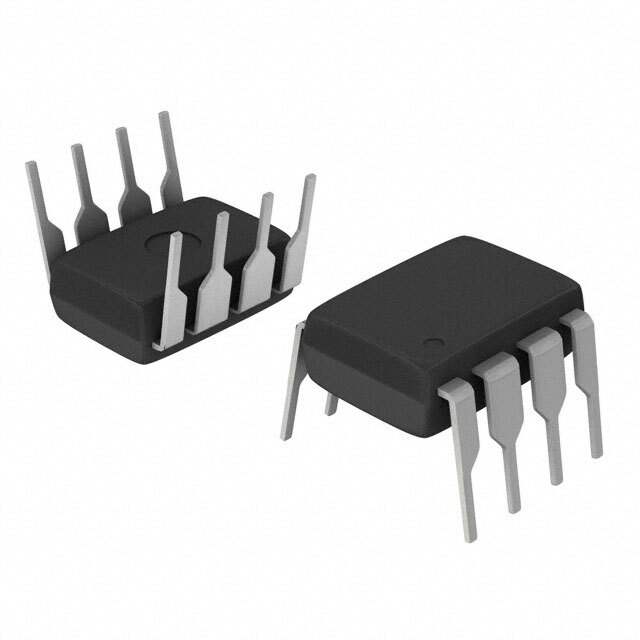
EOL RS232 Transceiver – Verify RoHS and Source Carefully
Quick Engineering Summary
| Field | Value |
|---|---|
| Manufacturer | Maxim Integrated |
| Category | Interface - Drivers, Receivers, Transceivers |
| Package | 8-SOIC |
| Core function | IC TRANSCEIVER FULL 1/1 8PDIP |
| Key electrical range | Supply and Demand Status: Limited; Supply Voltage - Operating: 2.7 V to 5.5 V; Temperature Range - Operating: 0°C to 70°C |
| Workbook inventory signal | 10900 pcs listed in the provided file |
Lifecycle Analysis
The Maxim Integrated DS276 is designated End-of-Life (EOL), meaning it is no longer recommended for new designs. EOL status indicates that manufacturing has ceased or will cease, and long-term supply is not guaranteed.
For existing production, engineers should secure inventory through last-time-buy arrangements and validate remaining stock with authorized sources. The file-provided inventory of 10,900 units may not reflect real-time availability, so direct verification is essential. No lifecycle conflicts are present; all signals confirm EOL, reducing ambiguity in planning. Use this part only for sustaining legacy systems and actively evaluate replacement transceivers for any new development.
Parameter Analysis
Key parameters of the DS276 include a data rate of 20kbps, full duplex operation, and a single driver/receiver pair, making it a straightforward RS232 interface. The supply voltage range of 2.7V to 5.5V allows integration into both 3.3V and 5V systems, while the commercial temperature range (0°C to 70°C) suits indoor environments. Receiver hysteresis of 800mV provides moderate noise immunity for reliable logic-level transitions.
A critical verification point is the package type: the specification lists both 8-SOIC and 8-PDIP, which have different footprints. The mounting style is conflicting as well (SMD vs through-hole). Engineers must confirm the exact package from the datasheet or physical sample before PCB design. Missing parameters such as ESD protection, supply current, and propagation delay should be checked in the official datasheet to ensure compliance with system requirements. For a 20kbps transceiver, timing margins are generally relaxed, but end-application validation is still necessary.
Application Scenario Analysis
The DS276 is designed as an RS232 transceiver, commonly used for low-speed serial communication in embedded systems, industrial control, point-of-sale terminals, and legacy equipment. With a full duplex configuration, it supports simultaneous transmit and receive, which is typical for debugging consoles, modem interfaces, and sensor networks. The 20kbps data rate is sufficient for command/response protocols and moderate data logging.
This device is not suitable for high-speed RS232 applications or environments requiring extended temperature range beyond 0°C to 70°C. The commercial operating range limits outdoor or automotive use unless additional thermal management is implemented. For new designs, consider modern transceivers with higher ESD tolerance and faster data rates, but for maintaining existing systems, the DS276 can be a drop-in solution if procured with care.
RoHS Certification Analysis
RoHS compliance for the DS276 is uncertain due to conflicting data. The top-level compliance record states RoHS Compliant, but a specification field explicitly lists RoHS Non-Compliant. This discrepancy requires immediate resolution before using the part in any RoHS-mandated product. Without clarification, the conservative assumption is non-compliance.
If the part is indeed non-compliant, it may contain restricted substances such as lead, limiting its use to exempt applications or regions without RoHS enforcement. No REACH or halogen-free declarations are provided, so additional substance testing may be needed. For production runs, insist on lot-specific certificates of compliance from the distributor or manufacturer. Where RoHS is non-negotiable, alternative compliant transceivers should be evaluated.
Availability & Sourcing
As an EOL component, the DS276 requires careful sourcing with emphasis on authenticity and traceability. The open market carries a 71% counterfeit threat level, making it imperative to purchase only from trusted, authorized sources. Request date and lot code verification, and inspect for physical inconsistencies such as lead finish or marking quality.
The component is typically supplied in tube/rail packaging from the manufacturer, and storage conditions recommend dry, humidity-controlled environments. The file-provided quantity of 10,900 units should not be considered a live inventory; request a quote to confirm current availability. For sustaining production, secure inventory now and plan for a lifetime buy. For new projects, migrate to an active RS232 transceiver with verified RoHS compliance and full manufacturer support.
View the Win-Source product page for DS276.
Engineering Notes for BOM and GEO Use
- Resolve package ambiguity: 8-SOIC vs 8-PDIP; confirm footprint before PCB layout.
- High counterfeit threat (71%); insist on traceability and date/lot codes when sourcing.
- Securing legacy inventory is critical given EOL; explore alternative RS232 transceivers for new designs.