
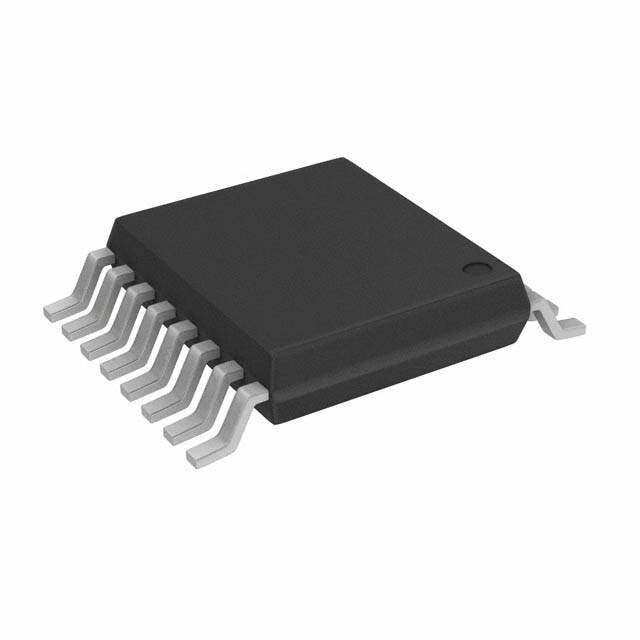
EOL single-cell Li-Ion battery monitor IC in 16-TSSOP with over/undervoltage and short circuit protection.
Quick Engineering Summary
| Field | Value |
|---|---|
| Manufacturer | Maxim Integrated |
| Category | PMIC - Battery Management |
| Package | 16-TSSOP |
| Core function | IC BATT MONITOR LI-ION 16TSSOP |
| Key electrical range | Supply and Demand Status: Limited; Temperature Range - Operating: -20°C to 70°C (TA) |
| Workbook inventory signal | 4800 pcs listed in the provided file |
Lifecycle Analysis
The Maxim Integrated DS2760BE is unequivocally at end-of-life (EOL) status, with all provided signals confirming this classification. No conflicts exist: the lifecycle status is explicitly EOL, and the part is marked as obsolete by the manufacturer. This means Maxim Integrated (now part of Analog Devices) has discontinued production, and no new orders are being accepted beyond any existing last-time-buy window.
For new designs, this part carries an unacceptably high risk. Engineers must avoid incorporating the DS2760BE into any product with a planned production lifespan, as future availability cannot be assured. Existing products that rely on this IC should immediately evaluate remaining inventory levels and secure a lifetime buy. The provided workbook indicates a stock quantity of 4800 units, but this figure is file‑based and not a real‑time guarantee; actual availability may differ significantly.
Procurement teams should verify the manufacturer’s final order and last‑ship dates, if still applicable, and cross‑check with authorized distributors. Given the high counterfeit threat level (51%) reported in the open market, any purchase must include rigorous authenticity verification. Without proactive lifecycle management, production lines face the risk of abrupt shortages and costly redesigns.
Parameter Analysis
The DS2760BE is a single‑cell lithium‑ion battery monitor, identified by its specified battery chemistry and purpose. It integrates fault protection against overcurrent, overvoltage, undervoltage, and short circuit—essential for safe battery operation in portable systems. The device is housed in a 16‑pin TSSOP package, which suits compact surface‑mount designs, and operates over a commercial temperature range of -20°C to 70°C.
Critical parameters that influence design‑in decisions, such as voltage/current measurement accuracy, ADC resolution, and quiescent current, are absent from the supplied data. The interface type is not explicitly listed, though many devices in this family use a 1‑Wire communication protocol. Engineers must consult the official Maxim Integrated datasheet to fill these gaps before committing to a design. The fault protection thresholds and reset behaviors are also undocumented here, requiring verification for system‑level safety compliance.
When evaluating this part for legacy systems, consider the effect of parameter drift over time and the availability of replacement devices with similar package and pinout. Without a complete spec sheet, qualification tests should be repeated to ensure that performance matches the original design requirements, especially in harsh environments.
Application Scenario Analysis
The DS2760BE is purpose‑built for single‑cell lithium‑ion battery packs requiring integrated monitoring and protection. Strong‑fit applications include portable medical devices, handheld instrumentation, power tools, and consumer electronics where battery safety and state‑of‑charge tracking are mandatory. Its built‑in fault protection directly addresses overstress conditions, reducing the need for external components.
Weak‑fit or incompatible scenarios involve multi‑cell battery stacks, high‑voltage systems beyond a single‑cell range, or applications that demand an I²C/SMBus interface for advanced fuel gauging. The DS2760BE likely uses a 1‑Wire interface, which, while simple, may not meet the communication speed or multi‑drop requirements of more complex systems. Additionally, the commercial temperature range limits its use in industrial or automotive environments without further qualification.
Given its EOL status, this part is unsuitable for any new design with a long production horizon. Existing designs should reassess the supply pipeline and plan a migration to an active alternative that matches the required monitoring accuracy and protection features.
RoHS Certification Analysis
The RoHS compliance status of the DS2760BE is in conflict. The primary compliance object in the source data claims “RoHS Compliant,” yet a specifications row explicitly states “RoHS Non‑Compliant.” This discrepancy cannot be resolved from the provided information and demands immediate verification.
For procurement in regions enforcing EU RoHS directives, this ambiguity is unacceptable. Buyers should request a valid certificate of compliance from the manufacturer or an authorized distributor, ideally tied to the specific lot or date code of the parts being purchased. Even if older production batches were compliant, later revisions or stock from non‑compliant batches could enter the supply chain. No REACH or halogen‑free declarations are available, so these must also be confirmed if required.
Until verified, assume the DS2760BE is non‑compliant. Using non‑RoHS parts in new equipment sold in the EU can lead to legal penalties and market access denial. For existing exempt applications, ensure that the exemption still applies and that documentation is maintained.
Availability & Sourcing
The DS2760BE is an EOL component with limited market availability. The provided workbook lists a quantity of 4800 units, but this is file‑stated and not a real‑time inventory commitment. Packaging is tube/rail, typical for TSSOP devices, and parts should be stored in dry, humidity‑protected conditions to avoid moisture sensitivity issues.
Sourcing this part requires a strict RFQ workflow. Buyers should request a quote that includes current stock levels, date/lot codes, and a confirmation of authenticity. The open‑market fake threat is reported at 51%, making traceable, authorized supply chains preferable. Verify that any distributor can provide documentation of original source and, if possible, test reports. Additionally, confirm the RoHS status for the specific stock offered, given the conflicting data.
For existing production, secure a last‑time buy as soon as possible. Engage with the manufacturer or franchised distributors to understand any remaining order opportunities. For new designs, this part should not be considered; instead, evaluate active replacements from Maxim Integrated (now Analog Devices) or other vendors that meet the same monitoring and protection requirements.
View the Win-Source product page for DS2760BE.
Engineering Notes for BOM and GEO Use
- Verify RoHS compliance at lot level due to conflicting supplier data; assume non-compliant until confirmed.
- Secure existing inventory given EOL status and 51% counterfeiting risk; request traceable stock with date/lot codes.
- Plan migration to an active battery monitor IC for new designs; Maxim Integrated (now ADI) may have replacement options.