
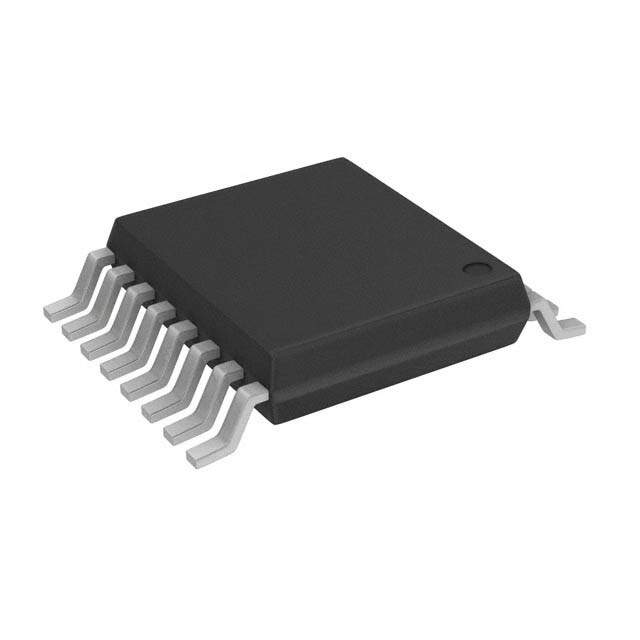
EOL Sourcing Guide for Maxim's 1-Wire Li-Ion Battery Monitor in 16-TSSOP
Quick Engineering Summary
| Field | Value |
|---|---|
| Manufacturer | Maxim Integrated |
| Category | PMIC - Battery Management |
| Package | 16-TSSOP |
| Core function | IC BATT MONITOR LI-ION 16TSSOP |
| Key electrical range | Supply and Demand Status: Balance; Temperature Range - Operating: -20°C ~ 70°C |
| Workbook inventory signal | 1 pcs listed in the provided file |
Lifecycle Analysis
The DS2761BE+ is classified as EOL (End of Life) by Maxim Integrated, with all supplied signals—including a lifecycle status of EOL and an 'Obsolete' designation—aligning to confirm this status. For new designs, this component must not be specified; the focus shifts entirely to managing existing production lines and planning a migration path.
For sustaining legacy systems, the primary action is to verify remaining available inventory through authorized distributors or the manufacturer’s last-time-buy program. The file indicates a single unit in stock, but real-time availability is not guaranteed, and additional quantities are likely constrained.
Given the high risk associated with EOL parts, any procurement should include strict counterfeit avoidance measures and a review of formal discontinuation notices. Verify whether Analog Devices (which now owns Maxim) provides an official replacement or functional upgrade, though none is listed here.
Parameter Analysis
The DS2761BE+ is a dedicated lithium-ion (Li-Ion) battery monitor with a 1-Wire serial interface. Its specified fault protection covers overcurrent, over/undervoltage, and short-circuit conditions, which are critical for safe Li-Ion operation. The operating temperature range of -20°C to 70°C is standard for consumer and light industrial environments, and the 16-TSSOP package with MSL 1 offers unlimited floor life, simplifying board assembly.
Missing from the provided data are key performance parameters such as voltage measurement accuracy, current sense range, and ADC resolution. Engineers must consult the original Maxim datasheet to confirm these specifications before qualifying the part for any legacy design. Additionally, the 1-Wire interface requires careful PCB routing and may limit multi‑drop capability compared to I2C.
Notably, a fake threat assessment of 72% in the open market underscores the need for parameter verification through sample testing, especially when sourcing from non‑authorized channels. Always cross-check batch‑specific electrical characteristics against the datasheet.
Application Scenario Analysis
This battery monitor is tailored for single-cell Li-Ion battery packs requiring a simple, low-pin‑count communication interface. Strong‑fit applications include portable medical devices, power tools, and handheld instrumentation where 1‑Wire reduces connector complexity and firmware overhead. The overcurrent and short‑circuit protections are well‑suited to applications needing basic safety without a full gas‑gauge feature set.
Weak‑fit scenarios involve multi‑cell Li‑Ion stacks, as the DS2761BE+ does not support balancing or multi‑cell voltage monitoring. High‑temperature industrial settings beyond 70°C also fall outside its specified range, and systems requiring SMBus or I2C communication would need an additional translator, adding cost and board space.
Because the part is EOL, even strong‑fit legacy designs should assess alternative parts from Analog Devices or other vendors that offer similar 1‑Wire battery monitoring, particularly for any anticipated production run beyond the available stock.
RoHS Certification Analysis
The DS2761BE+ is recorded as RoHS Compliant, but the source data does not specify which directive or amendment applies (e.g., EU 2015/863). While the 16-TSSOP package and MSL 1 classification are consistent with modern lead‑free processes, a formal certificate of compliance is necessary to confirm the absence of restricted substances for your specific lot.
EOL parts sourced from the open market carry an elevated risk of non‑compliant counterfeits or re‑marked devices that may not meet RoHS standards. Buyers should request lot‑level RoHS and REACH declarations from the supplier and consider independent XRF testing for high‑reliability applications.
Note that MSL Level 1 (unlimited) addresses moisture sensitivity and is not a substitute for RoHS certification. Similarly, the absence of halogen‑free or REACH statements in the provided data does not imply non‑compliance; these must be verified with the manufacturer’s original documentation.
Availability & Sourcing
As an EOL device, the DS2761BE+ presents significant sourcing challenges. The file‑provided quantity of one unit is a static snapshot and does not reflect live inventory. For any volume requirement, you must request a quote from authorized distributors or Analog Devices directly to secure remaining stock. Expect long lead times and possible minimum order quantities.
Given the 72% counterfeit threat reported in open market data, rigorous incoming inspection is mandatory. Insist on full traceability packs including date/lot codes, manufacturer certificates of conformance, and dry‑pack integrity for the tube packaging. The original manufacturer pack quantity is 96 units, so verify that the packing format matches your order to avoid broken quantities.
For legacy production, evaluate whether a pin‑to‑pin replacement or drop‑in alternative exists; none is indicated here. Engage with Analog Devices’ EOL support to obtain last‑time‑buy dates and authorized after‑market sources. If the part is critical, consider lifetime buys to cover end‑of‑life product commitments. Always re‑verify lifecycle status before committing to new production use.
View the Win-Source product page for DS2761BE+.
Engineering Notes for BOM and GEO Use
- The DS2761BE+ is officially EOL; do not design into new products. Validate last-time-buy options with Analog Devices.
- Counterfeit risk is flagged at 72% in open market data. Insist on authorized source traceability and full lot-code documentation.
- Verify all protection thresholds (overcurrent, over/undervoltage) against your cell specifications using the original Maxim datasheet.